India’s Protein Powder Market Is Growing Fast. Getting the Formula Right Is What Separates Brands From SKUs. The Indian protein powder industry is among the most fiercely contested and rapidly growing sectors of the country’s nutritional products market. Brand launches occur almost on a monthly basis. The social media age creates an impression of ease of distribution. Contract manufacturers are available across all significant nutritional manufacturing centers, from Baddi to Pune to Hyderabad. While on paper, formulating, manufacturing, and marketing protein powders may appear straightforward, in reality, it can be quite challenging. There exists a fundamental difference between founders who develop brands and those that go around SKU development without ever figuring out why their product doesn’t sell itself. This guide aims to help founders get a better understanding of formulating protein powders in India.
Why Most Protein Powder Formulation India Underperform
There is a predictable pattern of failure in protein powder formulation in India. This is a product formulated to a bare minimum of specifications, with the protein percentage being good, flavor acceptable, and price competitive. The product sells relatively well after a good marketing push. Repurchase rates are low. The reason cited by many reviewers is digestive problems, flavor inconsistency, or textural problems. This was not caught while samples were tested. The company lowers prices to sell off its excess inventory, creating a habit among consumers to wait until the product is available at reduced prices.
The India protein supplements market was valued at USD 1,027.2 million in 2025 and will reach USD 2,711.2 million by 2033, contains whey protein formulation India growing at a CAGR of 13.3% .This rate of growth provides a great opportunity, but only for those brands that can win customer trust through their products. In such a rapidly growing market, quality and formulation alone become the only defensible points of differentiation.
Why Protein Powder Formulation India Is More Complex Than It Looks
In terms of making a protein powder in India and whey protein formulation India , there are several decisions that have to be made that are interconnected in ways that might not be apparent at a superficial glance. First, there is the choice of the protein itself. This influences the profile of amino acids present, its digestibility, the taste it has inherently, and the processing steps needed. The choice of excipients, which would include things like sweeteners, flavoring agents, emulsifying agents, and flow aids, will influence the ease with which the product is mixed, its mouthfeel when dissolved in water, the stability of the formulation, and the customer’s experience. Finally, the claim structure, which refers to how the product is represented on the label, will affect the approval process and the testing requirements.
India also happens to be the world’s largest milk producer, thus having a structural advantage in terms of raw materials for whey protein formulation in India. Whey production is abundant within the dairy processing industry and can be acquired at reasonable prices by domestic producers in comparison with concentrates that need to be imported. However, such an advantage can only become a reality if the entire whey protein formulation is structured in order to utilize this particular feature properly. Unfortunately, founders of most brands lack such expertise initially.
What Founders Building Protein Powder Formulation India Keep Getting Wrong
- Based on cost per kilogram rather than the amino acid balance and digestibility rating required by the target consumer
- Using the taste system supplied by a contract manufacturing partner without checking its performance in relation to the chosen protein
- Not verifying the percentage content of the protein through independent testing by an NABL certified laboratory prior to manufacturing the first commercial batch
- Overlooking the importance of the choice of excipients on the product’s mixability, texture, and shelf stability, the three areas that cause maximum complaints from consumers
- Disregarding the classification of your product according to FSSAI category means whether the product falls into the food supplement, sports nutrition, or nutraceutical categories
- Selecting a co manufacturing partner based on the lowest minimum order quantity rather than the company’s formulation skill and reliability of their batch performance
- Introducing the product in the market using only one protein source, whereas multiple sources will suit the targeted demographic better and address amino acid kinetics and digestibility issues
The Core Types of Protein Powder Formulation India
Formulation of protein powders in India comprises a few varieties of protein powders, each variety having their specific rationale for formulation, base material, manufacturing process, and regulatory status. Before even thinking of any base material, an entrepreneur who is venturing into this industry should be clear about which particular variety of protein powder he or she is planning to formulate.
The formulation of whey protein is one of the most prevalent types of formulation in India. Whey comes from the liquid left behind after the manufacture of cheese or paneer. It is formulated into three main varieties, which include whey protein concentrate that contains approximately 70 to 80% protein , whey protein isolate, whose manufacturing process results in the attainment of 90 percent protein, in addition to lower lactose content; and lastly, hydrolysed whey protein.
The plant protein powder development India remains the fastest growing segment among other formulation types owing to the combined effect of the large number of vegetarians, increased number of vegans, and growing preference for sustainably sourced nutrition ingredients. The common types of plants from which proteins are sourced include pea, rice, and soy. All 3 contain an incomplete composition of amino acids and thus plant protein development in India always involves formulation of mixes that are complete in their essential amino acid content, which requires the use of complementary ingredients. A 70 to 30 blend of pea and rice is known to be most effective for this without having to risk allergies caused by soy protein intake.
Other types of protein supplements manufactured in India include casein protein, which takes long to digest and is best recommended for overnight recovery purpose, egg white protein, which gives users a complete amino acid profile without posing risks of dairy based allergens; and others such as mung bean and sunflower seeds.
What the Protein Powder Formulation India Actually Looks Like
Stage One: Protein Source Selection and Amino Acid Profiling
Plant Protein powder development India starts with the choice of the protein source. This is not a matter that can be decided based on the financial cost. It all depends on the entire amino acid composition in terms of the leucine per serving amount, which defines if this protein supplement will cause the necessary muscle protein synthesis. If the leucine content in one portion is less than 2 grams, then no matter what kind of protein is being used, the result will be far from satisfying the consumer’s muscle growth expectations. Both whey protein isolate and egg white protein contain enough leucine in their natural form. In the case of plant based protein supplements, there is usually a need to blend the source and control the serving size.
Moreover, the digestibility of the protein source is determined by the Digestible Indispensable Amino Acid Score. Here, whey isolate shows the best results with the maximum of 1.0 . Soy protein has a rate of 0.91. By contrast, the rice protein score is considerably lower. Thus, the use of rice and pea protein blends has become an established standard in creating such products in India, as it raises the score of composite digestibility significantly.
Stage Two: Excipient System Design
After identifying the protein source, the excipient system to surround it is to be developed to ensure the achievement of desired properties such as required texture, mixability, degree of sweetness and flavor without impacting the clean label claim and shelf life of the product. Sweetener selection comes first. Sucralose is the most common artificial sweetener used in protein powders and can deliver a clean sweet taste without any calorie impact, however, consumer rejection is increasing for the product category using sucralose in clean labels.
The emulsifier, usually lecithin from soy or sunflower oil, is added for better dispersibility in water or milk. The flow agent silicon dioxide prevents cake formation in the powdered product and improves scoopability of the product. All these excipients must be added in the appropriate amount obtained from the manufacturer providing food grade specification for use, and should undergo interaction tests with the protein matrix before proceeding with the manufacturing process.
Stage Three: Manufacturing Process Selection
Two main methods of processing are used in protein supplement manufacture in India when completing production of blended powders: dry mixing and wet granulation. Dry mixing is the method where the protein ingredient undergoes mechanical mixing with excipients in a controlled environment, this method is used more commonly for the production of whey and plant protein powder development India supplements intended for the sports nutrition segment. This method maintains the functionality of proteins and does not require complex and costly equipment, it is convenient and suitable for batch processing, which is required by emerging Indian brands.
Spray drying is a procedure where the protein slurry undergoes atomisation into fine particles and further drying. Spray drying is used in the manufacturing of protein ingredient concentrates and isolates, meaning that the procedure is done on the raw material stage and not in final product production. If an emerging brand works with Indian co manufacturing, it is expected to receive pre processed protein ingredient, which was spray dried, and further dry mix it with its own excipient system. It is essential to distinguish these procedures since this will help to identify the responsibility for different quality controls procedures.
Stage Four: FSSAI Compliance and Claim Validation
Formulation of protein powder in India will be guided by FSSAI’s Food Safety and Standards guidelines. This implies that depending on the specific category to which a product will belong, there will be specific guidelines that define the claims allowed for the product, labeling, and other requirements such as testing and documentation obligations imposed on the company making those claims. For example, the category of proprietary foods, food supplement, or sports nutrition product comes with specific labeling and documentation guidelines.
Labelling requirements for protein supplements include providing the ingredients of the product in their order of appearance as required. Other mandatory labeling items include the nutritional information table including information on the amount of protein per 100g and per serving, net weight, batch number, manufacture date, use before date, name, and address of the brand owner or the one who imports the product to India. All claims related to muscle building or recovery must be validated using scientific data from an NABL accredited laboratory before it appears on the label.
How Foodsure Approaches Protein Powder Formulation in India
The Foodsure team has been involved in working with various brands developing their formulations from scratch to production in the protein space in India, including protein type selection, amino acid profile optimization, excipient formulation, flavor development, FSSAI product certification, as well as co-manufacturer selection and evaluation. Among the brands that have partnered with Foodsure to launch their protein supplements include a whey protein formulation project aiming to target the premium end of the sports nutrition market to a brand developing plant-based protein powder.
However, the common thread running through all such projects is that founders who take the trouble to get the formulation sorted before going to the manufacturer gain a lot in terms of saving time and money compared to others who struggle to formulate the product at the manufacturing stage. Although the Indian protein supplement manufacturing market is quite competitive and cost sensitive, the brands that create successful formulations and create sustainable brand positions within that market are precisely those brands which appear at the co-manufacturer’s doorstep with a validated product formula.
What Founders Who Build Lasting Protein Brands in India Understand
There isn’t an Indian market where good product quality has a more direct and immediate impact than the protein powder industry, as consumers are better educated, review scores carry much weight, and repeat purchase figures are visible to everyone handling that product line. When the formula is capable of delivering on taste, mouthfeel, blendability, and amino acid benefits, repeat purchase rates will make the business sustainable. Otherwise, you get the initial sale and a slow accumulation of bad reviews that cannot be counteracted with a marketing budget.
With a 8.4% CAGR, India has the fastest growing protein powder market worldwide, thanks to increasing health consciousness and an expanding culture of fitness in both metro and non-metro areas. Founders with the opportunity to establish themselves in this growth stage are those willing to treat protein powder formulations in India like the technical undertaking they are, and not some commodity job that should be completed on the cheap.
When it comes to creating a whey protein, plant-based protein, or protein supplements brand in India, speak to our team for the right formulation and manufacturing approach from the very beginning.
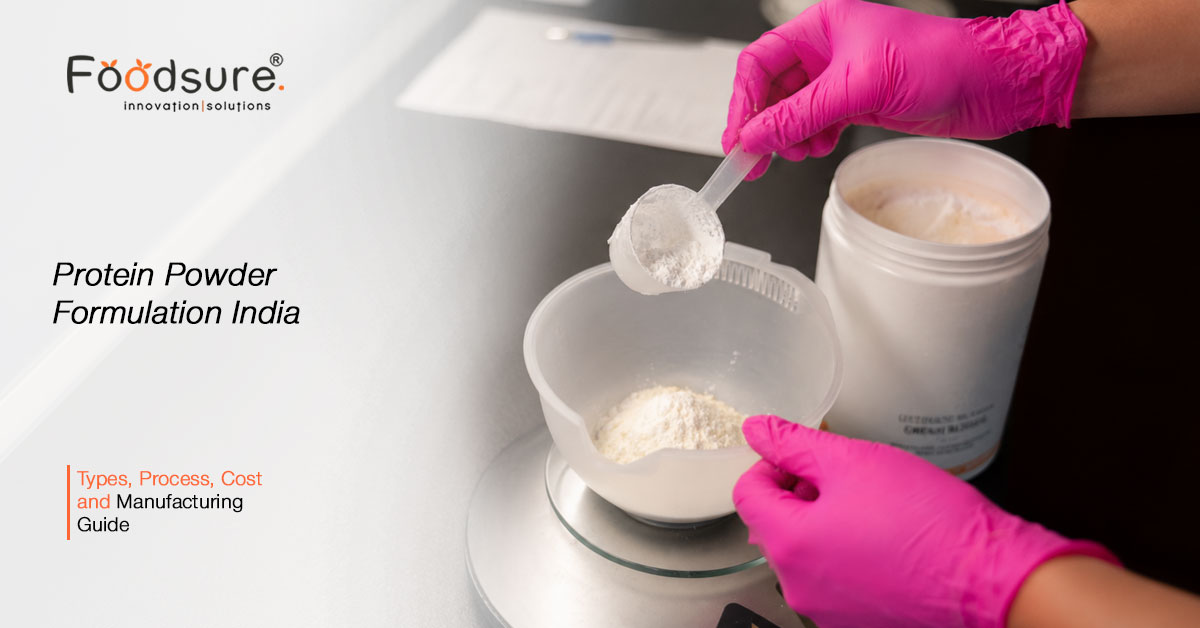
Protein Powder Formulation India: Types, Process, Cost and Manufacturing Guide
Discover protein powder formulation including whey, plant-based, and functional blends along with manufacturing process, cost factors, and market launch strategy.
Frequently Asked Questions
1. What is the difference between whey protein concentrate and whey protein isolate in India?
The whey protein concentrate has around 70% to 80% protein content but with high levels of residual lactose and fat, whereas the whey protein isolate goes through additional filtration to have 90% protein content or more with reduced lactose, which makes it ideal for lactose intolerant customers and labeling.
- What is the timeframe involved in protein powder formulation in India?
An optimally validated formulation process for protein powder production in India takes about 8 to 16 weeks from the formulation brief stage to the launch of the first batch, considering protein selection, excipients, trial runs, sensory analysis, stability studies, FSSAI conformity assessment, and co manufacturing partners’ onboarding.
- Which FSSAI clearances are essential for producing protein supplements in India?
Manufacture of protein supplements in India demands clearance from FSSAI for its product within its respective food category, state or central license for its production plant, NABL approved third party tests for its finished product, and conformance to FSSAI claim regulations prior to any health or performance claims on its label.
- What would be the best protein combination blend for protein powder formulation development in India?
The bes tested blend is the one of pea and rice in 70:30 proportion that provides the essential amino acids profile, higher composite digestibility, and the neutral enough flavour base for clean-label flavour development.
- How can founders select a contract manufacturer for protein powder supplements in India?
The following factors must be considered when selecting an Indian contract manufacturer: FSSAI license, GMP or WHO GMP certification, internal or partner NABL lab for testing products, batch to batch consistency history, minimum order volumes, and willingness to work from an owned formula rather than standard.
- How much will protein powder formulation cost in India for a startup?
Development costs for protein formulation depend on the complexity of the brief and required trials and tests, including stability and sensory tests. It is important that founders consider formulation development cost separately from the cost per piece and packaging cost.