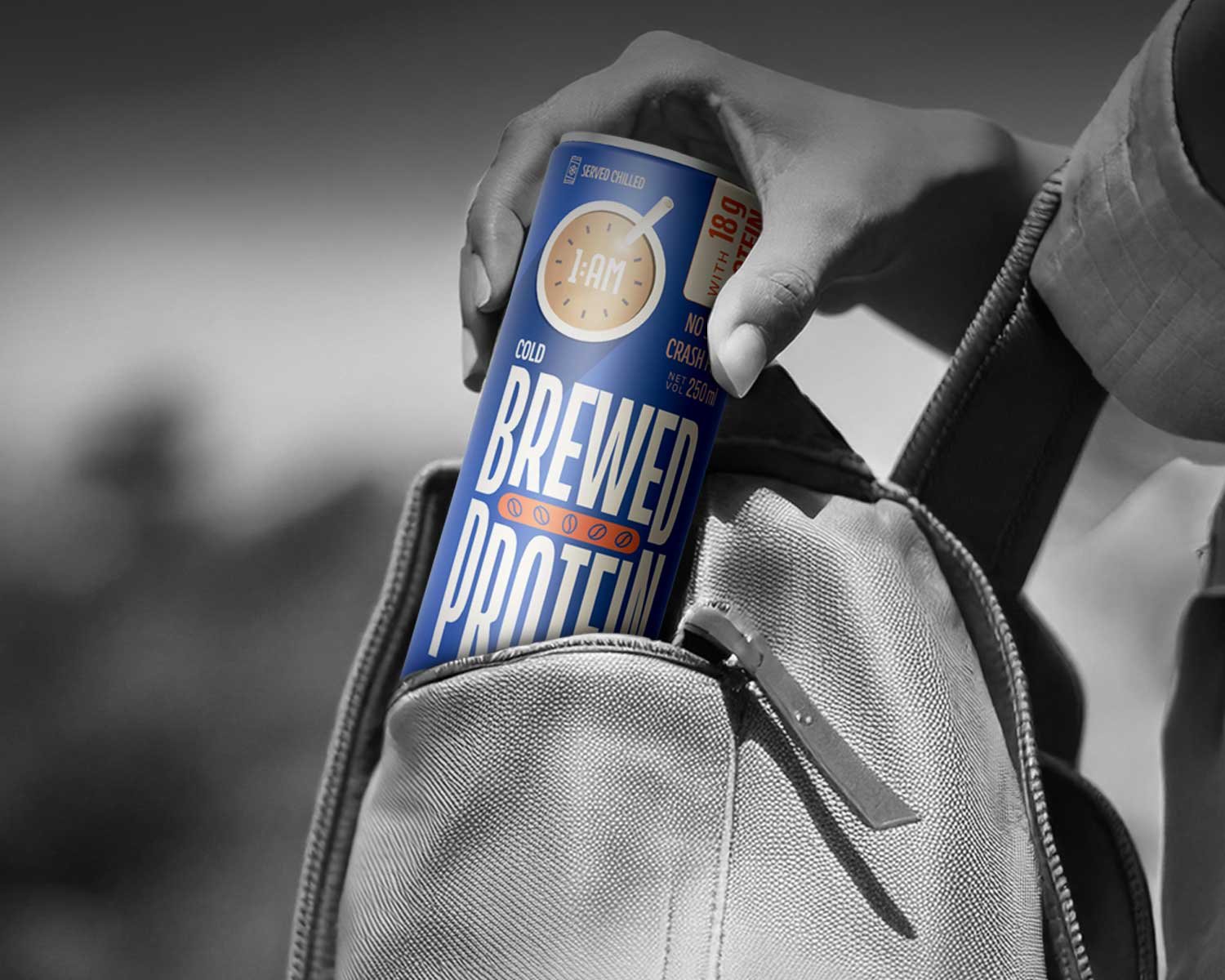
Beverage innovation is at its peak. Imagine this: you’re running late for work, your stomach is rumbling, and you desperately need a caffeine kick. Do you grab a cup of coffee or reach for a protein shake? What if you didn’t have to choose? Welcome to the world of Protein RTD Coffee — the ready-to-drink beverage that packs muscle-supporting protein (for strength and satiety), natural caffeine (for clean energy), and brain-boosting nutrients (for mental clarity).
Now is the perfect time for beverage startups to jump into the growing world of Protein RTD Coffee. Making a drink that works and lasts on the shelf takes careful planning. You need to get the pH right to keep it safe from bacteria. Beverage consultants use the right emulsifiers to keep the drink smooth and creamy, choose clean-label ingredients that are safe and approved, and follow FSSAI rules at every step. Even one small mistake — like the flavour separating or the wrong label — can lead to your product being rejected before it ever hits the shelves.
Why Protein RTD Coffee Is India’s Next Big Beverage Category
The Indian RTD coffee market is growing fast. India’s RTD coffee market was valued at USD 87.45 million in 2025 and is projected to reach USD 123.46 million by 2030 at a CAGR of 7.14%. India is growing at 9% CAGR in the global RTD coffee market — second only to China — making it one of the most attractive markets for innovation in this category.
Within this market, the most significant growth opportunity lies in functional RTD coffee. The introduction of RTD coffee infused with protein, adaptogens, and plant-based milk has impacted demand due to shifting preferences for on-the-go nutrition. Plant-based RTD alternatives are the fastest-growing segment at 11.53% CAGR from 2025–2030. Canned RTD coffee is growing at 9.34% CAGR — indicating the shift from bottles to premium packaging formats.
Globally, the RTD coffee beverage market was valued at USD 36.42 billion in 2025 and is forecast to reach USD 48.29 billion by 2030 — driven by increasing demand for functional and energy-boosting beverages. Cold brew dominates with a 28% market share, and the ability to integrate protein without compromising taste has made it the ideal base for functional protein RTD coffee products. Blue Bottle Coffee introduced a protein-packed RTD cold brew in early 2025 — signalling that this category is now mainstream, not niche.
For a complete understanding of the functional beverage opportunity in India, the functional beverages market India overview provides the consumer behaviour data that shows exactly why Protein RTD Coffee is positioned for rapid growth in 2026.
The Science Behind RTD Coffee Formulation
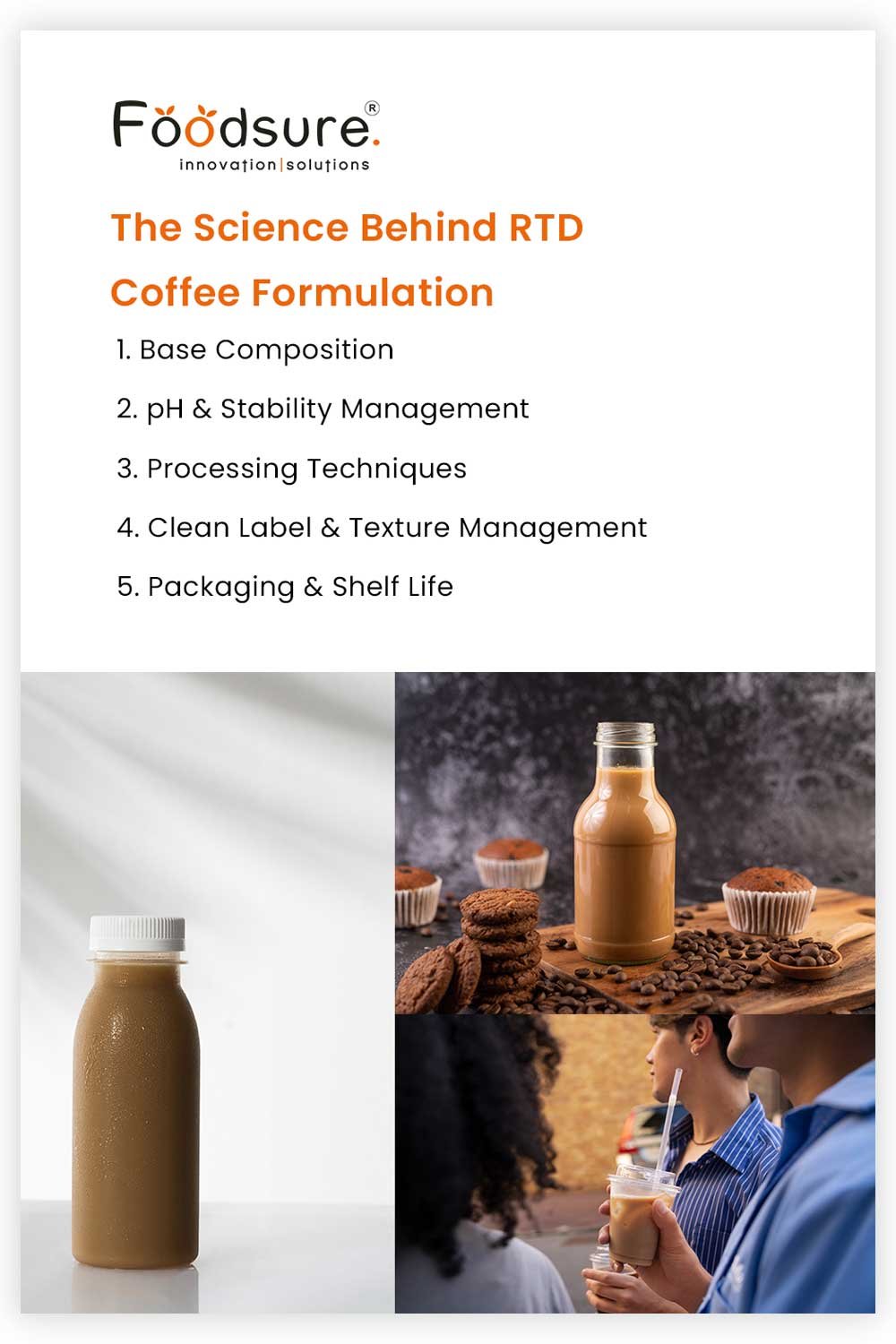
1. Base Composition
Coffee Base: Start with a cold brew or brewed coffee extract — smooth, low-acid, and rich in flavour. Arabica beans are commonly preferred for their premium taste profile.
Protein Source: Whey protein isolate is popular for quick absorption, while plant-based proteins (pea, soy, or rice protein) suit vegan or lactose-free needs. Aim for 10–20g of protein per 250 ml.
Sweeteners: Clean label alternatives like stevia (INS 960), monk fruit, or erythritol offer natural sweetness without added sugars or calories.
Fat Source (Optional): A small amount of MCT oil or coconut milk can improve mouthfeel and give an energy boost, especially in keto-focused versions.
2. pH and Stability Management
- Target pH: Maintain pH between 6.5 and 7.0 for protein integrity. For microbial safety in non-refrigerated drinks, preservatives or processing must support the shelf life.
- Protein Stability: Prevent denaturation or clumping by carefully adjusting the coffee’s acidity and avoiding extreme heat during mixing.
- Oxidation Control: Coffee and protein both oxidise. Add ascorbic acid (INS 300) or natural antioxidants to help retain flavour and prevent browning.
3. Processing Techniques
| Processing Method | Best For | Key Consideration |
|---|---|---|
| Hot Fill | Dairy-based versions with heat-stable proteins | Precise time-temperature balance to preserve flavour and nutrients |
| UHT (Ultra High Temperature) | Long shelf life ambient products | Must be matched with a protein that doesn’t degrade under high heat |
| Cold Fill + Preservatives | Cost-effective ambient production | Only FSSAI-allowed preservatives — check compliance carefully |
| HPP (High Pressure Processing) | Premium chilled RTD protein coffee | Preserves clean-label status without heat — ideal for D2C premium products |
4. Clean Label and Texture Management
- Avoid: Artificial stabilisers, carrageenan, synthetic colours, or sweeteners
- Use: Acacia gum or sunflower lecithin for emulsification; guar gum or xanthan gum in small amounts for texture
- Mixing: High-shear mixing or homogenisation is essential to blend the protein smoothly without sedimentation or foaming
5. Packaging and Shelf Life
| Format | Shelf Life | Best For |
|---|---|---|
| Chilled (HPP-based) | 30–45 days | Premium D2C, short-shelf premium segment |
| Ambient (UHT or Hot Fill) | 6–9 months | Retail, modern trade, export |
Use multilayer PET bottles or Tetra Pak for long shelf life. Glass is great for short runs or premium appeal. Use nitrogen flushing to reduce oxygen exposure. For a detailed understanding of packaging format impact on shelf life and brand positioning, the beverage packaging guide covers every format’s pros, costs, and compliance implications.
FSSAI Compliance – What Every Protein RTD Coffee Brand Must Know
| Area | Requirement |
|---|---|
| Food Category | 14.1.4 — Non-carbonated flavoured water-based beverages (including dairy and plant-based protein blends) |
| Permitted Ingredients | Brewed coffee, whey protein isolate, plant-based proteins (pea, soy, oat), MCT oil, natural flavours, stevia, erythritol, cocoa, vanilla, permitted vitamins and minerals |
| Additives | INS 330 (Citric Acid), INS 415 (Xanthan Gum), INS 471 (Mono- and Diglycerides), INS 960 (Stevia), INS 150d (Caramel Colour) |
| Label Claims | Declare protein content per serving; caffeine content if >145mg/L; “No Added Sugar” only if compliant; “High Protein” claim per FSSAI standards |
| Shelf Life Testing | Real-time and accelerated testing for TPC (Total Plate Count), yeast, mould, coliforms, and protein stability |
| Mandatory Declarations | Veg/Non-veg logo, allergen disclosure (milk, soy, nuts), caffeine disclosure, FSSAI license number, batch/lot number, MRP, date of manufacture and expiry |
For a complete guide to FSSAI label requirements, claim compliance, and nutrient panel formatting for beverages in India, the sports drink label FSSAI India guide covers the full framework that applies to all functional beverage categories including Protein RTD Coffee.
Have a Protein RTD Coffee concept ready to develop?
Write to our formulation team — [email protected]
What Else Goes Into Your Protein RTD Coffee?
Emulsifiers — Keeping Everything Blended Properly
- Sunflower Lecithin — Natural and brain-friendly
- Mono and Diglycerides — Help fat and water mix smoothly
- Polysorbate 80 — Improves texture and prevents separation
Stabilisers — For Smooth, Consistent Texture
- Carrageenan — Seaweed-based, adds creaminess
- Guar Gum — A natural thickener to stop settling
- Xanthan Gum — Keeps everything evenly mixed
Natural Preservatives — Freshness That Lasts
- Vitamin E (Tocopherols) — Helps protect from oxidation
- Rosemary Extract — Fights spoilage naturally
- Citric Acid — Balances pH and boosts flavour
Market Opportunity: Why Right Now for Protein RTD Coffee India
| Market Insight | Data |
|---|---|
| India RTD Coffee Market 2025 | USD 87.45 million — projected USD 123.46 million by 2030 at 7.14% CAGR |
| India RTD Coffee CAGR (Global Ranking) | 9% CAGR — second fastest globally after China (9.7%) |
| Global RTD Coffee Market | USD 36.42 billion in 2025 — reaching USD 48.29 billion by 2030 |
| Plant-Based RTD Coffee Growth India | Fastest-growing segment at 11.53% CAGR — directly benefits protein RTD coffee brands |
| Online Retail Growth | Fastest-growing distribution channel at 12.58% CAGR — ideal for D2C protein RTD launches |
| India RTD Tea and Coffee Market 2025 | USD 3.7 billion — projected USD 6.9 billion by 2034 at 6.77% CAGR |
Key drivers specific to Protein RTD Coffee India include India’s youth demographic — 65% of India’s population is under 35 — showing strong preference for aspirational and functional beverages. Nestlé announced plans to launch Starbucks-branded RTD coffee in India in February 2025, signalling major industry confidence in the market’s growth. Blue Tokai — India’s fastest-growing specialty coffee brand — received investment from Deepika Padukone in 2023, underscoring the mainstream potential of the RTD coffee category.
Starbucks has already expanded its menu in the US and Canada to include protein lattes and protein cold foam using whey protein isolate — confirming that protein-enhanced coffee is moving from niche fitness segment to mainstream consumer preference globally, with India set to follow.
Develop Your Protein RTD Coffee
Protein Stability, pH Management, FSSAI Compliance — Foodsure Formulates Your Protein RTD Coffee for India.
From whey or plant protein selection and emulsifier systems to pH calibration, shelf life testing, FSSAI compliance, and contract manufacturing — Foodsure helps founders build Protein RTD Coffee that is stable, great-tasting, and retail-ready.
Case Study: Clean Label RTD Protein Coffee That Worked
A performance nutrition brand in India aimed to create a plant-based protein cold brew with no sugar and a 6-month shelf life.
Formulation: Brewed Arabica cold brew, pea protein isolate (15g), stevia and monk fruit, acacia gum, cocoa, MCT oil, citric acid (for slight acidification, pH 4.6)
Processing: Hot fill at 88°C in a 300ml glass bottle
Label Claims: Vegan, no added sugar, high protein, gluten-free
Shelf Life: 6 months ambient (India and UAE)
Compliance: Registered under FSSAI 14.1.4, export cleared by ESMA
Result: Sold out in 45 days in Tier 1 and Tier 2 cities through D2C channels.
This case study demonstrates why the beverage formula development process — when executed systematically through a proper R&D lab with stability testing and regulatory alignment — produces commercially successful products, not just technically sound ones.
The Flavour Revolution in Protein RTD Coffee
Gone are the days when protein drinks tasted chalky, bland, or artificial. Today’s RTD protein beverages are about flavour-forward experiences that consumers crave, not just tolerate.
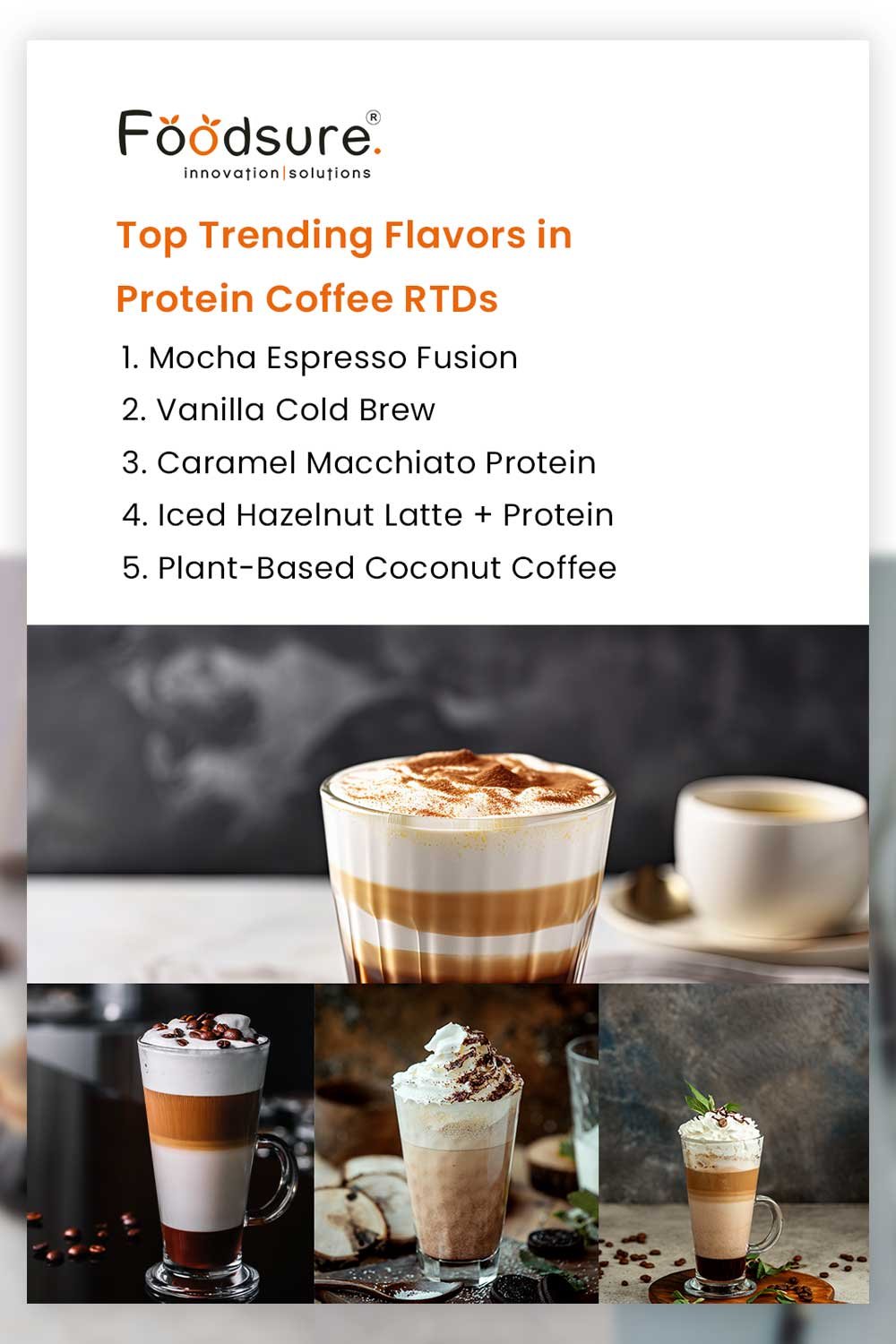
Top Trending Flavours in Protein Coffee RTDs
| Flavour | Profile | Target Consumer |
|---|---|---|
| Mocha Espresso Fusion | Rich cocoa meets bold espresso | Chocolate and coffee lovers — performance segment |
| Vanilla Cold Brew | Smooth and slightly sweet, with a creamy base | Everyday drinkers — clean energy positioning |
| Caramel Macchiato Protein | Dessert-like indulgence that fuels performance | Urban professionals — café experience at home |
| Iced Hazelnut Latte and Protein | Nutty, aromatic, and balanced | Premium café-goers transitioning to RTD formats |
| Plant-Based Coconut Coffee | Tropical twist on clean energy | Vegan and plant-based consumers |
Beyond these global flavours, India’s RTD coffee market is also seeing traction in regional and culturally relevant profiles — including filter coffee cold brew (South India), masala cold brew, and cardamom-infused protein coffee. These local flavour innovations align with Mintel’s finding that Indian brands that capitalise on local flavour innovation in RTD coffee have a significant differentiation opportunity against global brands.
How Brands Get the Flavour Right
Coffee itself can be bitter. Add plant protein or whey, and the challenge gets real. That’s why formulators use cold brew extraction for a smoother flavour, add natural sweeteners like monk fruit or stevia (carefully balanced), incorporate masking agents to cover the bitterness from proteins, and use low-acid profiles to prevent a harsh or metallic aftertaste. For a complete framework on solving bitterness and aftertaste in functional beverages, the zero sugar vitamin drink formulation guide covers every sweetener masking technique in detail.
Target Consumer Segments for Protein RTD Coffee India
| Consumer Segment | What They Need |
|---|---|
| Urban working professionals | Grab-and-go energy and protein — no prep time |
| Gym-goers and fitness enthusiasts | Pre or post-workout protein with clean caffeine energy |
| Millennials and Gen Z | Premium, Instagram-worthy beverage with genuine nutrition credentials |
| Plant-based and vegan consumers | Pea or rice protein cold brew — clean label, dairy-free, transparent ingredients |
| Coffee lovers seeking functional upgrade | Premium coffee experience with added muscle and satiety benefit |
Smart Formulation with Foodsure = Successful Product for Sure
Great drinks aren’t made by chance. They’re formulated smart. From Lab to Launch — Foodsure makes your Protein RTD Coffee retail-ready. Formulate it right. Launch it fast. Sell it bold. With Foodsure. Book your FREE 30-minute beverage consultation today — let’s build a product your customers will crave and your competitors will chase.
Launch Your Protein RTD Coffee Brand
Protein Stability, Flavour Masking, FSSAI Compliance — Foodsure Builds Your Protein RTD Coffee for India
Whey and plant protein selection, emulsifier systems, pH calibration, stability testing, FSSAI compliance, and contract manufacturing — Foodsure handles every step so your Protein RTD Coffee reaches retail shelves stable, great-tasting, and commercially ready.
Or email us — [email protected]
Related Reads
- Beverage Formula Development Process: R&D Guide India
- Sports Drink Label FSSAI India: Claims, Compliance & Requirements
- Zero Sugar Vitamin Drink Formulation: Fix Bitter Aftertaste
- Sports Drink Shelf Life Testing: Stability, Costs & India Guide
- Clear Whey vs WPI RTD Drinks: Complete Comparison
Frequently Asked Questions
What is a Protein RTD Coffee?
A Protein RTD Coffee is a ready-to-drink beverage that combines cold brew or brewed coffee with a high-quality protein source (whey or plant-based), providing energy from natural caffeine and muscle support from protein in a single convenient drink.
How much protein should a Protein RTD Coffee contain?
Industry standard is 10–20g of protein per 250 ml serving. This is enough to support muscle recovery without compromising taste or stability.
What is the best protein source for RTD coffee in India?
Whey protein isolate is best for quick absorption and neutral taste. Pea protein isolate is the top plant-based choice for vegan and lactose-free products. Both can be formulated to achieve good stability in a coffee matrix.
Why does protein cause separation in RTD coffee?
Protein separation in RTD coffee happens due to pH incompatibility between the acidic coffee and the protein, insufficient emulsification, or inadequate homogenisation during processing. These challenges are solved through systematic formulation expertise.
What processing method is best for Protein RTD Coffee?
HPP (High Pressure Processing) is best for clean-label premium chilled products. UHT or hot fill are best for ambient shelf life of 6–9 months for retail and modern trade distribution.
Is FSSAI approval required for Protein RTD Coffee India?
Yes. The product falls under FSSAI Category 14.1.4, and all protein, caffeine, and allergen declarations are mandatory. FSSAI license, shelf life testing, and compliant label claims are required before commercial launch.
What is the market size of RTD coffee in India?
India’s RTD coffee market was valued at USD 87.45 million in 2025 and is projected to reach USD 123.46 million by 2030 at a CAGR of 7.14%. India is the second fastest-growing RTD coffee market globally.