Finding a protein soda formula that stays stable, tastes clean, and actually fits what the 2025 market wants is actually very tough. The good thing is that small manufacturers can absolutely compete when they understand the science and the shifting expectations behind this category.
Why Protein Soda Recipe Formulation Is Different in 2025
The protein soda category isn’t the novelty space it was a few years ago. Customers today want genuinely functional products, not just a fizzy drink with a gram or two of protein added. There is a growing demand for products that remain transparent, provide 10-20 grams of protein, and still taste fresh rather than being chalky.
The flavor trends have changed as well. Fresh tropical, pure citrus, and nostalgic flavors such as cherry-vanilla are getting more popular than heavy dessert flavors. Also, the regulatory pressure concerning claims, amino-spiking, and “enhanced” functional ingredients is forcing brands to have tighter documentation and cleaner panels.
Innovation is happening fast. Brands using novel plant blends, microfiltered whey, and improved masking systems are setting the bar for both flavor clarity and stability under carbonation.
Ready to Take Your Protein Soda to the Next Level?
Our team of experts is here to guide you through creating the perfect protein soda formula. Whether you’re improving flavor clarity or working on stability under carbonation, let us help you craft a drink that stands out in 2025.
5 Essential Components of a High-Performing Protein Soda Recipe Formulation
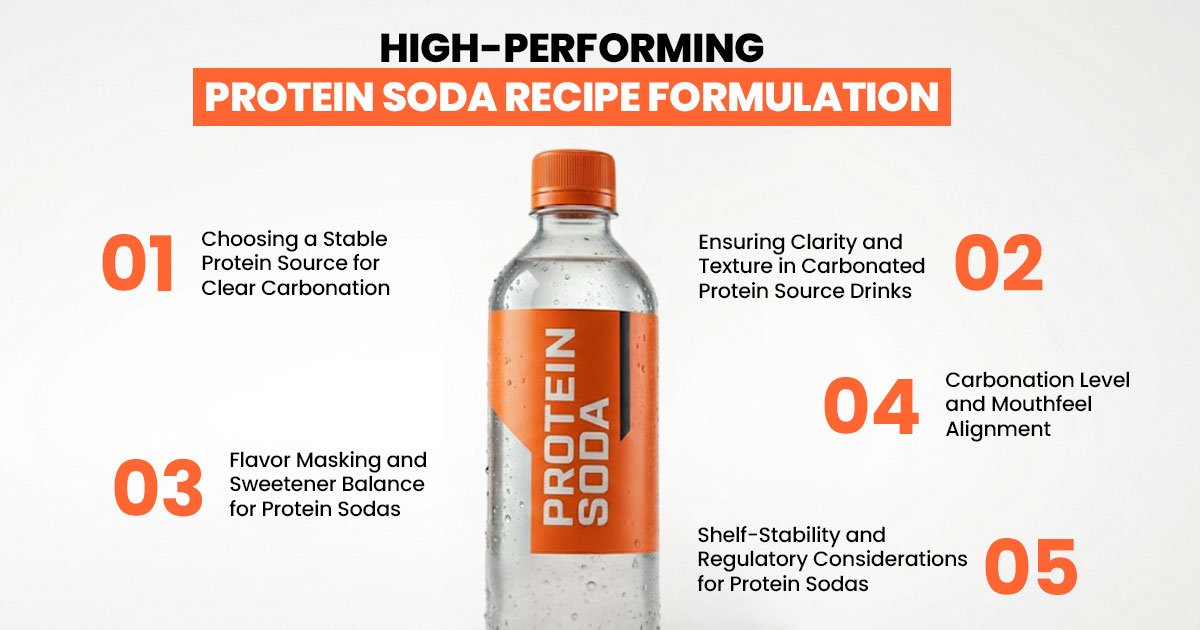
Choosing a Stable Protein Source for Clear Carbonation
If the protein settles, clouds, or forms those odd floating particulates, consumers will reject the product instantly. WPI still dominates because of its clarity and neutral flavor, but plant blends have made real progress. The trick is testing solubility under pressure, not just bench-top agitation. Start small: two or three candidate proteins, CO2 stress testing, and chill-hold cycles before you scale anything.
Ensuring Clarity and Texture in Carbonated Protein Source Drinks
What this really means is controlling interactions between protein, minerals, acids, and carbonation. Even slight shifts in pH can turn a previously clear drink hazy. Keep your acid system simple. Use filtration as a tool, not a crutch. If your base liquid is cloudy before carbonation, it won’t magically fix itself after CO2 infusion.
Flavor Masking and Sweetener Balance for Protein Sodas
Masking isn’t about drowning the protein with sugar or heavy flavors. It’s about balancing clean acids, moderate sweetness, and a top-note that complements the protein, not fights it. Most brands overshoot sweetness because they panic about off-notes. Instead, build flavor in layers and taste it cold and carbonated. Warm bench samples lie.
Carbonation Level and Mouthfeel Alignment
Carbonation can sharpen flavors or flatten them, depending on the level you use. Too high and you highlight bitterness. Too low and the drink feels dull. The right level also hides some of the protein’s natural weight, giving the drink that soda-like lift people expect. Let sensory testing guide you instead of guessing from typical soda benchmarks.
Shelf-Stability and Regulatory Considerations for Protein Sodas
If you want real shelf-life, run full microbial testing and physical stability checks, not just a quick accelerated study. Protein drinks behave differently under pressure and temperature swings, and small brands often underestimate this. Tighten your documentation early so you can support protein claims, functional add-ins, and any “natural” language you use on the label.
Common Protein Soda Recipe Formulation Mistakes Small Brands Should Avoid
Here are the patterns that cause most early failures:
- Picking a protein without checking clarity under carbonation
- Pushing sweetness too high to hide off-notes
- Ignoring pH drift over shelf-life
- Using flavor systems built for still drinks
- Overcomplicating acid systems
- Skipping CO2 stress tests before pilot runs
- Making claims you can’t document or support
Final Thoughts: Protein Soda Recipe formulation That Wins in 2025
A great 2025 protein soda drink formulation is clean, light, stable, and grounded in realistic sensory and regulatory choices. When you get those pieces right, scaling becomes far less painful. If you’re ready to take the next step, grab our resources. Contact Foodsure at +91 8130404757 to grab all the information and services you need to make your brand the one choice for all.