“We had the taste and the vision, but we were losing trust.”
That’s what the founder shared in one of our protein water case studies when they approached Foodsure.
They had developed a clean, protein-rich hydration product targeting the wellness and gym-going crowd:
sleek branding,
promising initial trials, and a
strong online buzz.
But the biggest problem? Cloudiness, sedimentation, and doubts.
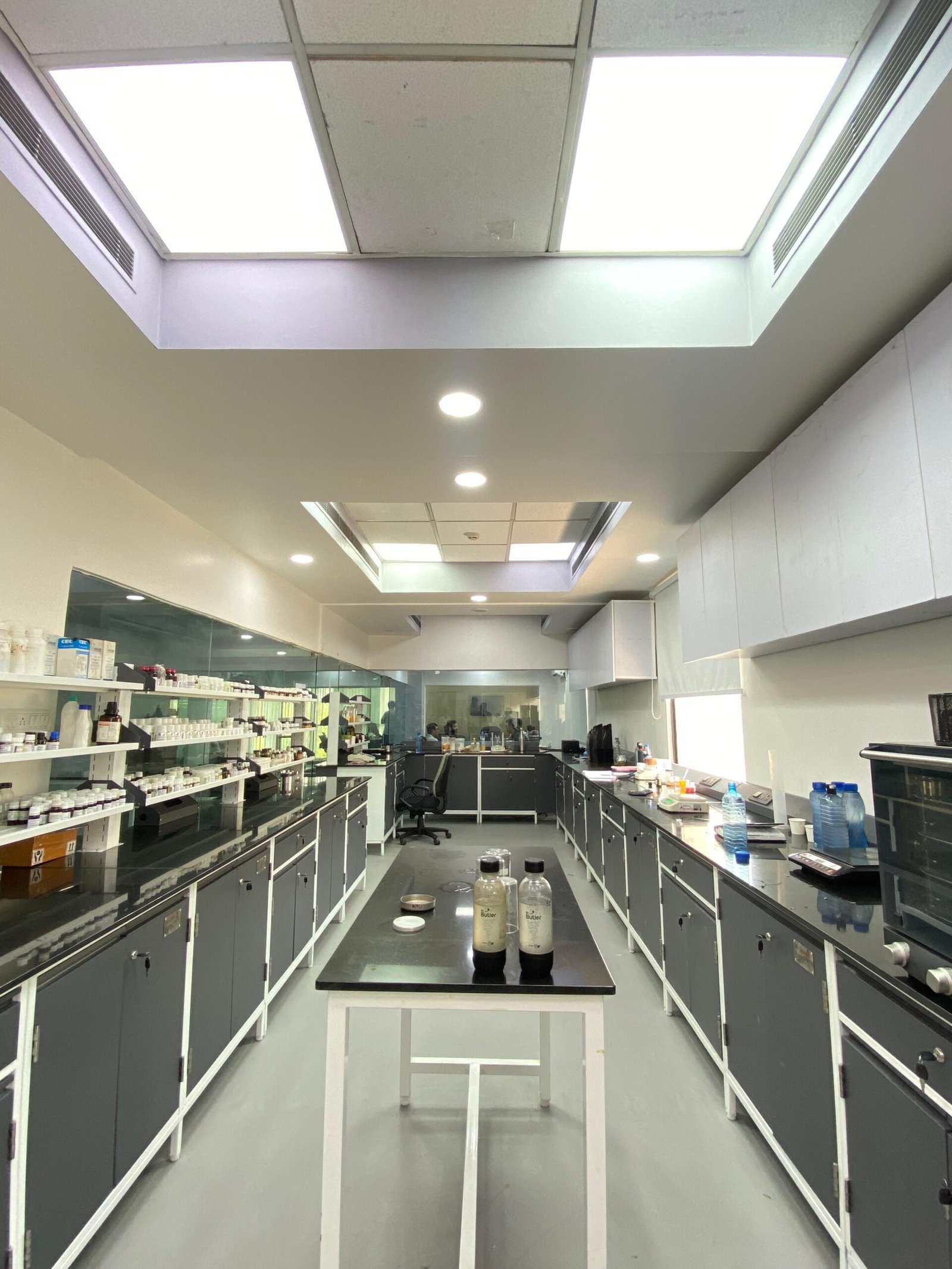
Foodsure R&D Lab
“If your drink doesn’t look clean, people won’t believe it’s healthy, no matter what’s inside.”
This case wasn’t just about fixing a formula; it was about
saving the brand’s promise, its
credibility, and most importantly, its
opportunity to lead in the growing functional beverage space.
Client Background: Protein Water Case Study
Before moving ahead, here’s a quick look at one of our protein water case studies. A functional beverage startup approached us with a bold goal: to create a crystal-clear protein water with high bioavailability, great taste, zero sedimentation, and long shelf life. Their target audience included health-conscious millennials and gym-goers seeking light, protein-rich hydration without the heaviness of shakes.
The challenge? Every trial failed. The product turned cloudy, protein settled, and stability didn’t last, prompting us to step in and uncover the root cause.
Key Challenges Identified
During early protein drinks lab trials, we identified critical issues affecting protein water product development in a highly competitive protein water market:
1. Protein Water Sedimentation: Within 5-7 days, protein particles settled at the bottom, creating an unappealing layer and reducing drinkability.
2. Cloudy Appearance: Instead of crystal clarity, the beverage appeared hazy and dull, weakening its visual appeal.
3. Foaming & Mouthfeel Issues: Excessive foam during shaking disrupted the refreshing experience expected from protein water.
Read More: Why Most Protein Waters Fail & How To Fix It
Why Sedimentation is More Than a Technical Problem?
Clarity in protein water isn’t just visual, it’s psychological.
Consumers associate cloudiness with spoilage, poor quality, or artificial thickeners. Sediment at the bottom of the bottle feels like something has gone wrong. You only get one shot to impress a health-conscious customer.
Imagine investing ₹25-30 lakh in launching your beverage, and watching customers hesitate because it “looks weird.”
And the truth? Even premium ingredients won’t save your product if the science isn’t aligned.
Challenges We Identified And Why They’re Common?
| Issue | Real Impact |
|---|---|
| Low-quality protein source | Protein particles aggregated and sank during storage |
| Poor thermal process | Denatured proteins caused haze formation |
| Wrong stabiliser (or none at all) | No binding system, leading to visible layers and floating clumps |
| Unbalanced pH & electrolytes | Accelerated spoilage and visual breakdown |
| Unstructured process flow | Batch-to-batch inconsistency in clarity and stability |
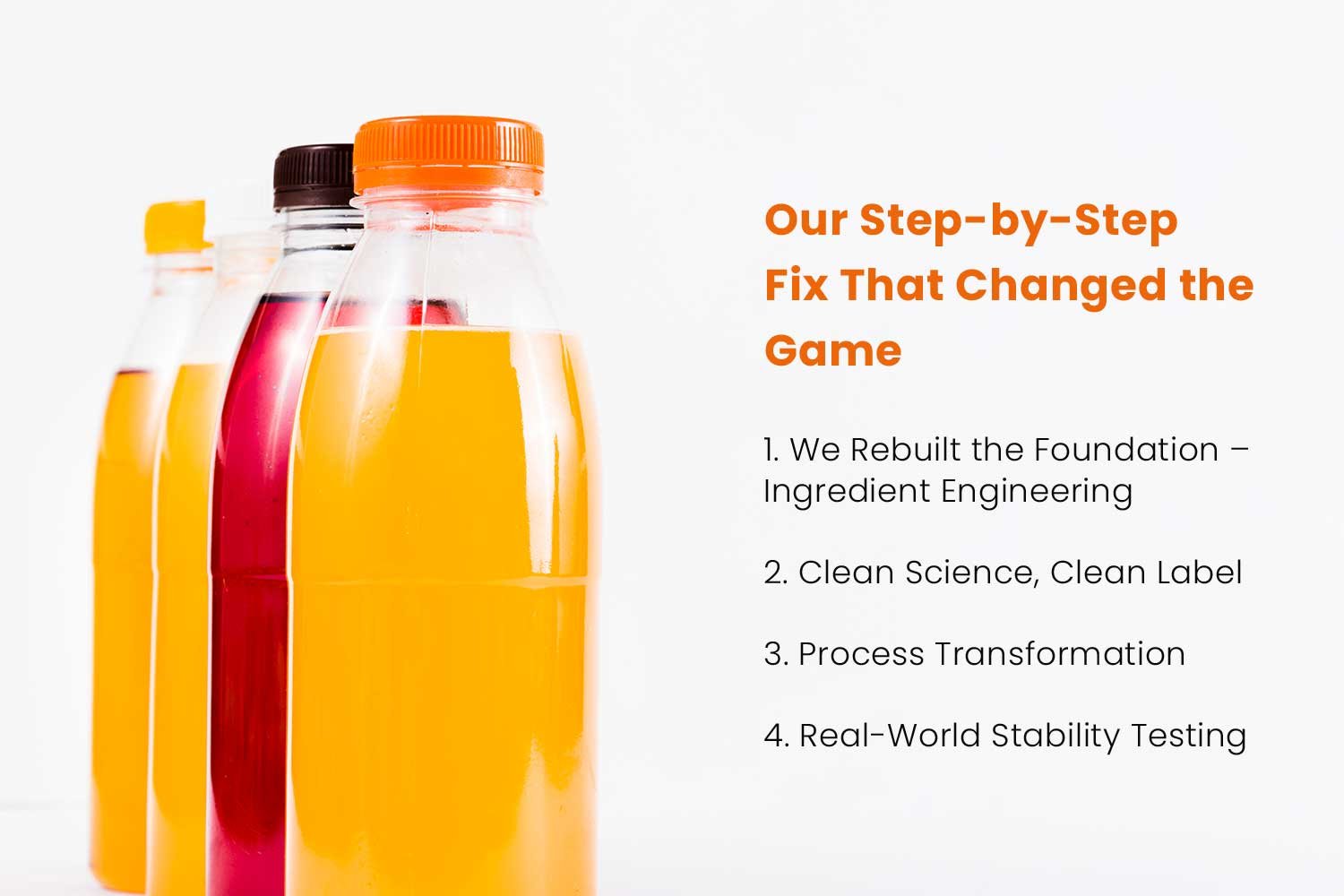
Our Step-by-Step Fix That Changed the Game
| Step No. | Solution Area | Actions Implemented |
|---|---|---|
| 1 | Rebuilt the Foundation – Ingredient Engineering |
|
| 2 | Clean Science, Clean Label |
|
| 3 | Process Transformation |
|
| 4 | Real-World Stability Testing |
|
Results That Transformed the Brand
| Performance Metric | Before Intervention | After Our Reformulation |
|---|---|---|
| Sedimentation (7 days) | Visible >5% | Negligible <0.05% |
| Clarity (Turbidity Index) | ~65% | 98-99% |
| Shelf-Life | 10-12 days | 60+ days |
| Customer Perception | “Cloudy, suspicious” | “Clear, premium, trusted” |
- The brand launched successfully across 400+ stores and three online marketplaces.
- Repeat purchase rates increased by 37% in the first month.
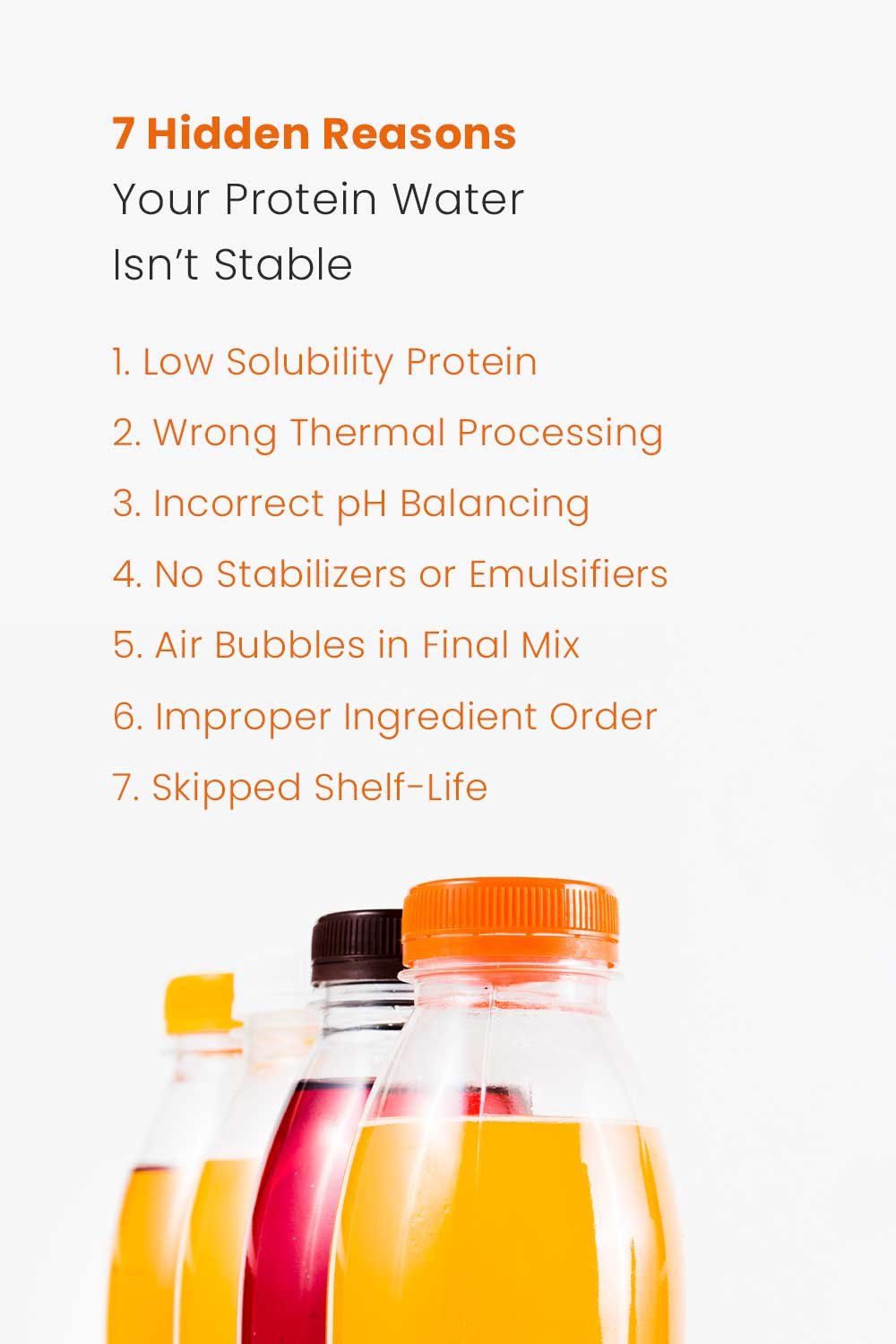
7 Hidden Reasons Your Protein Water Isn’t Stable
In many protein water case studies, early-stage mistakes during protein beverage formulation lead to instability and poor market performance. Key causes include:
- Low Solubility Protein: Cheap WPC or blends fail to disperse properly, triggering protein water sedimentation and grit.
- Wrong Thermal Processing: Overheating denatures proteins, causing clumping and haze.
- Incorrect pH Balancing: pH below 3.5 or above 4.5 destabilises proteins and reduces protein water clarity.
- No Stabilisation System: Lack of proper stabilisers or emulsifiers leads to separation.
- Air Entrapment: Oxygen bubbles create oxidative haze and reduce shelf life.
- Poor Mixing Sequence: Incorrect ingredient order causes flocculation and instability.
- No Shelf-Life Simulation: Skipping stress testing results in unexpected degradation after launch.
Precision in formulation and processing is critical for success in the competitive protein water market.
The Bigger Picture: What Beverage Brands Can Learn
- Visual clarity = consumer trust
- Great protein ≠ , great formulation (solubility & interaction matter more)
- Clean label doesn’t mean compromise, it means smarter choices
- Every new product needs real-time + accelerated shelf-life testing
- Technical partnerships can save lakhs in launch delays & reformulation costs
Why Brands Trust Foodsure?
- 4500+ R&D and formulation projects delivered
- End-to-end beverage lab setup with pilot-scale capability
- 100% success rate in beverage product commercialisation
- Pan-India support | NDA-backed consulting | Quick project turnaround
Ready to Solve Sedimentation Forever?
Whether you’re already in the market or just at the concept stage, Foodsure can help you launch the most stable, clear, and consumer-loved protein water in the market.

Book your free 30-minute Clarity Audit Call
- 1:1 review of your formula
- Get actionable improvements
- No obligation, 100% confidential