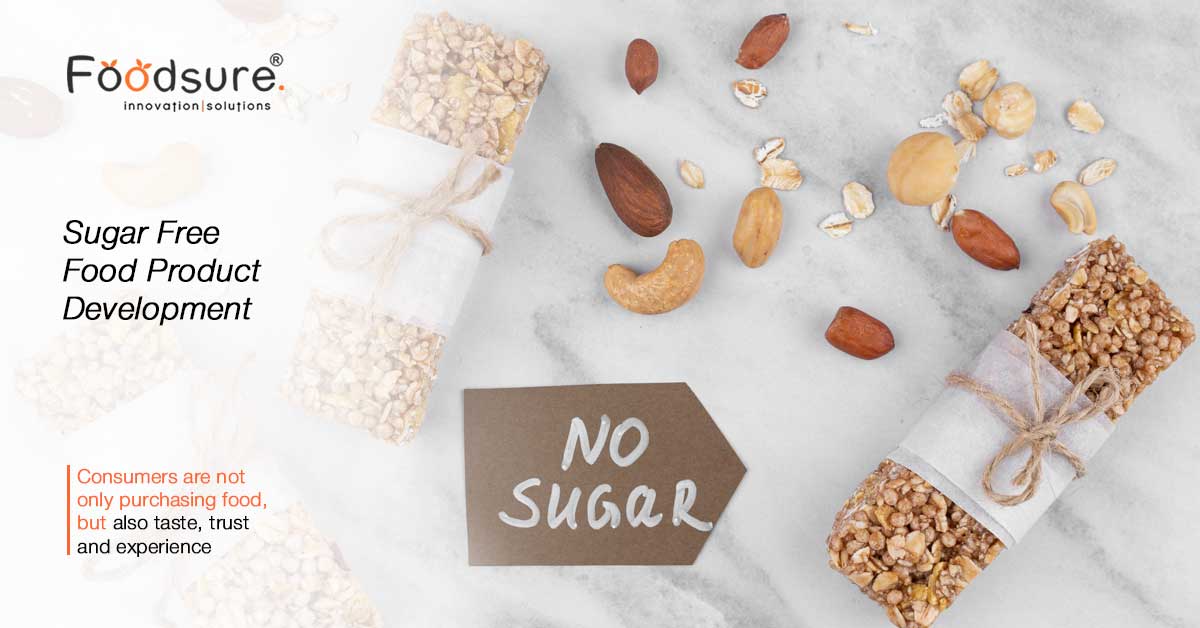
Consumers are not only purchasing food, but also taste, trust and experience. Though there is a rapid increase in health awareness among Indians, the majority of their healthy or Sugar Free Food Product Development fail because of a single factor: they do not taste good enough compared to other traditional alternatives.
Here, the development of sugar-free food products is a science and a strategy. The modern consumer wants no sugar, no pleasure. Your product won’t last long, however healthy it may be, should it compromise on taste, texture, or satisfaction.
Why Is Sugar-Free Booming in India?
People are not just on a sugar-free food product development and low-sugar product spurt; the structural change is here to stay.
- The diabetic friendly food product India is a huge opportunity, given that India has a population of more than 101 million diabetics (IDF 2023).
- The Indian health food market will grow to approximately 30+ billion by 2026 with an annual CAGR of about 16%.
- More than 65% of city dwellers examine the sugar level and purchase pre-prepared food items only after doing so.
- The number of searches using the keywords sugar-free snack formulation India and natural sweetener food formulation has increased by 40 – 60% every year.
Consumers don’t want “no sugar.” They desire superior substitutes to sugar without the compromise.
What Makes Sugar-Free Products Fail?
To create a winning product, you should know the reasons why most fail.
Sugar is not only sweet, but it also forms bulk, texture, browning, and preservation. Without substituting its functions, its removal will result in failure.
Sugar Free Food Product Development Sugar Free Food Product Development – The Right Approach
To produce a successful sugar-free food product development is deprived of sugar, the multi-layered approach must be adopted:
1. Define the Right Consumer Segment
Sugar-free buyers are not all alike:
- Diabetics require a rigid glycemic control.
- The fitness audience has a low-calorie preference.
- General consumers – desire healthy and tasty.
The way you approach the formulation will also vary depending on your target.
2. Choose the Right Sweetener System
There is no one perfect sweetener to substitute sugar. The winning strategy is a combination strategy.
Popular Options in India:
One of the most successful stevia erythritol India food product formulations is a balanced starch-free food product with erythritol.
3. Focus on Taste Masking & Flavor Engineering
This is where the majority of brands go wrong.
- To decrease bitterness, use flavor modulators
- Add natural flavors (vanilla, cocoa, fruit extracts)
- Equalize the amount of sugar, acid and salt
4. Rebuild Texture & Mouthfeel
Sugar contributes to:
- Bulk
- Moisture retention
- Structure
To compensate:
- Take fibers (inulin, polydextrose)
- Add hydrocolloids (gums)
- Optimize fat content
This is essential in sugar-free food product development in India, particularly baked products.
5. Ensure Digestive Tolerance
Consumers are now aware of the side effects of sugar alcohol.
- Avoid excessive polyols
- Have a balanced formulation
- Conduct tolerance testing
Nothing will ever scale with a product that makes people feel uneasy.
6. Validate Shelf Life & Stability
Sugar is a preservative. Without it:
- Microbial risk increases
- Deterioration of the texture occurs more rapidly
You must:
- Conduct shelf-life studies
- Safe preservatives should be used where required
- Optimize packaging

Product Categories Where Sugar-Free Works Best
The India low sugar food product introduction area is particularly strong in snacking and beverages.
Clean Label vs Sugar-Free: Finding the Balance
Modern consumers want both:
- No added sugar
- No artificial ingredients
This necessitates the formulation of natural sweetener food.
But here’s the challenge:
The key is transparent formulation, not oversimplification.
Regulatory Considerations in India
For sugar-free food product development :
- Should be in compliance with FSSAI labeling practices
- Things such as Sugar-Free must have hard limits
- Artificial and natural sweeteners should be stated
- The claims made about nutrition have to be scientifically supported
Regulatory errors have the potential to slow or halt your product release.
Go-To-Market Strategy for Sugar-Free Products
The best formulation will never work without the appropriate positioning.
Winning Strategy:
- Sell it not as sugar-free, sell it as great with benefits
- Break taste skepticism with sampling
- Emphasize great advantages (low GI, diabetic-friendly)
- Train the consumer by packaging
Positioning is like formulation.

Common Mistakes to Avoid
- Copying Western formulations without Indian adaptation
- Overusing stevia leading to bitterness
- Ignoring texture issues
- Poor consumer testing
- Weak branding focused only on “health”
Call Foodsure for Professional Food & Beverage Product Development
The development of a successful sugar-free product is a highly complex process that needs profound knowledge in product formulation, regulatory standards, and product positioning.
Our services at Foodsure:
- Development of sugar free end-to-end food products.
- HI-tech sugar free snack manufacturing India.
- Stevia erythritol solution food products India.
- Regulations in favor of diabetic friendly foods product India.
- Indian food product low sugar product launch plans.
- Food formulation natural sweetener clean.
And whether you have a new product or one to enhance, our specialists see to it that your product is market-ready, compliant, and loved by the consumers.
How to Create a Sugar-Free Food Product That Consumers Actually Love
Develop sugar-free food products with balanced sweetness, clean taste, and excellent texture using advanced formulation strategies. Create consumer-friendly recipes with functional sweeteners, improved mouthfeel, shelf stability, and regulatory compliance while maintaining the flavour experience modern health-conscious consumers expect from premium food brands.
FAQs
Which is the most appropriate sugar-free sweetener in India?
Stevia and erythritol combined are ideal to strike a balance between taste and performance.
Does it mean that diabetics can consume sugar-free products?
Yes, when they are formulated and tested accordingly they can qualify as a diabetic friendly food product India.
What is it that makes sugar-free products taste bitter?
Without masking, improper use of sweeteners such as stevia will lead to issues of aftertaste.
What do you do to add texture to a sugar-free snack?
Bulking agents, hydrocolloids, and the replacement of the structural function of sugar with fibers.
Can there be a clean label when it comes to sugar-free products?
Yes, but it must be formulated with sophisticated ingredients of natural sweeteners and low quantities of additives.
Which are the largest issues with sugar free snack formulation India?
The most challenging ones are taste, texture, and digestive tolerance.
What is the time frame to make a sugar-free product?
Normally 3 to 6 months, based on complexity, testing and regulatory approvals.