The beverage industry is undergoing a major shift as sustainability drives packaging innovation. The global beverage packaging market will reach USD 217.54 billion by 2032, so businesses must use eco-friendly solutions. Consumers, regulators, and investors increasingly demand sustainable beverage packaging that minimises waste, lowers carbon footprints, and supports a circular economy.
Businesses now use sustainability as a tool to strengthen brand image, meet regulatory requirements, and achieve sustainable business growth. There are Sustainable Packaging Trends In The Beverage Industry that use renewable materials, recycled materials and recyclable materials while creating lightweight products that need fewer resources and developing systems that enable product reuse and closed-loop solutions and following ESG regulations and worldwide regulatory frameworks.
Market Data & Growth Of Sustainable Packaging in the Beverage Industry
- Sustainable packaging market: The market will expand from USD 292.71B in 2024 to USD 423.56B by 2029, representing a compound annual growth rate of 7.67%.
- Beverage packaging market: The market will increase from USD 144.40B in 2023 to USD 217.54B by 2032, representing a 4.7% compound annual growth rate.
- rPET usage: The market will achieve 7.5 million metric tons of global production by 2027, which will support the development of recycled packaging solutions.
- Reusable packaging: Reusable plastic containers can be used over 100 times, which leads to decreased greenhouse gas emissions that occur during beverage packaging.
- Consumer sentiment: 70% of consumers prefer beverages in sustainable packaging, which brands use to shape their business approach.
Using Biodegradable & Compostable Materials In Packaging
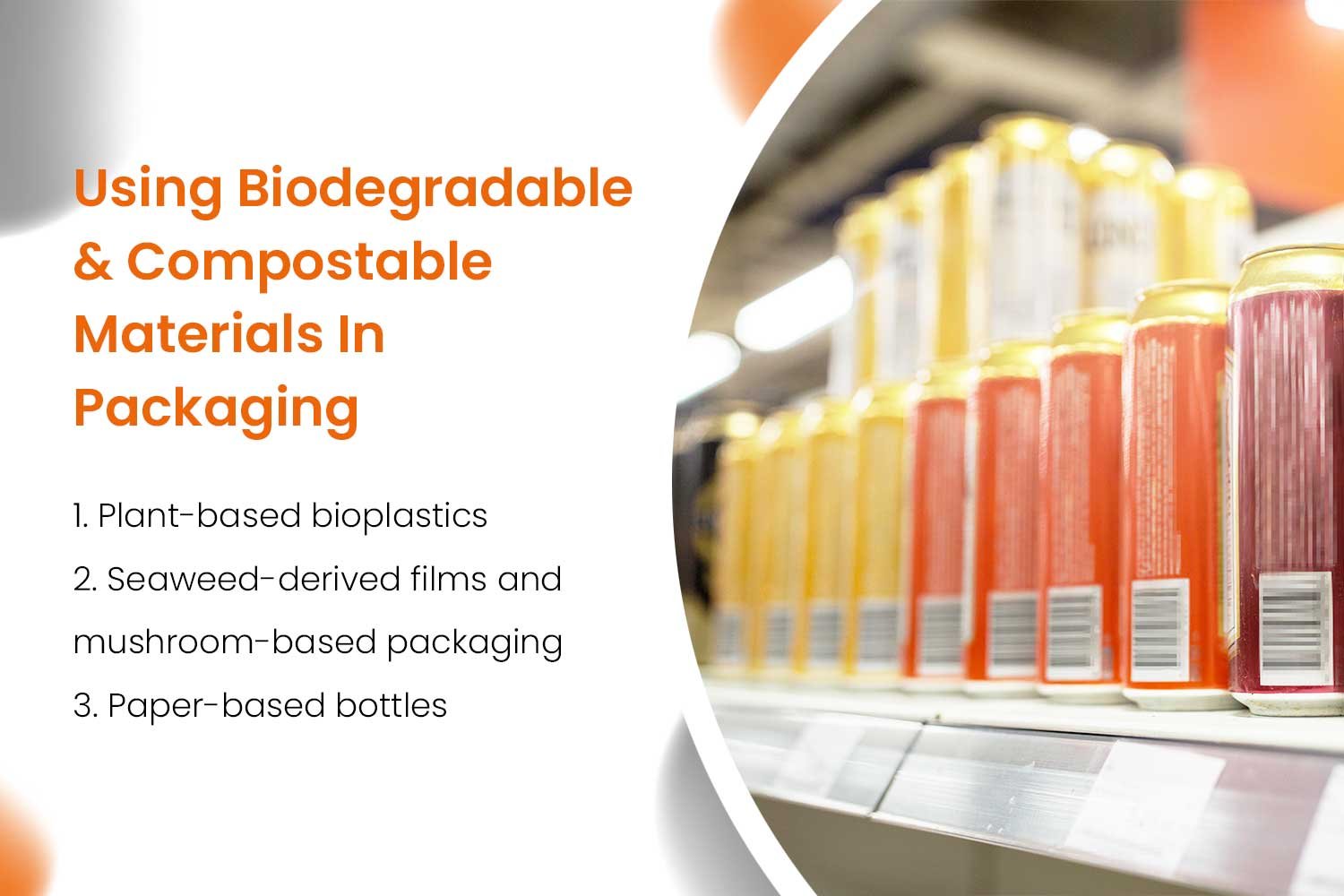
- Plant-based bioplastics: Increasingly used in bottles, caps, and labels, particularly for non-alcoholic beverage containers. They decompose faster and help reduce landfill waste.
- Seaweed-derived films & mushroom-based packaging: Gaining popularity as alternatives that decrease fossil fuel usage while providing workable solutions for product disposal.
- Paper-based bottles: Made from recycled paperboard with thin food-grade liners, which create a renewable, compostable packaging solution for spirits and juices.
Recycled Content & Advanced Recycling Packaging
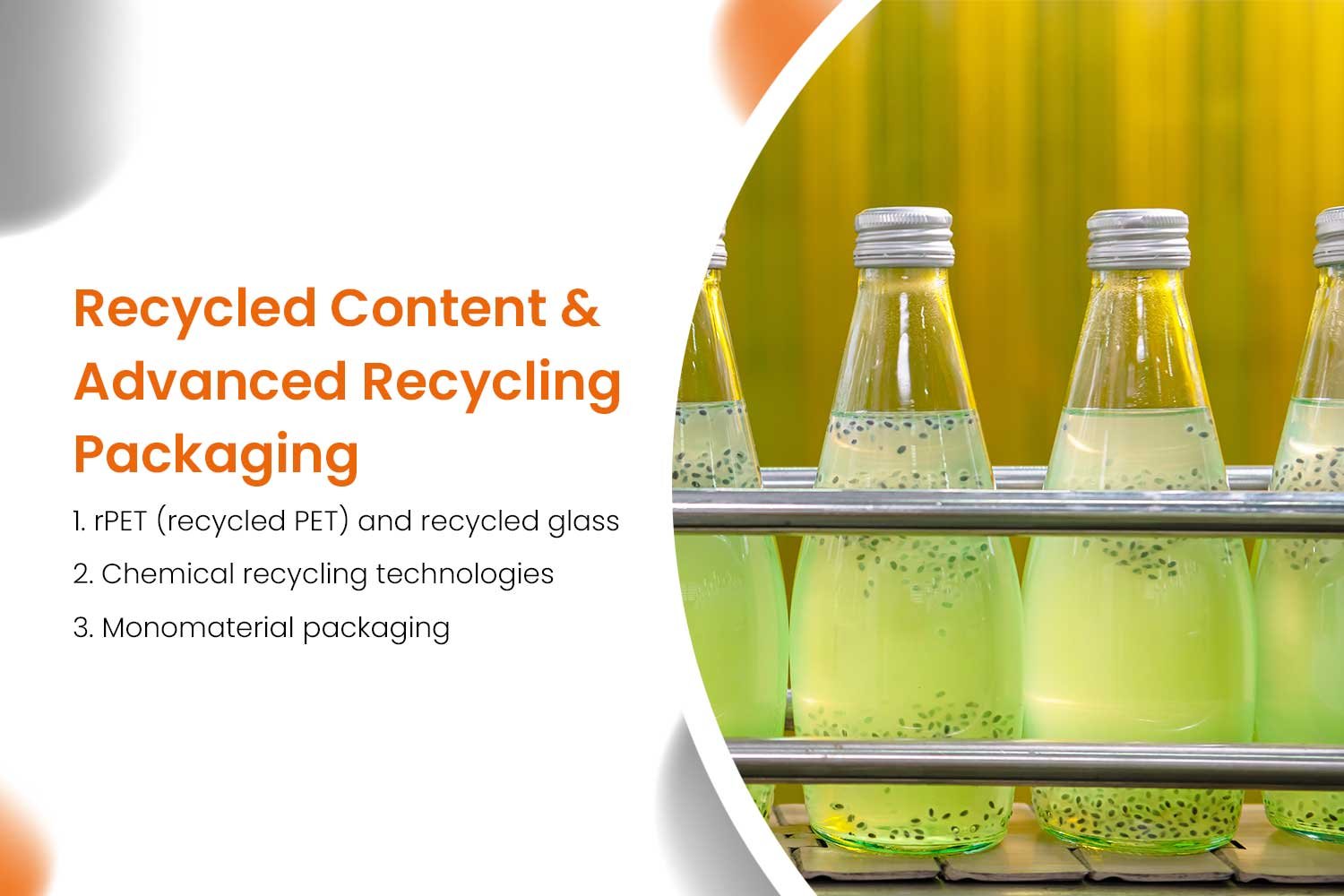
- rPET (recycled PET) and recycled glass: Increasingly popular across many beverage lines. For example, Coca-Cola has committed to using 50% recycled material in its bottles by 2030.
- Chemical recycling technologies: Break down plastics into reusable units, which enable the production of high-quality recycled content while decreasing reliance on newly produced materials.
- Monomaterial packaging: Uses a single type of plastic in beverage packaging, which makes recycling easier and helps establish a circular economy.
Smart & Functional Packaging Of Beverages

- Digital Labels and QR Codes: QR codes, NFC chips, and laser marking enable consumers to access information about material origins, recycling options, and material authenticity through their mobile devices. The system enhances operational transparency while decreasing physical documentation requirements in beverage packaging, which complies with current beverage packaging trends and sustainable beverage packaging requirements.
- Blockchain Technology: The application of blockchain technology enables the verification process for raw material sustainability, which creates customer confidence while supporting sustainable drink packaging initiatives that currently represent a major trend in the beverage packaging industry.
- Embedded Sensors: Smart caps and labels monitor product freshness and track temperature changes and detect tampering activities, which leads to waste reduction because it guarantees that beverage quality remains constant throughout the supply process. The sensors function as components of recyclable beverage packaging solutions, which represent one of the sustainability-focused beverage packaging trends.
- AI-Driven Packaging: AI sustainable beverage packaging solutions design beverage packaging systems that achieve maximum product protection, extended shelf life and minimal environmental effect. The system enables consumers to monitor their products while streamlining inventory management in beverage packaging according to existing beverage packaging industry standards.
Sustainable Packaging Reusable Systems, Refillable Systems
- Refillable Glass Containers: Companies such as ecoSPIRITS and the major spirits firms are utilising glass containers that can be reused and assist them in large production. The advantage of the containers is that they can be sanitised and reused in the future, which is why they are a major part of sustainable beverage packages and recyclable beverage packages.
- There is an increase in returnable bottle programs and deposit-return programs, primarily of water and soft drinks. Such models prompt consumers to re-use packaging, and this lowers single-use plastic, which contributes to a circular economy, which are significant trend in beverage packaging.
- Circular Economy Initiatives: Several brands are shifting to the use of circular packaging, which keeps the materials in circulation, refillable, and recycled content to complete the circle, in line with sustainable drink packaging and the market in general beverage packaging trends.
Paperboard & Fibre Hayes Beverage Packaging
Paperboard Multipacks: PepsiCo has also changed beverage multipacks to paper-based packaging instead of plastic rings in the U.S and Canada. This assists in minimising plastic waste and preserving the integrity of the drink product. It is one of the exemplary cases of beverage packaging that is sustainable.
Fibre-Based Cartons: Tetra Pak and other firms are developing recyclable, renewable fibre-based juices, milk and plant-based beverage packaging designed using plant-based or recycled liners, which help reinforce the trends of recyclable beverage packaging.
Edible Packaging, Zero-waste Packaging: The use of edible packaging and fully compostable materials is being implemented to eliminate waste in the entire beverage packaging stream altogether, which illustrates the trends of beverage packaging and the emergence of sustainable drink packaging solutions.
Industry Leaders Who Are Using Sustainable Packaging Trends In The Beverage Industry
| Brand | Innovation | Impact |
|---|---|---|
| PepsiCo | Paperboard multipacks, rPET bottles as part of sustainable beverage packaging initiatives | Reduced plastic waste, improved recyclability and supports recyclable beverage packaging |
| Carlsberg | Plant-based, fiber beer bottles reflecting new trends in beverage packaging | Lower carbon footprint, renewable materials |
| Coca-Cola | 100% plant-based bottle (pilot), rPET supporting sustainable drink packaging | Renewable packaging, closed-loop recycling aligned with beverage packaging market trends |
| ecoSPIRITS | Reusable glass containers for spirits are an example of sustainable beverage packaging | Eliminated single-use packaging in hospitality and promoted recyclable beverage packaging |
Consumer Preferences & Business Impact
- Eco-conscious consumers: Gen Z and Millennials now consider sustainability as an essential value. Brands that implement sustainable beverage packaging and create visible eco-initiatives according to trends in beverage packaging receive higher customer loyalty, and customers will pay additional fees to them.
- Business benefits: Companies that implement lightweighting and material reduction strategies will experience decreased shipping expenses and lower production costs. The operations use these practices to achieve sustainable drink packaging objectives while they mirror essential beverage packaging market trends and enhance operational performance.
- Regulatory readiness: Brands that implement recyclable beverage packaging along with other sustainable beverage packaging systems can prevent penalties while they establish smooth compliance pathways to upcoming regulations, which will streamline their operations to meet the latest trends in beverage packaging.
Win The Shelf With Sustainable Packaging Trends In The Beverage Industry
Ready to make your beverage brand impossible to ignore? Sustainable packaging in the beverage industry is your secret weapon. With over 70% of consumers choosing eco-friendly products, brands need to switch to biodegradable, recycled, or reusable packaging that protects the planet. This will help to increase the brand’s appeal and keep you ahead of regulations.
Imagine packaging that tells a story, engages customers with smart features, and reduces waste, all while cutting costs through lightweight design and refillable options. This is your chance to stand out on crowded shelves and win loyal customers who care.
Don’t just follow the trend, lead it with the right sustainability packaging experts. Transform your packaging today and watch your brand grow with the best sustainable packaging trends in the Beverage Industry. Contact us to grab your free 20-minute consultation from our beverage product development experts.

Frequently Asked Questions
What effect does consumer preference for sustainable packaging have on the beverage industry?
New trends in beverage packaging are being accelerated by the efforts of eco-conscious consumers, who are putting pressure on brands to use sustainable beverage packaging and recyclable materials.
Which companies have the most sustainable packaging for their drinks?
PepsiCo, Coca-Cola, Carlsberg and ecoSPIRITS are global brand leaders in innovative, sustainable drink packaging with recyclable and reusable packaging solutions.
Does it have any instant beverage brands that recycle their packaging and invest in clean water?
Yes, several instant beverage brands are adopting recyclable beverage packaging and clean water programs and sustainability.
What is the impact of sustainability on the innovation of beverage packaging?
Innovation is being fueled by sustainability in the lead of sustainable beverage packaging, such as the use of plant-based bottles, fibre cartons, and refillable container systems.
What are the major sustainability trends that are affecting the beverage industry in 2026?
Refillable system, recyclable material, paper-based packaging, and smart digital labels are some of the key market trends of major beverage packaging.
Why is recyclable packaging emerging as a critical issue in the beverage industry?
The use of recyclable beverage packaging will reduce waste, facilitate the objectives of the circular economy, and resonate with the current trends in beverage packaging.
What is the advantage of sustainable beverage packaging to the beverage brands?
Sustainable beverage packaging enhances the brand image, satisfies the laws, and captures the attention of consumers who are environmentally conscious.