
Let’s jump into the hidden risk in beverage innovation. You’ve worked hard to create the perfect drink— one that tastes amazing, solves a real consumer need, and stands out on shelves. But here’s a question many founders forget to ask:
Who owns the beverage formula?
When the brands get excited about launching, scaling, or outsourcing production, it’s easy to overlook the legal side. However, if your beverage formula is not protected, someone else could replicate it, or worse, claim it as their own. Yes, this can be a major concern. The actual question that arises is, who owns your beverage formula? That’s where IP registration for food and beverage formulas and smart licensing strategies come into play.
This blog can be a master read for you to understand everything about protecting beverage recipes. From intellectual property (IP) basics to co-manufacturer contracts, beverage formula ownership, and real-world cases that reveal what can go wrong (and how to avoid it). Let’s take a ride.
1. What Is A Beverage Formula, Really?
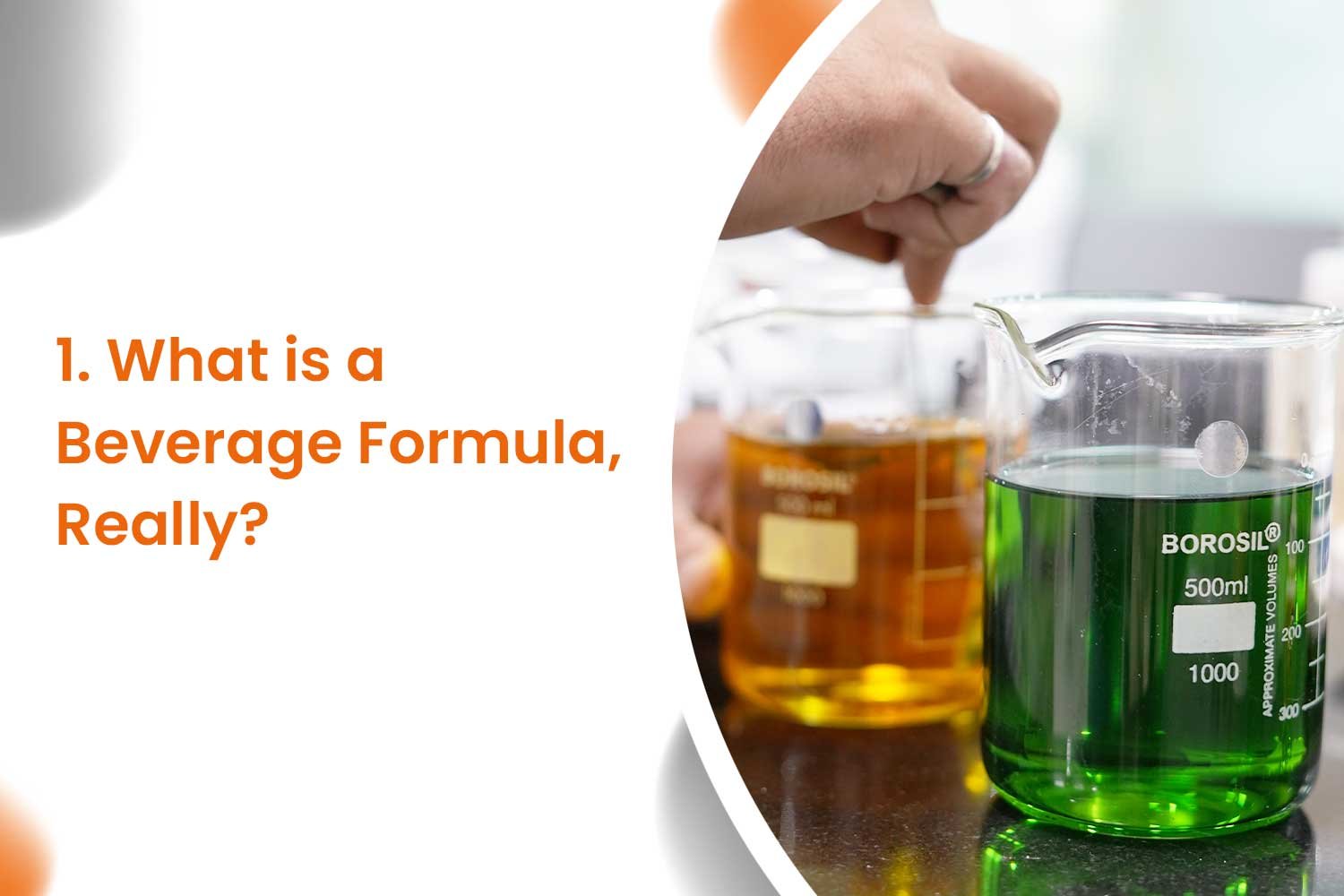
The real essence of your product is the perfect formula and beverage IP licensing. At its core, a beverage formula is your product’s recipe. It includes:
- List of ingredients
- Quantity of each
- Processing steps
- Flavors, aromas, and even color codes
This innovative beverage formula is your trade secret — it’s what makes your drink unique and gives your brand value.
Whether it’s a herbal energy drink or a plant-based protein beverage, your formula is the heart of your business. And like any valuable asset, it needs beverage formulation IP protection.
2. Who Owns Your Beverage Formula? Founder, Consultant, Or Manufacturer?
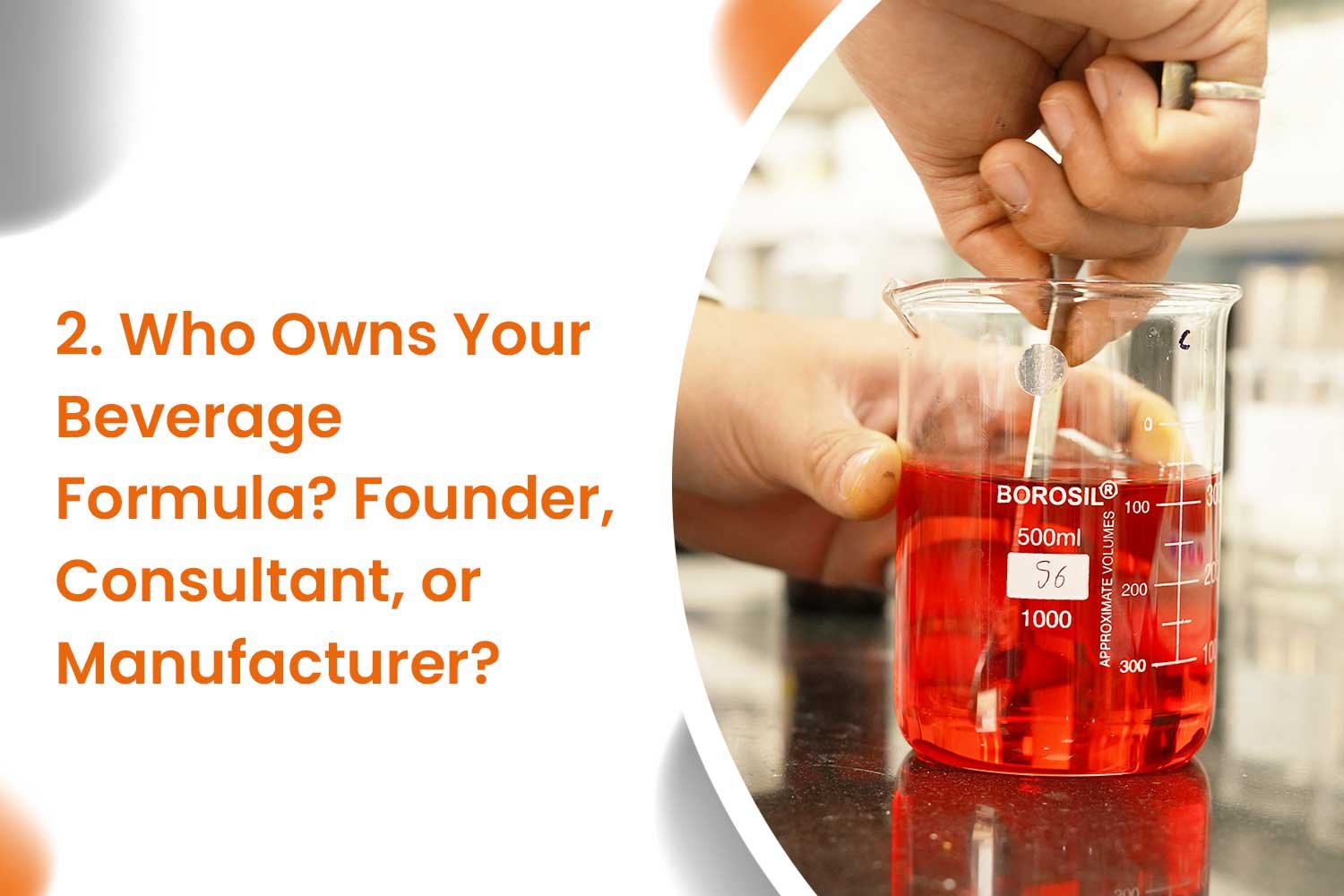
Beverage formula ownership depends entirely on how and by whom the formula was created— and most importantly, what agreements were signed (or not signed). Let’s break this down:
- You created it in-house: Great — your company owns the formula by default. But don’t leave it informal. Document everything. Store the final version securely. Make sure your employees or R&D team have signed confidentiality agreements to prevent any leakage. This is the most secure route for protecting beverage recipes.
- A consultant or formulation expert developed it for you: Here’s where it gets tricky. If no written contract includes a clear IP assignment clause, then legally, the consultant may own the formula — not you. Always include language that transfers full rights to your company. Without it, you risk losing control, especially if the product becomes a success.
- Your manufacturer created or refined it: Many startups outsource formulation refinement to their co-packer or contract manufacturer. But unless you’ve negotiated beverage IP licensing or full ownership transfer in your contract, they might legally retain rights to that version of the formula. Even if they only made minor tweaks, those improvements could legally be considered theirs.
3. How To Legally Protect Your Beverage Formula

There’s no one-size-fits-all IP registration for food and beverage formulas, but here are the tools you can use:
A. Trade Secrets (Most Common)
- Keep your formulation confidential.
- Use NDAs (Non-Disclosure Agreements) with everyone: consultants, co-packers, even your own team.
- Store the final formulation in a secure, limited-access format.
B. Copyright (Limited use)
- Protects how your formula is written/presented (e.g., in manuals or process documentation), not the formula itself.
C. Patent (Hard but possible)
- Only works if the formulation is truly novel and involves an inventive step.
- Often used for highly functional or health-driven beverages (e.g., probiotic drinks with unique processing).
Pro tip: Trade secrets are the most practical way to protect beverage formulas for most startups and mid-size brands.
4. Don’t Ignore Your Manufacturer Contracts

IP registration for food and beverage formulas is a must. Many beverage brands use third-party manufacturers (co-packers or contract manufacturers). Here’s what must be clear in your agreement:
- Who owns the final formula?
- Can they use or tweak your formulation for others?
- What happens if you end the partnership?
Include a Formulation Ownership Clause that clearly states:
“All rights to the beverage formulation, including any modifications, improvements, or iterations, belong solely to [Your Brand Name].”
Also, add non-compete and non-reverse engineering clauses to prevent misuse.
5. Licensing Your Beverage Formula: When And Why

Sometimes, instead of producing the drink yourself, you may choose to license your beverage formula to another company. This means they can manufacture and sell the drink, but only under your terms and conditions.
This is a great option for those who want to expand quickly without building production facilities or managing daily operations. Through beverage IP licensing, you retain control of the formula while allowing another party to use it commercially.
Benefits of Licensing:
- Faster expansion: Get your product into new markets without setting up factories.
- Earn royalties: Get paid per bottle or unit sold without producing anything.
- Keep beverage formula ownership: Stay in charge of your formulation while another company sells it.
- Minimize risk: You reduce the financial risk while still scaling your brand reach.
Key Licensing Terms to Include:
- Duration: How long can they use the formula?
- Territory: Where can they sell the product?
- Royalty or fixed fee: Agree on a percentage or amount per unit sold.
- Quality control: Set production and branding standards to protect your product image.
- Non-compete clauses: Prevent them from developing a similar product using your ideas.
Licensing works best when beverage formulation IP protection is already in place. This means your formula is documented, legally owned by you, and protected under NDAs or trade secret agreements.
Real Example:
A Pune-based herbal beverage brand developed a ready-to-drink Ayurvedic tonic and licensed it to a wellness resort chain across India. They agreed on a 5% royalty per bottle. The resort used its branding and formulation, while the original brand retained full ownership and control over any modifications. This helped the company expand its presence, build brand value, and earn steady income without building a new supply chain.
Another D2C startup in Bengaluru licensed its flavored sparkling water recipe to a retail chain. With clear clauses in place, they not only earned profit but also ensured their beverage formula ownership stayed intact.
6. Case Studies: IP Trouble & Smart Licensing
Case 1: IP Gone Wrong
A startup in Bengaluru hired a co-manufacturer to develop and bottle a unique flavored water. They skipped legal documentation. A year later, the manufacturer launched a near-identical drink under their own label. No legal recourse.
Lesson: Always have a formulation ownership clause and NDA in place.
Case 2: Smart Licensing for Growth
A Mumbai-based startup developed a protein drink and licensed it to a regional distributor. They earned royalties, kept brand ownership, and eventually scaled nationally with the help of the added revenue.
Lesson: Licensing can be a powerful growth tool if your formula is well-protected.
What Happens If You Sell Your Brand?
If your beverage brand is acquired, the formula is one of the most valuable assets. Make sure:
- It’s documented
- You have legal proof of ownership
- All past agreements with developers or consultants are clean
This ensures your IP adds value during due diligence and negotiations.
Conclusion: Protect First, Promote Later

In the world of beverages, taste matters — but ownership matters more. I hope that the question of Who Owns Your Beverage Formula? resolved now.
You might have the best drink in the market, but without proper IP protection for your beverage formula, it can be copied, sold, or taken away.
So before you market, pitch to investors, or hand over your formulation to anyone, lock down your legal rights. Your formula is your goldmine. Treat it like one.
Need help protecting beverage recipes or licensing your beverage formula? Our expert team guides startups, D2C brands, and food entrepreneurs through formulation IP, NDAs, and smart licensing.
Contact us at +91 8130404757 or get in touch for a free 15-minute consultation.
Frequently Asked Questions
Who legally owns a beverage formula developed with a consultant or formulation partner?
Ownership depends on the contract terms. If intellectual property transfer is not clearly defined, the formula may not legally belong to the brand, even if development costs were paid.
Can a brand lose ownership after sharing the formula with manufacturers?
Yes. Without strong confidentiality and usage clauses, manufacturers may legally reuse formulation knowledge, creating ownership and exclusivity risks.
Is a beverage recipe automatically protected by law?
No. Beverage recipes are not automatically protected. Legal ownership requires proper agreements, confidentiality controls, and intellectual property planning.
What documents are essential to secure beverage formula ownership?
Key documents include IP assignment agreements, NDAs, formulation contracts, and controlled access records for all formulation data.
Can someone legally recreate a beverage using common ingredients?
Yes, if the formulation is not protected. Legal protection comes from proprietary ratios, processes, and technical methods, not ingredients alone.
Is it safe to discuss formulation details with investors or advisors?
Only high-level information should be shared. Detailed formulation data should remain confidential unless legal safeguards are in place.
Does contract manufacturing affect beverage formula ownership?
Yes. If ownership and usage rights are not contractually defined, manufacturers may retain rights to formulation knowledge.
Are formulas developed by freelancers legally secure?
Only if contracts clearly transfer ownership to the brand. Without explicit clauses, freelancers may retain legal rights.
Can regulatory approvals expose a beverage formula?
If documentation is poorly structured, sensitive information may be exposed. Only mandatory data should be disclosed during compliance submissions.
What is the biggest formula ownership mistake beverage startups make?
Launching quickly without securing ownership rights, documentation, and long-term intellectual property protection.