The drink was good. The package was sharp. The brand story was good. But the drink was still a failure. After six months of launching the drink, it was delisted from the market, the co packer was pointing the finger at the formula, and the founder had no idea what had gone wrong.
Nielsen reports that over 85% of new consumer packaged goods fail in the marketplace. In terms of the beverage category specifically, it’s not as much about poor branding or distribution as it is about mistakes with the actual beverage formulation that were made long before it ever made it to a shelf. That’s where most beverage launches are won or lost, and most founders do not realize it until it’s too late.
Why Beverage Formulation Mistakes Are So Costly
The penalty for a mistake in the formulation of a beverage is especially severe because of compounding. A formulation error discovered early in a bench scale process may mean a few weeks and a few ingredients. A similar error discovered after operating a commercial scale process will mean the loss of everything: the batches, the shelf life, the claims, the complaints, and in some cases, a complete reformulation that means a delay for a brand’s next product altogether.
The bad news is that the majority of the beverage problems that occur during a production process or after a production process are preventable. They are not random acts of manufacturing chaos; they are the predictable result of formulation decisions that lacked sufficient technical rigor, or in many cases, weren’t made at all in the name of getting a product to market.
If you’re working on a new beverage or facing formulation challenges, it might help to get a second expert perspective before moving ahead.
Talk to a Beverage Expert →
Why These Formulation Errors Happen
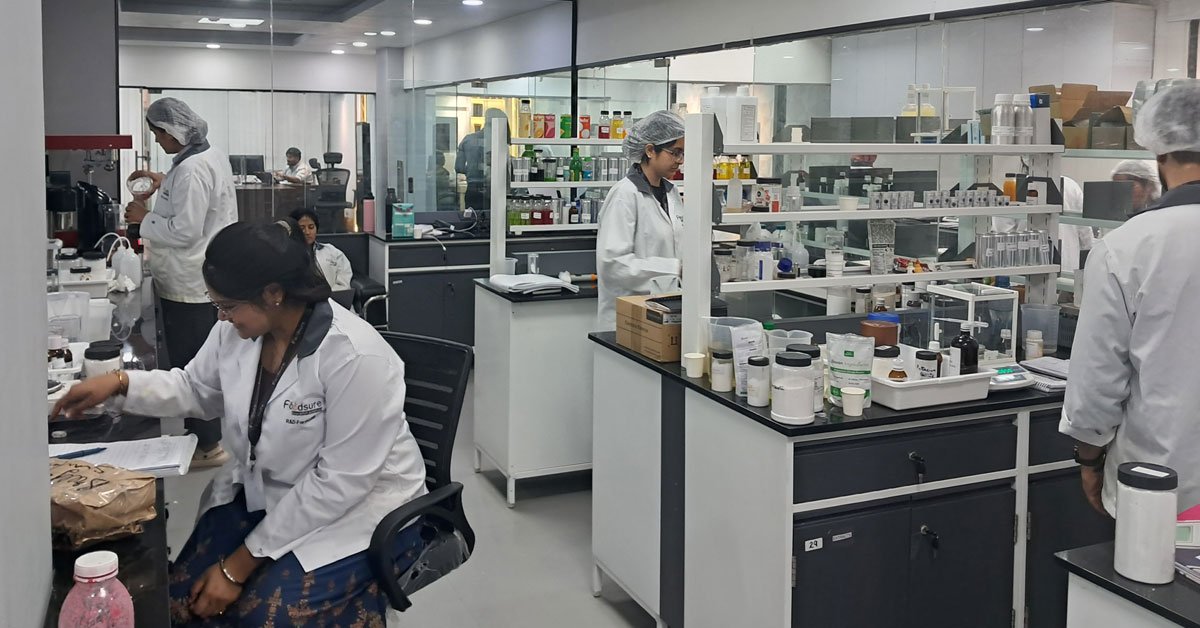
The majority of beverage founders are not food scientists. They know what they want their beverage to do, how they want it to taste, and who they want to sell it to. The difference between what they want and a beverage formula that works, is stable, and legal is where beverage formulation problems start.
The need to get it done in a hurry makes beverage problems more likely to occur. If a beverage founder is in a hurry to get it done in a particular deadline or a particular time window, stability tests are skipped, scale tests are skipped, and the beverage formula is done before it is stress tested. The beverage problems that haunt them later, from a lack of taste to sedimentation to shelf life failure to label approvals, all come from a shortcut in formulation.
The Environment That Creates Formulation Errors
- Lab scale formula provided to co packer without manufacture SOP developed or a pilot run done
- Shelf life assumed based on similar products without testing against the formula
- Health claims added to the label without validating the amount of active ingredient
- Sign off on the flavour without testing for room temperature conditions when the product will be consumed cold
- Sweetener system selected based on cost without testing for interaction with pH and preservative system
- Stability testing not done on the product under transport conditions or for temperature changes
- Co packer not selected until the formula is tested for compatibility with the co packer equipment
What Founders Experience When Formulation Goes Wrong
- The taste of the first batch of production is not the same as the sample that the co-packer approved , co-packer says it is the formula, founder says it is the co-packer
- The product separates or changes color after a few weeks of production, wrong assumption on shelf life
- The carbonation of the drink differs in the cans of the same batch, compatibility of the formula or equipment was never tested
- The label is rejected by the FSSAI because the health benefit cannot be substantiated with the dosage
- The flavor profile is not present or changes from tropical to medicinal by the third month , the interaction of the bioactives with the acid system was never considered
- The product is put on the shelf , the first order is rejected because the return rate goes through the roof
- The relaunch with the reformulation takes eight months; the time runs out on the runway
Helpful Guide:- Aerated Drinks Recipe Formulation: From Idea to Commercial Beverage Production
The 8 Most Common Beverage Formulation Mistakes
Mistake 1 : Skipping Stability Testing or Running It Too Short
Stability testing is not a joke. It is the only way of finding out if a formula will do what you want it to do over a given period of shelf life. The biggest mistake people make in making a beverage formula is not doing stability tests or doing accelerated tests for two to four weeks and expecting it to last twelve months. Flavours deteriorating, active ingredients disappearing, microbes growing, and physical instability such as settling out, separating, or changing color will all be detected by stability tests if they are done properly. They will be detected on the shelf if they are not.
Mistake 2 : Freezing the Formula Before Scale-Up Compatibility Is Confirmed
The same formula that works on a small lab scale will not work on a 1,000 liter production scale. The speed in which the mixture is done, how much time the solution spends on the heat exchanger, carbonation pressures, speed in which the fill lines are done, and so on, all play a role in the final product. One of the biggest mistakes that can be made in a formula is not doing a pilot batch to make sure the formula works in conjunction with the co-packer’s equipment. This leads to a final product in a co-packer batch that does not even come close to resembling the sample that was originally approved.
Mistake 3 : Choosing the Wrong Sweetener System
The sweetener selected is a taste issue when it is a formulation system issue. Different sweeteners have different responses to pH levels, preservatives, heat, and shelf life. Stevia at high levels causes a licorice taste in acidic drinks over time. There are stability issues with sucralose when using a hot fill process. High fructose syrups have a different character than sucrose in carbonated drinks. One of the most avoidable beverage issues is one of the most common: sweetener selection based on price or trend without evaluation of its performance through the entire formulation system.
Mistake 4 : Ignoring Ingredient Interaction
Beverages are not just a combination of individual ingredients. The entire combination of ingredients is important. Acids play a role in the perception of sweeteners, minerals play a role in the taste, some preservatives work with polyphenols, and proteins play a role in mouthfeel, which complements or counteracts other taste attributes. The problem of product failure because of interactions of ingredients is not an easy problem to recognize once the product has been launched. It is not something that will be seen on the label or the formula. It will only be seen in the glass. Recognizing interactions of ingredients in the process of formulating a beverage, prior to any bench work being done, is what prevents the majority of beverage formulation errors.
Mistake 5 : Getting pH Wrong
The only parameter that affects all other aspects of a beverage formula is pH. It affects taste, microbial safety, stability of ingredients, functionality of preservatives, and color. A high pH in a juice based beverage creates a microbial problem. A low pH in a protein based beverage causes precipitation. It must be tested against a complete formula, not just itself, and it must survive processing and shelf life.
Mistake 6 : Under-Dosing Active Ingredients to Fix Taste
With regard to functional and nutraceutical beverages, one of the most costly formulation blunders is reducing the amount of the active ingredient contained within a product because it tastes bad at the effective dose. The end result is a product with a health claim on the label, but a reduced amount of the active ingredient contained within the bottle. A taste issue with active ingredients is a challenge that must be overcome within the formulation design phase. Determining the flavor system, form of ingredients, and masking technique are part of the solution. Cutting the amount of the active ingredient is not a solution.
Mistake 7 : Not Accounting for Packaging Compatibility
The formula and the package are not two separate decisions. Flavour compounds work with PET over time and result in off notes. Acids extract minerals from the can linings. Carbonated beverages require validation based upon the amount of CO2 and internal pressure of the formula. It is not a good practice to validate the package before the formula or the other way around. It generates beverage problems weeks or months down the road, which is very costly to correct in the field.
Mistake 8 : Treating Compliance as the Last Step
The issue of FSSAI compliance, declaration of ingredients, substantiation of health claims, declaration of allergens, and accuracy of the nutrition panel is not something that can be done towards the end of the product development process. In fact, brands who do their FSSAI compliance towards the end of the project will always find that the
key ingredient of the beverage formulation is not compliant, or the health claim of the beverage formulation cannot be substantiated, or the label needs a reformulation.
Building in the requirement of FSSAI compliance in the formulation brief from day one eliminates all beverage formulation errors of this type.
| Formulation Mistake | When It Shows Up | Cost of Discovery |
| Skipped stability testing | Months 2 to 4 on shelf | Full batch recall or relaunch |
| No scale up pilot trial | First commercial run | Wasted production cost |
| Wrong sweetener system | Consumer complaints post launch | Reformulation and relabelling |
| Ingredient interaction ignored | Sensory shift > shelf life | Brand trust damage |
| Invalid pH | Microbial or protein issue on shelf | Recall and regulatory action |
| Active ingredient under dosed | Label compliance review | Legal exposure + reformulation |
| Packaging incompatibility | Weeks to months post filling | Full packaging change |
| Compliance left to last | Label approval stage | Launch delay of months |
What Good Formulation Process Actually Looks Like
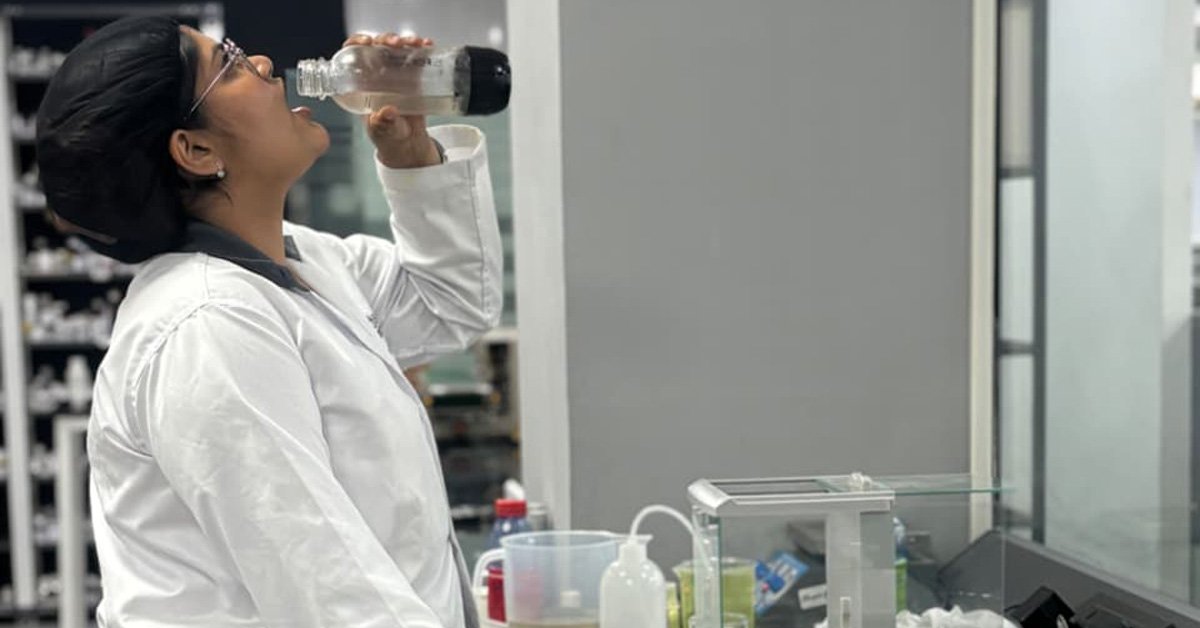
The best way to avoid beverage formulation failure is to consider the beverage formulation as a system rather than a recipe. A system has inputs that are well understood, interactions that have been checked, outputs that have been tested, and compatibility with the manufacturing process and package form that has been checked. Each decision regarding the ingredients has a corresponding check further down the line. Each step is checked against the stability of the beverage formulation.
Compliance is a consideration that is built in from the initial brief rather than something that is checked at the end. This is not a slow or costly approach when done from the outset; it is a slow and costly approach when done when the launch has failed.
Helpful Guide:- Custom Drink Formulation Cost in India
How Foodsure Catches Formulation Errors Before They Reach Production
The Foodsure formulation approach is based on the elimination of beverage formulation failures before they become a problem in either production or the market. Every project starts with a review of the compatibility of the ingredients, a stability and processing risk assessment, and a compliance brief, before a single bench trial is run. The results are not generating new problems; they are validating a formula that is designed to work.
We’ve seen it all like sweetener acid incompatibility that causes a change in taste at the 3 month mark, carbonation loss from a package selection that does not match the formula’s CO2 spec, and health claims that cannot be substantiated because the dosage form was reduced to solve a taste issue. We understand where the problems are because we’ve worked through all of them. That is what beverage formulation services are supposed to do , give you a formula, yes, but a formula that will survive scale up, shelf life, and the market.
The One Thing Founders Need to Understand About Formulation
Every mistake made in the formulation of each drink on this list could have been avoided before production. None of the mistakes on this list can be avoided after production for a low cost. The successful founders who got it right were not luckier or better funded than the unsuccessful founders who got it wrong. The only difference is that the successful founders recognized the importance of formulation as a technical discipline worthy of the same level of rigor as any other discipline in the business.
Formulating your drink is not the glamorous work of building a beverage brand. But it is the work that determines whether everything else you are doing is worth doing.
Top Trending Blog:- Focus Drink Contract Manufacturing for Modern Brands in 2026
Avoid Costly Beverage Formulation Mistakes
Small formulation errors can lead to failed batches and delayed launches. Fix them before production.
Avoid rework. Save cost. Launch faster.
FAQ’s (Frequently Asked Questions)
Q1. What are the most common beverage formulation mistakes that cause product failure?
The most damaging are skipping stability testing, ignoring interactions between ingredients, getting the pH wrong, and leaving compliance until the last stage.
Q2. Why do most new drink brands fail before or shortly after launch?
The most common reasons for failure are formulation mistakes made during development, not branding or distribution, that are only revealed after production or on the shelf.
Q3. What formulation errors cause taste to change after launch?
The sweetener acid interaction, instability of ingredients over shelf life, and migration of active ingredients into packaging are the most common reasons.
Q4. How can beverage issues like sedimentation or colour change be prevented?
The cost of failure includes waste generated in production batches, reformulation of products, delay in relaunch, and damage to brand reputation, which is not easily recoverable.
Q5. What does product failure due to beverage formulation mistakes cost a brand? This can be achieved by conducting appropriate stability tests, pH validation, and ingredient compatibility tests before finalizing the formula for production.