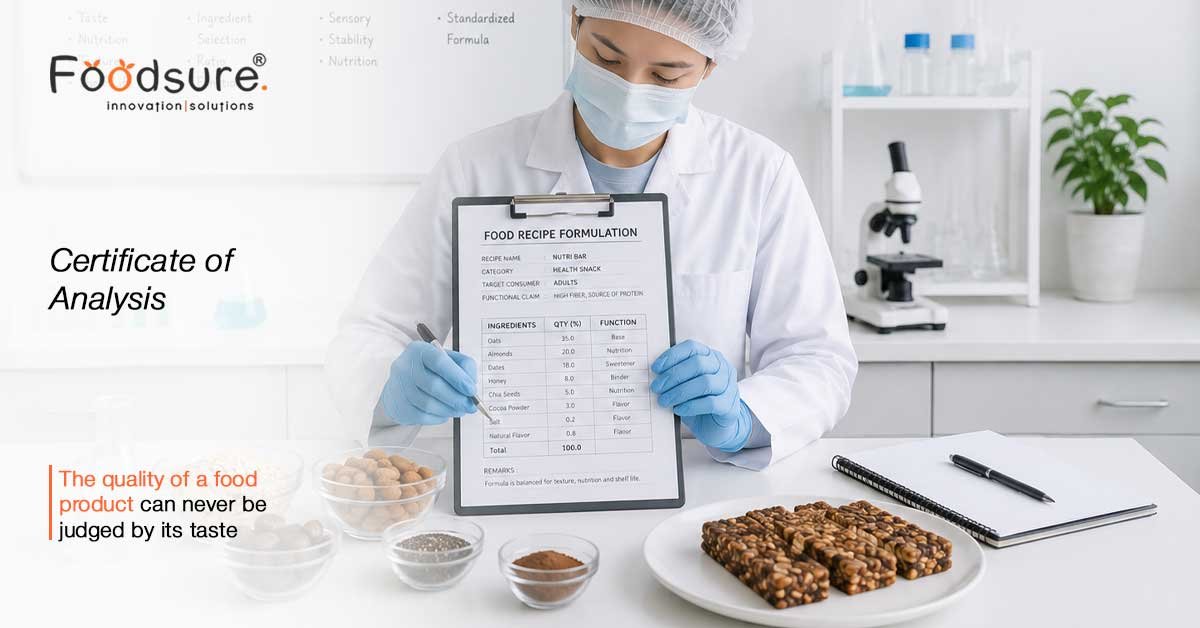
The quality of a food product can never be judged by its taste, texture or packaging alone. The quality of any food product must always be proved, and here comes the need for certificate of analysis.
This is basically a written document (physical or virtual) which is used to prove that a certain food product has been subjected to tests according to certain quality parameters. Such a certificate is used as a technical record sheet which proves that a certain food product has been tested for all quality aspects before it is introduced into the market.
The Certificate of Analysis (COA) will be essential for your understanding if you intend to start your business operations with packed snacks, health foods, beverages, spices, as well as foods in the category of nutraceuticals.
Why Certificate of Analysis (COA) Matters in Food Manufacturing
A COA is usually issued after the testing procedures have been done in the lab. The COA will include the results obtained from the tests conducted on the batch together with the comparison between the results and the set standards. These standards may include microbial levels, water content, pH values, heavy metal presence, purity, and shelf-life indicators, among others.
In simple terms, once someone inquires about proving the authenticity of their product, then COA becomes one of the best proofs that you can have.
This becomes even more critical for Indian brands, especially in light of the selective nature of the market. The modern-day retail chains, exporters, contract manufacturing, and knowledgeable consumers all demand high levels of documentation. While the packaging may look like it is ready for market release, without proper documentation from testing, there would be failures at many points along the way.
How Certificate of Analysis (COA) Supports COA Food Manufacturing Systems
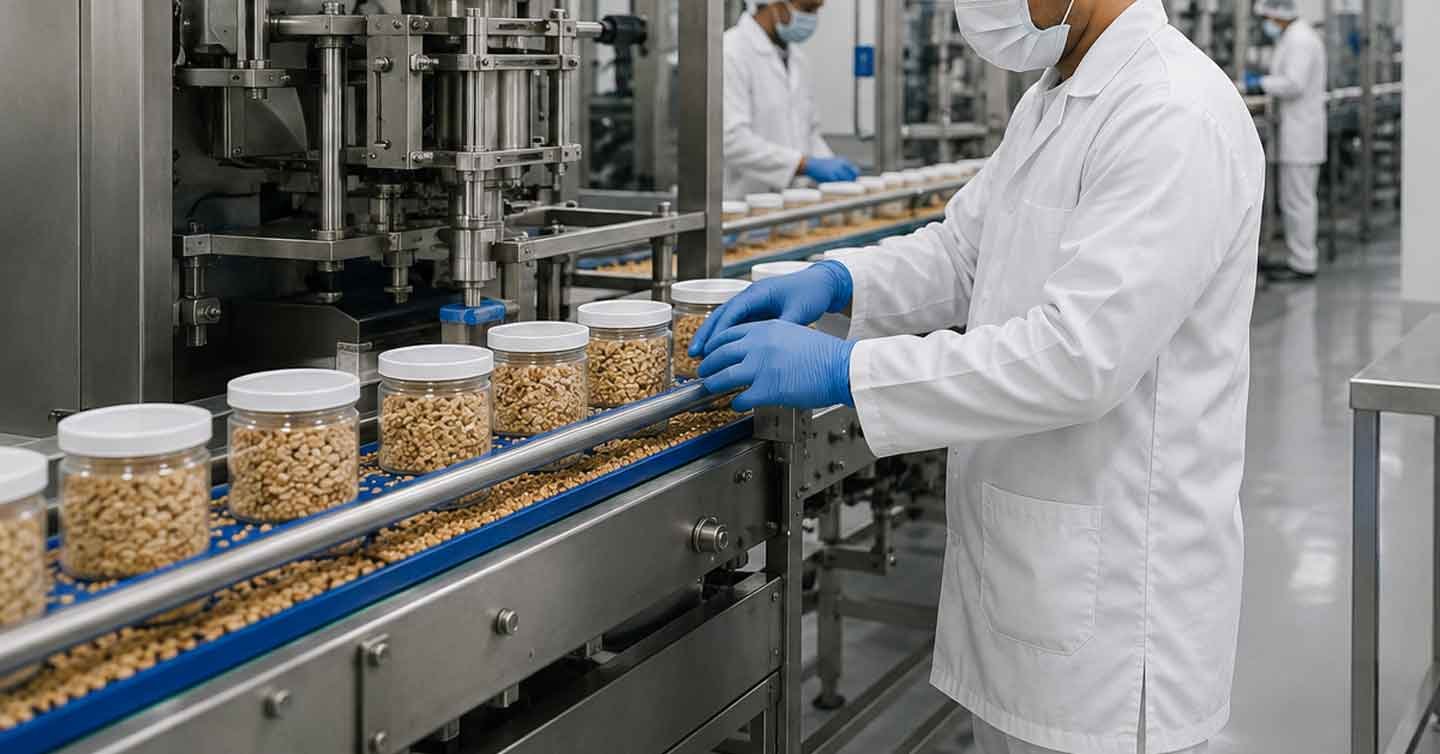
COA-effective methods for food manufacturing include the use of batch-based controls on quality. This means that every batch during manufacturing should be tested and documented. The certificate of analysis helps to prove that the food being produced adheres to the desired formulation and quality specifications.
It falls perfectly within those sectors where uniformity is important. Such sectors include:
- The protein snacks should comply with nutritional claims.
- The sauces and condiments should comply with microbial counts.
- The spices should comply with moisture contents.
- The functional foods should comply with label information.
If no food analysis certificate exists, it means that the company is just making a guess and not relying on facts.
What Certificate of Analysis (COA) Usually Includes
A typical Certificate of Analysis (COA) used in food manufacturing could consist of:
- Name of product
- Batch identification number
- Manufacturing date & expiration date
- Description of sample
- Parameters tested
- Testing method
- Specified/acceptable limits
- Obtained results
- Pass or fail verdict
- Signatures of lab/quality team
It becomes far more than just a piece of writing. It becomes a practical report on food quality testing that pertains to a certain batch of products.
If we test a batch of ready-to-drink beverages, we can have parameters such as pH, total plate count, yeast and mold, appearance, taste, and package integrity. However, if we test a batch of snack powder, we will test for moisture, microorganisms, and ingredient checks.
Why Certificate of Analysis (COA) Helps Indian Food Brands Build Trust
Trust emerges as one of the key concerns in the food industry. The new firm can claim about its attractive packaging and the right products that fit the market needs; however, the problem of trust regarding the safety and quality of its products arises. This is where the Certificate of Analysis (COA) comes in.
Its advantages include:
First of all, COA makes it possible to conduct stringent quality control in-house. Workers tend to be more careful because their performance is being monitored.
Furthermore, it is highly important to mention that COA comes into play when talking about B2B problems. Wholesalers, retailers, and other business partners ask for testing certificates before selling products to the customers.
In addition, COA ensures that the manufacturer can avoid complaints on the market by checking the problem at the batch level.
Fourth, it builds credibility for the brand. The food lab test certificates are proof that the brand is concerned about quality, not merely the marketing side.
In an intensely competitive environment like India, this credibility can mean business.
Certificate of Analysis (COA) and What Is COA in Food Compliance
There are numerous founders who question why COA in food is essential when the product itself is already packed with an FSSAI label on it.
It is because the packaging process does not always guarantee the quality of the food product inside it.
FSSAI compliance could include issues concerning labeling, declaration, and other regulatory issues, but the COA serves to confirm that the particular batch meets required standards. It means that it has undergone some tests.
In circumstances whereby there is manufacture through private labels or contract manufacturing, the COA becomes very crucial because the label owner will need to make sure that the manufacturer is providing products per specifications.
When Indian Food Brands Need Certificate of Analysis (COA) the Most
The COA will play a key role in the following situations:
- During onboarding process for the retail/marketplace
- In working with third parties or manufacturers under contract
- During export processes or identification of international buyers
- For launch of products which make health/purity claims
- During handling of consumer complaints/batch analysis
In addition to assisting the founders in their startups to design more effective backend infrastructure for their products, this can help them develop proactive approaches to quality management rather than adopting reactive methods whenever a problem arises.
This is the exact reason why businesses have turned to COA as a critical step prior to launching their products.
Key Takeaways on Certificate of Analysis (COA)
- It shows the quality of food in batches.
- It helps buyers and sellers trust each other.
- It lowers the risk of not following the rules.
- It makes manufacturing control stronger.
- It helps brands grow in a responsible way.
Foodsure Takeaway on Certificate of Analysis (COA)
It is normal for Foodsure to observe that there are many times when food products will have to ensure that they are paying keen attention to aspects such as package design and brand image when venturing into the market but do not consider backend documentation an important thing.
It is essential to note that having a quality Certificate of Analysis (COA) ensures that the whole process becomes much easier for the brand since the whole cycle starting from formulation and testing all the way to production becomes much easier.
Conclusion: Certificate of Analysis (COA) Is Not Just a Document
The Certificate of Analysis (COA) is not only an important document that has to be archived. In fact, it can be regarded as one of the most important quality documents that one may possess within the framework of food manufacturing industry. The COA shows how high the quality level of the batch is, guarantees the purchasers, and prepares a brand for future growth.
With regard to the tough competition in India, a brand will never win relying on its branding only. It takes proof, procedure, and consistency – these are exactly what effective COA management ensures.
This is the best way to start with your food brand when considering a product launch or developing your quality systems in your products. If you have the right formula, testing procedures, and documentation, your food brand will grow quickly with no quality issues.
FAQs on Certificate of Analysis (COA)
- COA in Foods stands for what?
The COA in foods represents the document that contains test results of the food lots according to quality criteria.
- Why is COA important for food products?
The COA in foods refers to a certificate which assures the quality and safety of the product before delivery to the customers.
- Are there any differences between a food quality test report and a COA?
The food quality test report can cover all tests conducted, but the COA is a formal report usually associated with batch data.
- When do I need a food lab test certificate for my products?
You will need it at the launch stage of your product, when you are retailing your products, when you are discussing the exportation of your products, and at the manufacturing stage.
- How will using COA in food manufacturing benefit my brand?
Using COA in food manufacturing will improve your capability of managing batch sizes and reduce mistakes.