For decades, milk has been promoted as the ultimate solution for meeting daily calcium needs and has long been considered one of the most common calcium rich foods. The common advice has always been simple: drink milk to build strong bones. However, modern nutrition research and changing dietary habits are revealing a different story. Many people today do not tolerate milk well, do not consume it regularly, or fail to absorb the calcium it contains effectively.
As a result, calcium deficiency remains common even among dairy consumers. This highlights the growing importance of exploring a wider range of calcium rich foods and identifying multiple sources of calcium in food beyond milk. By understanding how the body absorbs calcium and including different types of calcium providing food, both consumers and food brands can make smarter nutritional choices and develop better health-focused products.
Want to optimise your Food Business? Request a free consultation!
Food Product Development Services – Click Here
Why Relying Only on Milk Isn’t Enough
Milk can certainly be a useful calcium source, but it is not suitable for everyone.
A large portion of the global population experiences lactose intolerance, making regular dairy consumption uncomfortable or even impossible. In such cases, relying solely on milk limits access to essential nutrients.
Even among individuals who drink milk daily, calcium absorption may still be low. The body’s ability to absorb calcium depends on several factors including:
- Vitamin D levels
- Gut health
- Overall diet quality
- Nutrient balance
Modern diets also rely heavily on highly processed foods that are often low in micronutrients. Over time, this imbalance can contribute to calcium deficiency, leading to health issues related to bone strength and muscle function.
This is why nutrition experts encourage people to explore diverse sources of calcium rather than depending on a single dietary source.
Signs Your Body Is Craving More Calcium
Calcium deficiency often develops gradually and may not show obvious symptoms at first. However, several early indicators suggest that the body may need more calcium rich foods.
- Tiring easily: Low levels of calcium also can disrupt muscle function and nerve communication, which typically results in feeling overtired or weak even when you get plenty of rest and eat sufficient calories.
- Weak bones or nails: Brittle nails and chronic joint pain are typical symptoms that the daily calcium intake is not being met regularly.
- Muscle cramps: Calcium directly influences the processes of muscle contraction. With a decrease in its concentration, cramps and spasms occur more often, especially after training.
What this really means is that the absorption of calcium is equally as important as the intake of calcium. Source, combination with other nutrients, and overall diet all influence how efficiently the body utilizes it.
Powerful Calcium-Rich Foods Beyond Milk
Milk is the only option. Let’s break down other calcium-rich foods that quietly do a lot of heavy lifting.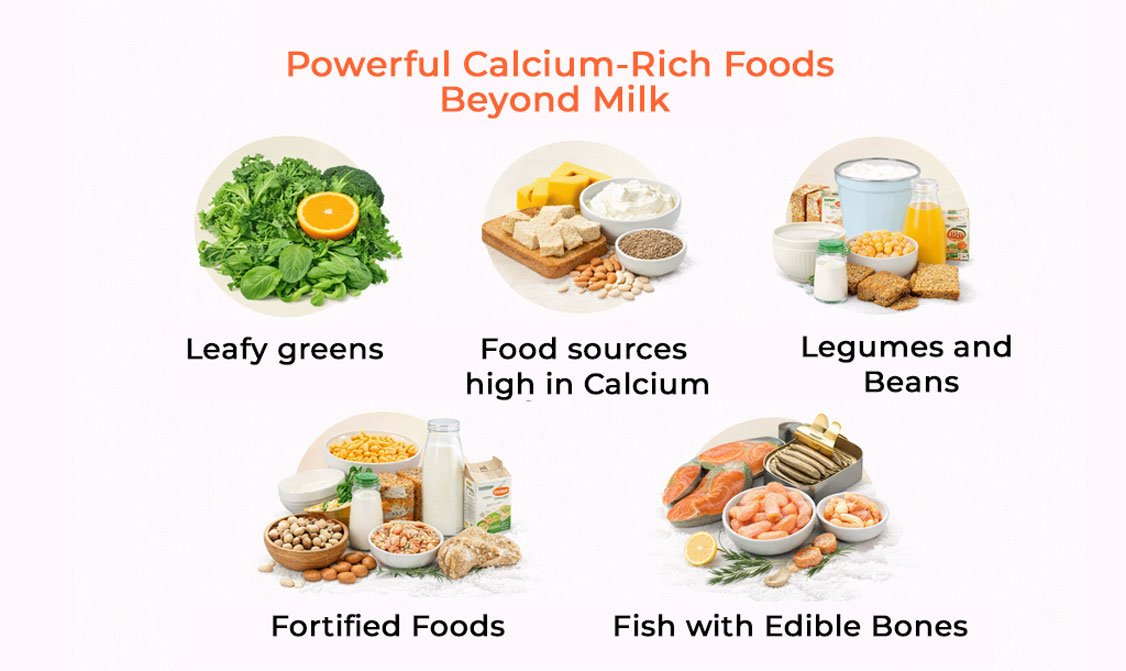
Leafy greens
Vegetables like kale and bok choy are surprisingly strong calcium sources. They also come with magnesium and vitamin K, which support bone health and improve how calcium is utilised.
Food sources high in Calcium
Chia seeds and sesame seeds are high in calcium and are a great way to add calcium to a person’s diet. They can be added to food such as baked goods, snack foods, and nutrition bars, making them a good source of calcium in a product formulation.
Legumes and Beans
Beans and legumes think of chickpeas, lentils, and white beans—have a lot of calcium. They also contain protein and fiber from plants, which helps keep you satisfied. This keeps you satisfied and helps with health instead of a quick solution.
Fortified Foods
Fortified offerings, such as plant-based milks, breakfast cereals, and flours, increase calcium intake. If executed properly, fortified offers a solution for brands when it comes to consistency and scalability.
Fish with Edible Bones
Edible Smoked salmon and sardines are characterised by their soft bones, which can be eaten and increase calcium levels. They both contain vitamin D, which is an important collaborator in calcium. If you need assistance in designing calcium-enriched products to meet your customers’ demand, get in touch with a nutrition specialist from us.
Quick comparison of calcium sources
| Food Source | Approx. Calcium Benefit | Key Advantage |
|---|---|---|
| Leafy Greens | Moderate | High nutrient synergy |
| Seeds & Nuts | High per gram | Easy for food formulation |
| Legumes | Moderate | Protein + fiber combination |
| Fortified Foods | Controlled | Consistent calcium levels |
| Fish with Bones | High | Excellent absorption |
You May Also Like: High-Protein Snacks Development
How Brands Can Leverage Calcium-Rich Foods
For food startups and nutrition-focused brands, calcium-rich foods present a powerful opportunity for product innovation.
Modern consumers increasingly seek non-dairy nutritional products that support bone and muscle health. This demand has created strong market potential for:
- Functional foods
- Fortified snacks
- Plant-based nutrition products
- Clean-label fortified staples
However, successful food formulation goes beyond simply adding calcium.
To improve effectiveness, formulations should also include nutrients that support calcium absorption, such as vitamin D and magnesium. This approach enhances both the nutritional value and consumer credibility of the product. Clean-label transparency is also essential. Today’s consumers want to clearly understand the calcium sources used in the products they consume.
Brands that combine strong nutritional formulation with clear communication can build greater trust and long-term customer loyalty.
Final Words
Need Help Developing Calcium-Rich Food Products?
Foodsure supports startups and FMCG brands in developing safe, effective, and market-ready
calcium-rich food products. From ingredient selection to formulation and scaling,
we help you build nutrition-focused products that meet consumer needs and regulatory standards.
Why 500+ Brands Choose Foodsure
- Calcium-rich food formulation and R&D support
- Ingredient sourcing and bioavailability optimization
- Fortification strategies for dairy & non-dairy products
- FSSAI compliance, nutrition labeling, and claims guidance
- Shelf-life testing, stability studies, and pilot trials
- Packaging, scale-up, and commercialization support
Who We Work With
- D2C brands launching calcium-fortified foods
- FMCG companies expanding nutrition product portfolios
- Plant-based and dairy alternative brands
- Health, wellness, and functional food startups
- Export-oriented brands requiring compliant formulations
Book a Free Consultation
Get expert guidance on developing calcium-rich and fortified food products.
Our team will help you with formulation, compliance, scaling, and manufacturing.
Frequently Asked Questions
What food is highest in calcium?
Sesame seeds are one of the richest natural sources of calcium.
How to get 100% of daily calcium?
You can meet your daily calcium needs through calcium-rich foods or supplements when required.
Which fruits are rich in calcium?
Oranges are among the fruits that contain a relatively good amount of calcium.
How can I increase my calcium fast?
Calcium intake can be increased through calcium-rich foods and supplements taken along with vitamin D.
What drink is high in calcium?
Milk is one of the most common and easily available calcium-rich drinks.
What are the early signs of calcium deficiency?
Muscle cramps, weakness, and fatigue may be early signs of low calcium levels.
Which vegetables have calcium?
Leafy greens such as kale, spinach, and moringa leaves contain calcium.