When people select functional drinks for their needs, they must first evaluate which of the two options, carbonated vs. Non-carbonated functional drinks, better fits their business needs. The two formats provide separate advantages because they attract different customer groups and require distinct product development methods. The product development process requires you to understand how carbonated beverages and non-carbonated beverages differ from each other.
What Are Functional Drinks?
Functional drinks, which people call functional beverages, function as non-alcoholic beverages that provide health advantages beyond their basic ability to hydrate and provide nutrition. These beverages, which contain additional functional ingredients, create a regular wellness solution that people consume throughout their day.
The answer to the question about what is non carbonated drinks are in this category explains that they function as special drinks that lack carbonation, together with their five specific health advantages.
The answer to this question requires us to investigate the specific components that drive drink popularity within current market conditions.
FORMAT STRATEGY CONSULTATION
Unsure Which Format Suits Your Functional Drink?
We evaluate ingredient compatibility, carbonation impact, shelf-life stability, packaging feasibility, and commercial cost before you commit to production.
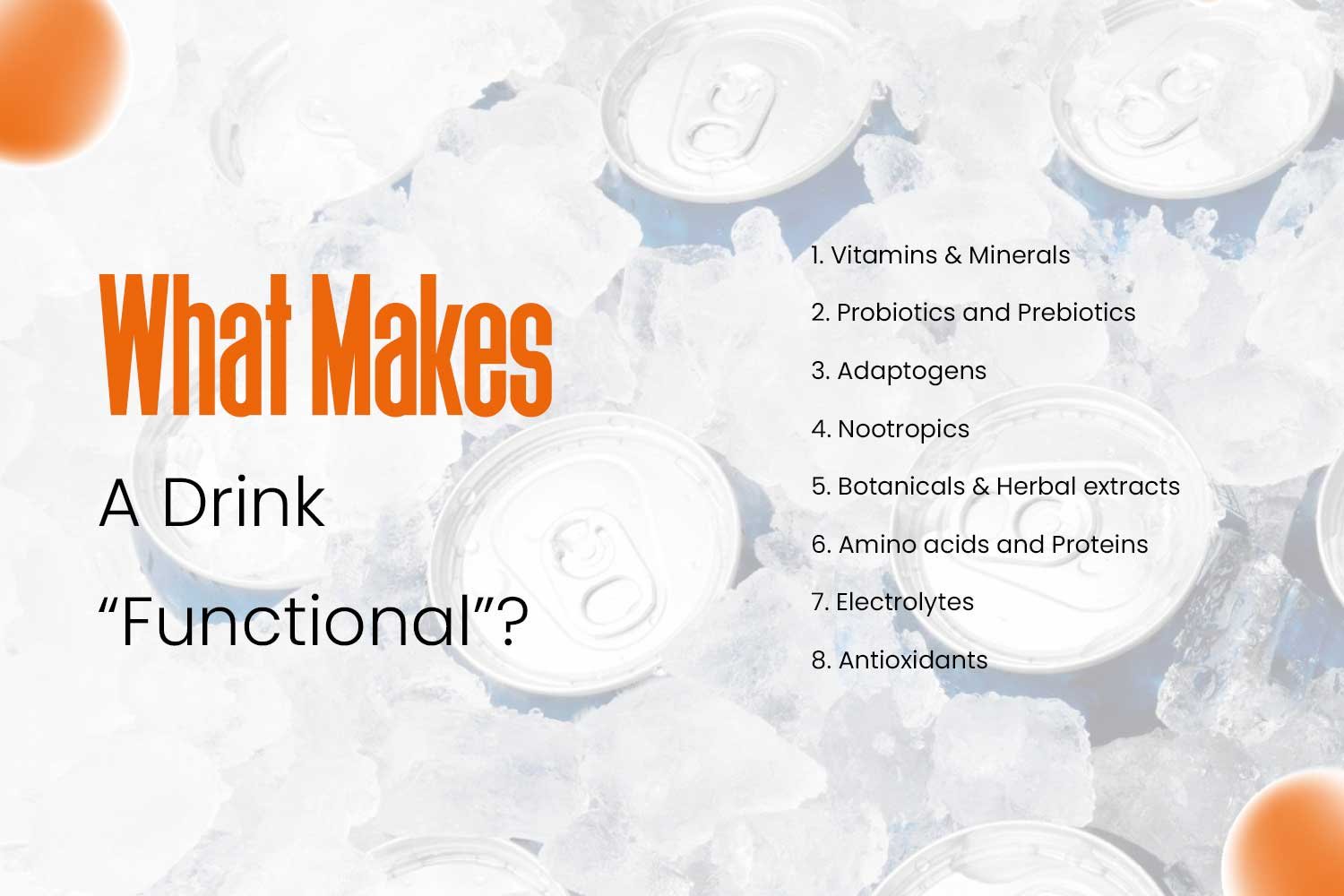
What Makes A Drink “Functional”?
The term “functional” comes from the bioactive components these beverages contain, which create specific biological effects in the body. The components of these drinks enable people to identify non-carbonated beverages and carbonated functional drinks as different products from standard hydration options.
The active ingredients of a functional beverage determine its effectiveness for your projects, which include developing non-carbonated drinks and sparkling formulations and creating a non-carbonated soft drinks list.
Key functional ingredients include:
- Vitamins & Minerals: Found in fortified juices, energy drinks, and yoghurt-based drinks
- Probiotics & Prebiotics: Kombucha, kefir, and fortified gut-health beverages
- Adaptogens: Ashwagandha, ginseng, reishi, and rhodiola for stress support
- Nootropics: L-theanine, ginkgo biloba, and certain amino acids for cognitive performance
- Botanicals & Herbal Extracts: Chamomile, turmeric, and plant-based actives
- Amino Acids & Proteins: Protein shakes and collagen drinks
- Electrolytes: Sports drinks and electrolyte-infused waters
- Antioxidant: Green tea, berry smoothies, and grape juice
The ingredients can be used to create both carbonated beverages and non-carbonated drinks since the final product depends on the mouthfeel and shelf stability requirements and customer preferences.
Recommended Reading: What Makes a Beverage Truly Functional? Breaking Down 5 Levels of Ingredient Purpose
Carbonated Functional Drinks
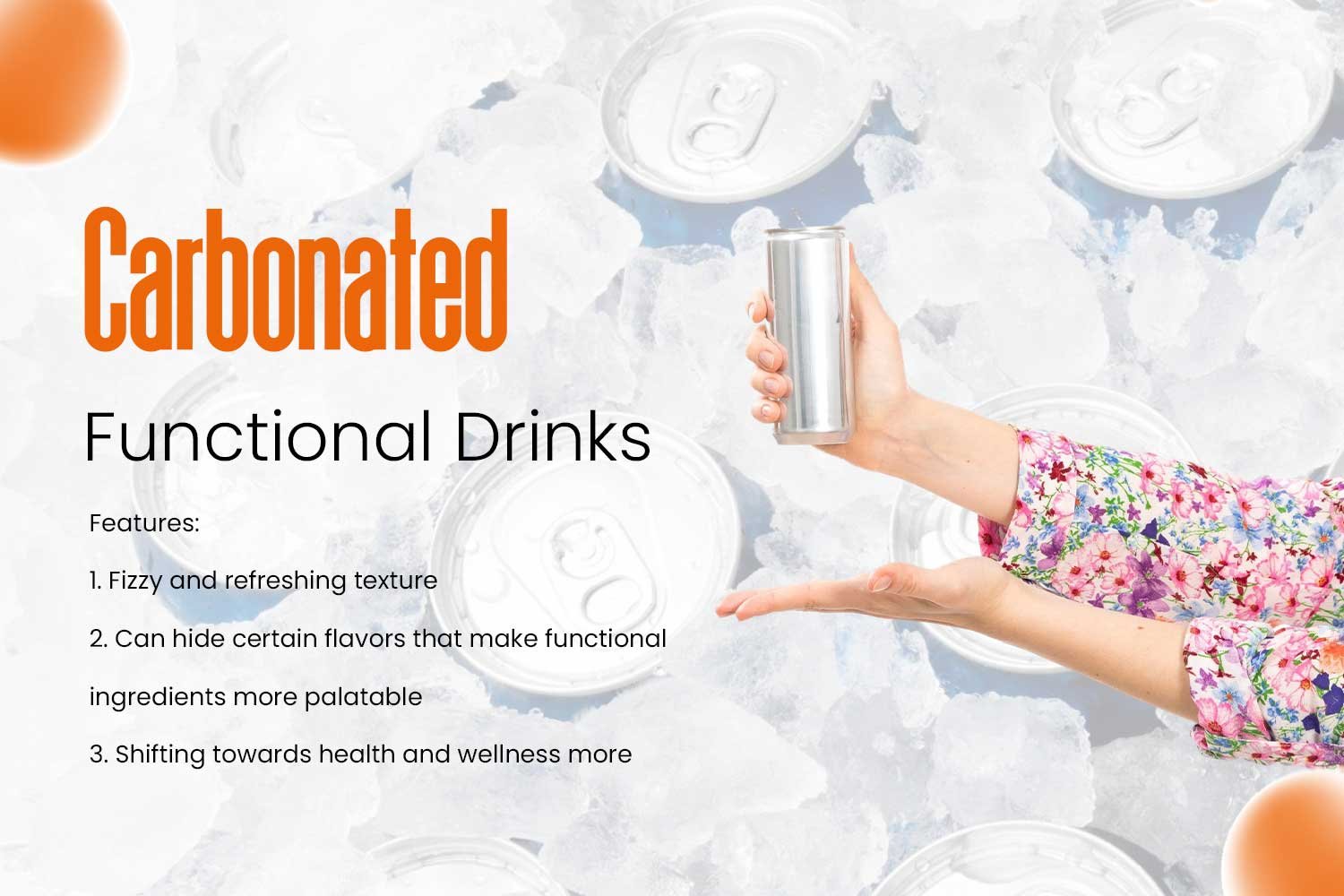
The carbonated functional drinks use carbon dioxide to create their distinctive sparkling effects. The drinks contain health-oriented components that create a refreshing sparkling effect that makes them more appealing than standard sodas in the carbonated vs non-carbonated functional drinks market.
Features:
- The product delivers a refreshing experience through its fizzy texture.
- The product helps to conceal the unpleasant taste of its functional components.
- The product emphasises its health advantages through strong marketing efforts.
Examples:
- Kombucha
- Sparkling botanical sodas
- Prebiotic and nootropic sodas
- Sparkling protein water
Various companies create these products through carbonated beverage contract manufacturing in India or establish their brand through private label sparkling water India distribution methods.
Non-Carbonated Functional Drinks
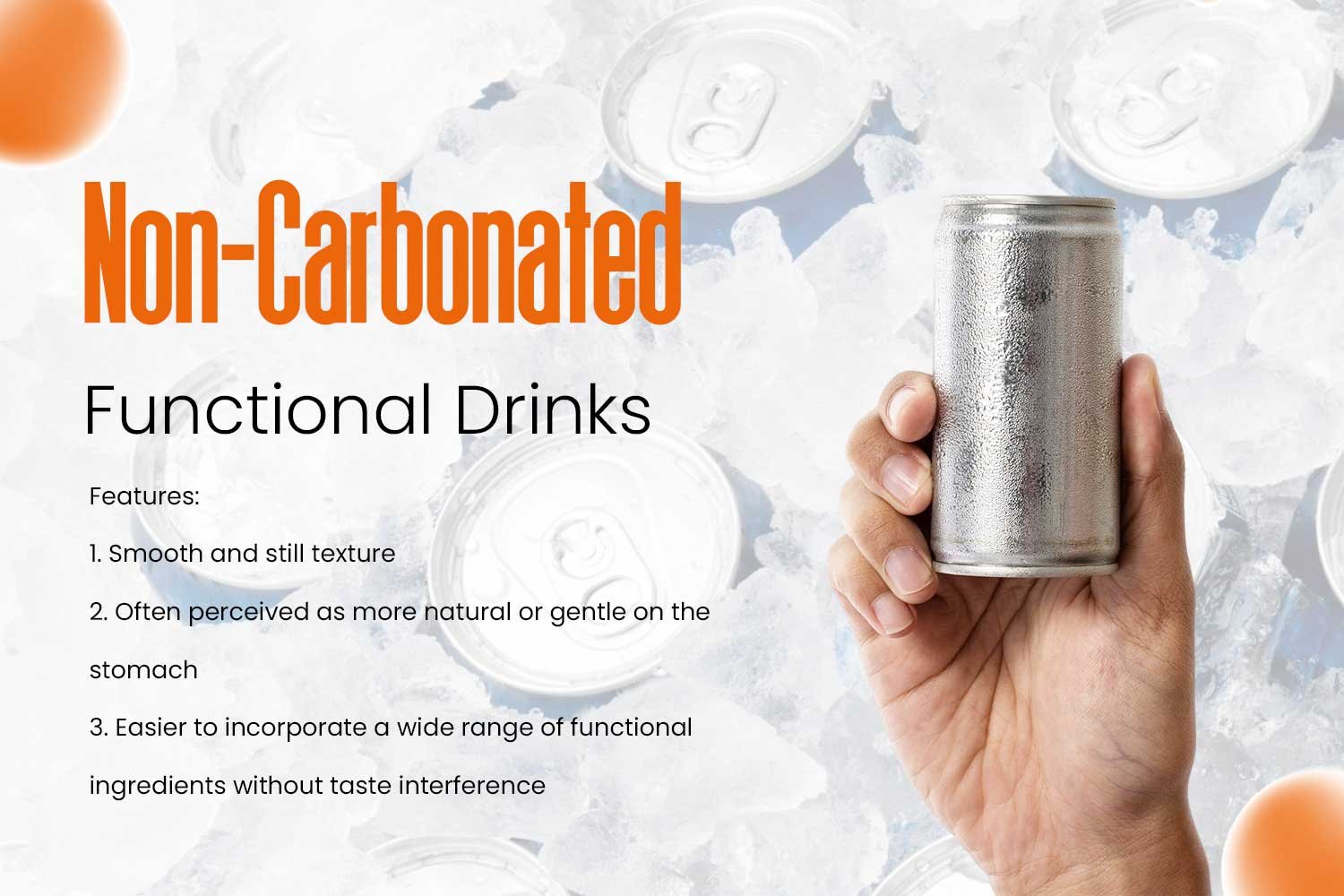
Non-carbonated functional beverages are created through the process of making drinks without any extra carbonation, which results in a drink that provides customers with a smooth and continuous drinking experience. The non-carbonated beverages of this category include enhanced waters, herbal teas, smoothies, protein shakes and classic sports drinks.
The brands that seek to understand what non-carbonated drinks function as non-carbonated beverages, which contain no bubbles except for their products, which they promote as gentle, natural and simple to use.
Features:
- The product offers a completely smooth experience, which maintains its stillness throughout.
- People believe that this product offers more natural benefits, which customers find easy to digest.
- The system enables users to add multiple functional components without altering the fundamental taste of their existing product.
Examples of non-carbonated drinks:
- Flavoured or enhanced waters
- Herbal infusions (chamomile, ashwagandha, tulsi)
- Protein and meal replacement shakes
- Cold brew coffee with added functional benefits
These formats are widely used in non-carbonated energy drinks and hydration-focused product lines.
Difference Between Carbonated & Non-Carbonated Functional Drinks
The comparison table shows how carbonated beverages differ from non-carbonated beverages. The functional drinks category presents a clear distinction between carbonated drinks and non-carbonated drinks.
| Feature | Carbonated Functional Drinks | Non-Carbonated Functional Drinks |
|---|---|---|
| Texture & Mouthfeel | Fizzy and refreshing | Smooth and still |
| Consumer Appeal | Popular among younger consumers who enjoy lively drinks | Preferred by health-conscious consumers |
| Taste & Ingredients | Carbonation helps mask strong or unusual flavours | Works well with subtle, light, or natural flavours |
| Shelf Life | Often longer due to carbonation support | Varies by formulation; sometimes shorter |
| Packaging | Typically, in pressure-resistant cans or bottles | Bottles, Tetra packs, or pouches |
| Common Health Add-ins | Suitable for probiotics, prebiotics, and nootropics | Ideal for adaptogens, proteins, electrolytes, and vitamins |
| Rules & Regulations | May face additional taxes or regulatory considerations in some markets | Generally, fewer carbonation-related compliance concerns |
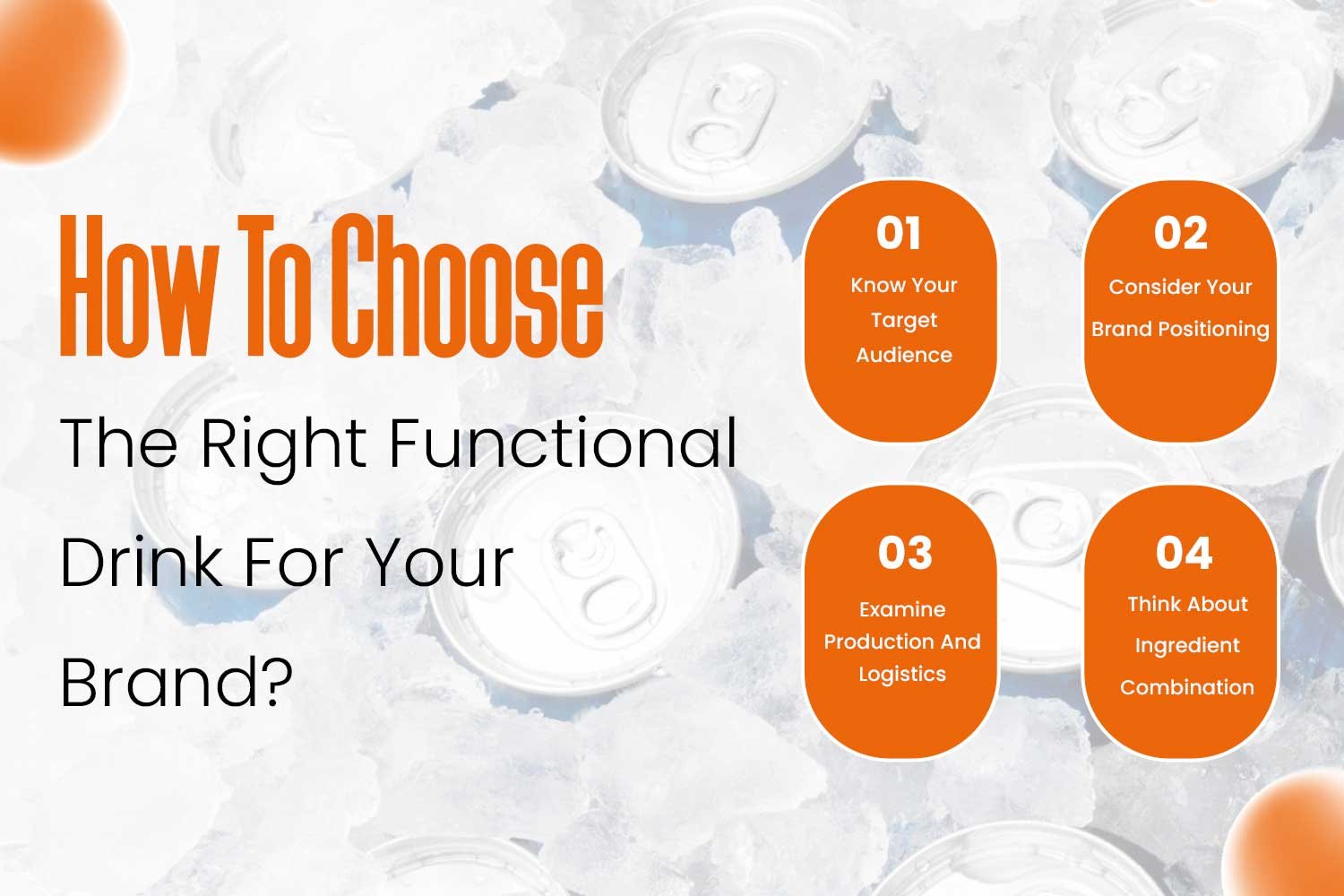
How To Choose The Right Functional Drink For Your Brand?
1. Understand Your Target Demographic
- Younger Consumers: Young people enjoy carbonated functional drinks because these drinks provide both a refreshing taste and exciting new flavour options.
- Health-Conscious Adults: Health-conscious adults prefer non-carbonated beverages because they want to consume products that use gentle, natural ingredients with clean-label certification.
2. Determine Your Brand Identity
- Trendy & Modern: Carbonated beverages enable brands to achieve market differentiation through their intense taste profiles and visually appealing product designs, which perform effectively at retail locations.
- Authentic & Wellness-Oriented: Non-carbonated drinks attract customers who value traditional consumption methods and complete health solutions, and desire information about the ingredients used in products.
3. Analyse Production Process And Distribution System
- Carbonated beverages need both specialised production equipment and pressure-resistant packaging materials, and skilled workers to handle the production process, which raises expenses and operational difficulties for businesses that produce carbonated beverages in India.
- Non-carbonated beverages are simpler to produce because they can be packaged in multiple container types, including bottles, Tetra packs and pouches.
4. Assess How Ingredients Work Together
- Probiotics and prebiotics show effective results when used in carbonated beverages such as kombucha and prebiotic sodas.
- Adaptogens and proteins plus vitamins and electrolytes work effectively in non-carbonated energy drinks and functional bases that keep their taste and feel unaltered.
How Foodsure Can Help In Functional Beverage Recipe Formulation?
Foodsure serves as a reliable partner for brands that need to create effective functional drinks that will compete successfully in the current market. We assist you throughout your entire process, from developing your carbonated vs non-carbonated functional drinks to bringing them into the market.
- Expertise in Trend-Driven Formulation: We track developing trends, which include plant-based proteins, adaptogens, probiotics, nootropics and advanced functional ingredients to create beverages that meet current market needs.
- Customised Solutions for Your Brand: Our team works closely with you to understand your target audience, positioning, and growth goals. We create custom recipes for your brand, which range from bold sparkling concepts to clean-label non-carbonated beverages.
- Ingredient Selection & Nutrition Optimisation: We select premium ingredients that help us achieve the right taste and product stability and operational performance through our selected combination of vitamins and minerals, botanical elements and active components.
- Product Testing & Quality Assurance: We conduct taste testing together with stability testing to verify that your beverage product provides both functional benefits and a pleasurable drinking experience.
- End-to-End Commercial Support: We handle every step of product development, from creating product specification sheets and finding ingredients to developing nutrition labels and meeting FSSAI requirements until your product reaches retail stores.
Let Us Guide You To Choose A Perfect Functional Drink!
Your journey to a successful functional beverage starts here. Whether you’re leaning towards a fizzy, refreshing drink or a smooth, natural option, we will help you make the best choice for your brand. Let us simplify the process and turn your idea into a product that stands out. Contact us at +918130404757 Today and get the best functional beverage formulation services!
FROM FORMULATION TO SCALE
Ready to Develop a Commercially Viable Functional Drink?
Whether carbonated or non-carbonated, we support formulation validation, pilot trials, regulatory alignment, packaging selection, and production readiness.
Related Blogs
- Carbonated Drink Development & Production Systems
- Beverage Shelf Life Study & Stability Testing
- Clean Label Functional Beverage Strategy
- Functional Beverage Ingredients & Compatibility
- Commercial Beverage Production & Scale-Up Guide
FAQs
What is non carbonated drinks?
Non-carbonated drinks are beverages without added carbon dioxide (fizz). The functional category includes enhanced water herbal teas, protein shakes, electrolyte drinks and smoothies.
What is the difference between carbonated and non-carbonated beverages?
The main difference is carbonation. Carbonated drinks contain dissolved CO₂, which creates a fizzy sensation, while non-carbonated drinks have a smooth and unbroken texture. The two types of beverages exhibit different mouthfeel characteristics, suitable ingredients, package designs and production procedures.
What are some examples of non-carbonated drinks?
Non-carbonated drinks include flavoured water, herbal infusion,s protein shake,s cold brew coffee, electrolyte drinks and meal replacement beverages.
Are non-carbonated energy drinks better than carbonated ones?
The answer depends on what consumers prefer and which specific formulas they want to create. Non-carbonated energy drinks provide a more gentle stomach experience, which health-conscious consumers prefer, while carbonated energy drinks offer a refreshing experience that resembles soda.
Do carbonated functional drinks have a longer shelf life?
Carbonation helps products maintain their fresh taste and stable condition in many circumstances. The shelf life of a product depends on the combination of its ingredients and preservatives, together with the methods used to process it and its packaging design.
Which format is easier to manufacture: carbonated or non-carbonated beverages?
Production of non-carbonated beverages requires less effort because manufacturers do not need to install pressure-resistant packaging systems or carbonation systems for their products.
How do I choose between carbonated and non-carbonated functional drinks for my brand?
The selection process requires you to consider three factors, which include your business’s target market, your company’s branding strategy and the functional aspects of your product line.