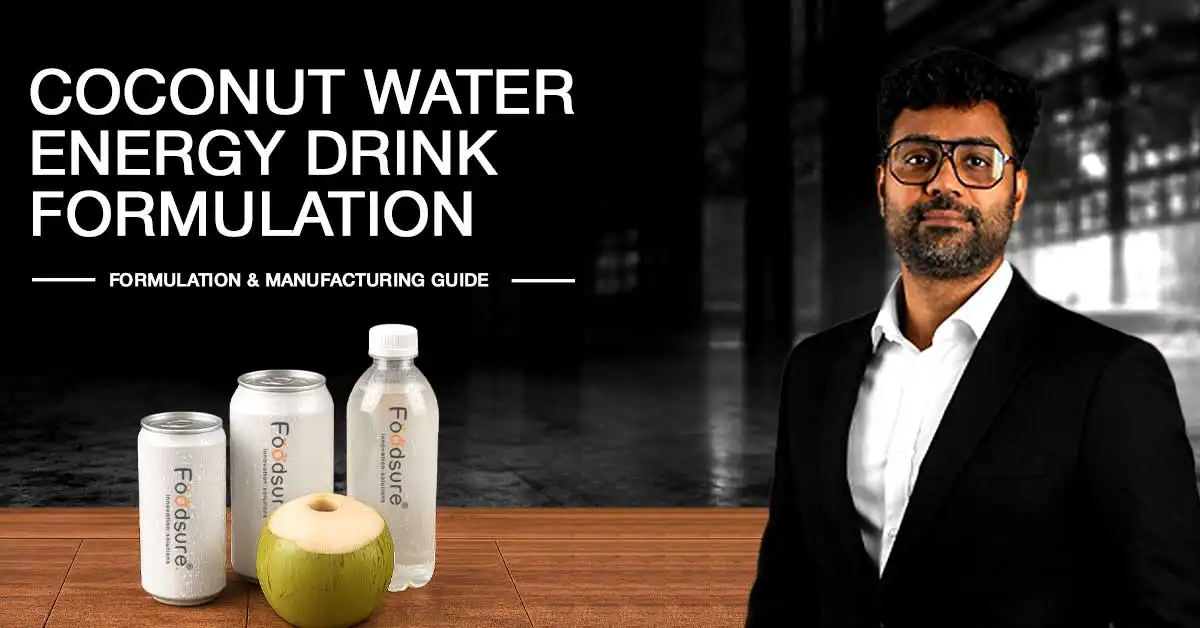
The beverages market in India is constantly developing, and today, people are more interested than ever in consuming natural and healthy drinks rather than regular energy drinks. One of the most promising drinks that can be offered to consumers is a coconut water energy drink that will combine the hydration qualities of coconut water and functional components aimed at boosting the consumer’s energy level. There are a few important steps that every business owner should know about when trying to develop a coconut water drink with fresh concentrate or powder in India. First of all, one will need to choose a proper source of coconut water; secondly, select appropriate ways of processing coconut water for energy drinks in India; next step is to find a way to introduce energy components into coconut water without altering its unique taste; finally, the businessperson should select a suitable packaging that would prolong the shelf life of coconut water.
The following blog gives an insight into developing a coconut water energy drink in India. The blog covers the coconut water energy drink formulation manufacturing India, packaging of the product, and compliances related to the FSSAI standards for making the product marketable and palatable.
Coconut Energy Drink B2B
The entrance into the B2B industry using a coconut water energy drink provides an effective route to achieve scale and distribution.
- Retailers and Distributors: Wellness stores, large groceries, gyms, and café shops are stocking up on functional drinks that will hydrate and energize consumers.
- Corporate and Institutional Sales: Sport arenas, wellness centers, hotels, and airlines are consistent purchasers who have been seeking hydration products.
- Modern Trade and E-commerce: Amazon, BigBasket, DMart, among others, offer functional drink ranges that can be accessed online.
The B2B approach will focus on bulk purchases, consistency in reordering, and relationships that may foster growth before marketing initiatives geared towards consumers. Issues regarding pricing, order sizes, and logistics must be taken into account in seeking out a B2B deal.
Coconut Water Sourcing: Fresh vs Concentrate vs Powder
| Coconut Water Type | Description | Pros | Cons |
| Fresh Coconut Water | Coconut juice extracted from young coconuts preserves its taste and nutrition. | Highest quality of taste and nutrition; suitable for high-quality products. | Highly perishable; requires cold chain; must be processed quickly. |
| Coconut Water Concentrate | Reduced water content from fresh coconut juice for transportation and preservation. | Lower logistics cost; easy to reconstitute; consistent supply for scaling. | May slightly alter natural flavor; reconstitution required during manufacturing. |
| Coconut Water Powder | Sprayed or powdered coconut juice. | Longest shelf life; no refrigeration needed initially; convenient storage. | Requires careful rehydration; some flavor loss is possible; processing must retain taste. |
Coconut Water Processing Methods
Process guarantees the strength, robustness, and suitability of the foundation, as well as its ability to formulate an energy drink. Best methods for energy drink formula stabilization through the coconut water process in India:
- Filtration & Clarification: Removes the solids and other particulate matter, giving you a clear foundation to work on.
- Pasteurization: The application of heat in a controlled manner to sterilize the drink and increase its shelf-life while minimizing flavor loss.
- Aseptic Processing: Sterilizing both the drink and its package, extending its shelf-life without the use of any preservatives.
- Cold filtration (micro/ultra): Maintaining some natural flavors and nutrients in the drink; however, it requires careful handling.
A combination of a solid processing technique along with high-quality base material (fresh, concentrate, or powder), along with other ingredients (energy sources), is crucial.

Adding Energy Ingredients to Coconut Base
In the creation of the energy drink using coconut water, the inclusion of functional ingredients that have energy-boosting characteristics but are not capable of altering the taste of the coconut water must be included.
Ingredients to Include:
- Sources of caffeine: The natural sources of caffeine include green coffee extract and guarana, which provide natural energy boosts.
- B vitamins: The B vitamins, B6 and B12, help in metabolic energy.
- Electrolytes: The electrolytes include potassium, magnesium, and sodium for hydration.
- Amino acids: Either taurine or L-carnitine would enhance endurance.
- Usage guidelines: Begin with small quantities, micro-encapsulate ingredients, and ensure sweeteners are natural so as not to overpower the taste of coconut.
The functional components will be selected carefully such that they work harmoniously with the coconut water, giving rise to a refreshing drink that rejuvenates the consumer.
Flavour Balance: Not Masking Coconut Taste
One of the key issues in the formulation of an energy drink from coconut water involves balancing out the true coconut flavor with the taste experience desired by the consumer.
Here’s how to preserve flavour balance:
- Do not use any strong flavors that might mask the flavors of coconut.
- If variation in flavor is needed, then complementary natural flavors such as those of lime, mint, or ginger can be used without making the flavors too overpowering.
- The sugar content should be low or zero, since those who seek coconut water look for products that are close to natural.
- Sensory testing should be conducted among your target consumers to guarantee consistency and preference.
In addition to improving the taste experience, getting the balance of flavours right will help with the marketing of your product as a high-end, health-oriented alternative to mainstream energy drinks. A good flavour combination inspires confidence and creates a reason for people to keep coming back for more.
Carbonated Coconut Water Format
The addition of CO2 will definitely add an exciting element to your coconut water energy drink that can put it on par with its competitors in the energy drink category. Nonetheless, there are some technical issues with carbonation:
- Perceived sweetness: CO2 may lower perceived sweetness, and hence adjustments need to be made regarding ingredients.
- Foaming: The sugars and protein content of the coconut water may lead to foaming while filling; deaeration can be done to address this issue.
- Effect of packaging: Carbonated products generally have better results when filled in cans or PET containers that can contain pressurized products.
Although carbonation makes production more complicated, it also offers a great chance for differentiation. A properly formulated carbonated coconut water energy drink will allow you to offer a unique taste experience, make your brand a part of the premium category, and satisfy the needs of those health-conscious consumers who are searching for alternatives to conventional fizzy energy drinks.
Shelf Life Challenges of Coconut Water
The biological nature of coconut water makes it inherently perishable, which increases its sensitivity to microbial contamination. In developing an energy drink from coconut water, prolonging the coconut water shelf life Tetra Pak PET cans emerged as a crucial step toward ensuring commercial viability.
Key Shelf Life Factors & Solutions:
- Problem with oxidation: Oxidation may result in color changes and off-flavors due to exposure to air.
- Microbial growth: Inadequate sterilization procedures may result in spoilage.
- Separation/precipitation: Natural separation of ingredients may happen due to the presence of such factors in the composition.
- Processing techniques: Processing methods that include aseptic processing, pasteurization, and sterilization should be used.
- Packaging effects: The most preferred packaging would be those that are oxygen and light-proof, such as Tetra Pak, PET, or canned forms.
Regarding shelf-life, the Tetra Pak aseptic packaging could remain stable for up to 12 months, the PET bottles would be around 3-9 months, and carbonated cans have 6-12 months. It is important that stability testing under actual conditions be performed to prove the shelf-life period.
Packaging: Tetra Pak, PET, Cans
| Packaging Type | Key Features | Best Use Case |
| Tetra Pak | Aseptic protection; lightweight; supports long shelf life without refrigeration | Ideal for functional, non-carbonated coconut water energy drinks |
| PET Bottles | High consumer familiarity; resealable; convenient for on-the-go consumption | Suitable for still and mildly carbonated formats |
| Cans | Premium look and feel; strong barrier protection; highly recyclable | Best for fully carbonated coconut water energy drinks |
FSSAI Compliance for Coconut Water Drinks
Manufacture or sale of any coconut water energy drink in India can only be done after obtaining approval from the Food Safety and Standards Authority of India. It is important to note that having a good package design of the coconut water energy drink is vital for FSSAI compliance.
Key FSSAI Compliance Requirements:
- Labeling Requirements: All beverage containers have to adhere to mandatory labeling requirements such as ingredients list, nutritional information, batch number, vegetarian logo, and expiry date as per FSS (Labelling and Display) Regulations, 2020.
- Testing & Quality Requirements: The products have to comply with the maximum level of contaminants and toxins set out in FSS (Contaminants, Toxins and Residues) Regulations, 2011, such as pesticides and metals.
- Product Claims and Advertising Requirements: All claims, including ‘energy boost’ have to comply with the mandatory FSS (Advertising and Claims) Regulations, 2018.
Compliance with these guidelines will not only help you meet legal standards but will also help in building credibility with distributors, retailers, and consumers, allowing you to effectively launch your coconut water energy drink in India.
Contract Manufacturing Options
In addition, many companies and entrepreneurs lack their own production plants, hence making contract manufacturing an excellent and viable option. In case of your proposed coconut water energy drink, contract manufacturing will be able to cover all the processes, from product development through packaging, without any need for additional equipment.
Key Benefits & Selection Criteria:
- Lower upfront cost: No requirement for setting up your own manufacturing unit, thus reducing the expenses required.
- Knowledge of formulations: Experts available who know how to formulate energy drinks through coconut water formulation manufacturing India.
- Scaling up is easier: Transition from smaller quantities to larger-scale manufacturing in no time.
- Assistance with documentation: Assistance regarding FSSAI certification and other requirements.
- Choosing a manufacturer: Prefer manufacturers who deal in coconut drinks, possess Tetra Pak, PET, and can manufacturing capabilities, and boast past success.
Choosing the right manufacturing partner not only eases things up for you but also ensures consistency in quality and speedy entry into the market.

Build Your Coconut Drink with Foodsure
Once you are ready to turn your coconut water into an energy drink, Foodsure can assist you from development to compliance and manufacturing. We will help you to develop a good formulation while keeping the taste of coconut intact. Be it in any form of fresh coconut water, concentrated, or coconut water powder, we will guide you on which route would suit you. Being experts in the processing of fresh coconut water powder, along with packaging options that include Tetra Pak, PET bottles, and cans, Foodsure can become a complete stop for all your requirements.
FAQs
What is a coconut water energy drink?
Coconut water energy drink is an energy drink formulated using coconut water, along with functional components such as caffeine, electrolytes, and other active ingredients for energy enhancement.
What are some of the ways you can create a coconut water energy drink using fresh or powdered coconut water concentrate in India?
There are several ways through which a coconut water energy drink can be created in India, using either the fresh, concentrated, or powder form of coconut water, with processing, functional ingredients, and FSSAI compliance.
What are the ideal methods for processing coconut water for making energy drinks in India?
Ideal methods for processing of coconut water in India include filtration, pasteurization, and aseptic processing.
How can we include energy components into coconut water base without overpowering the taste?
We can include energy components through the use of natural caffeine sources, microencapsulation of various components, and appropriate dosages that will allow for an easy blend without making coconut water taste dominant.
What is the shelf life of coconut water energy drink when packaged in Tetra Pak, PET bottle, and cans?
The shelf life of coconut water differs depending on the process and packaging method used, with Tetra Pak shelf life at 12 months, PET bottle at 3–9 months, and cans at 6–12 months.
What is the FSSAI compliance packaging for a coconut water energy drink in India?
FSSAI compliance packaging of coconut water energy drink in Tetra Pak, PET cans in India will need to have proper licenses, labeling, approved food additives, safety tests, and advertising guidelines to be legally available in the market.
Guide to creating a coconut water energy drink brand in India 2026?
A guide to creating a coconut water energy drink brand in India will involve formulation, procurement, production, packaging, marketing, regulatory compliance, and contract manufacturing until 2026.