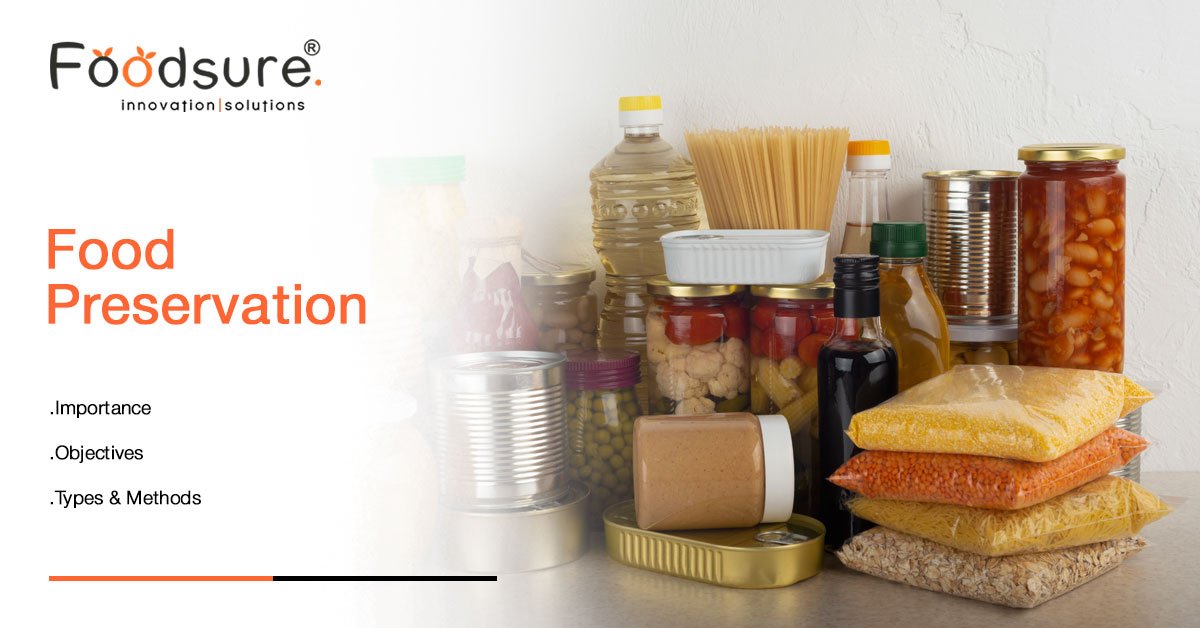
Food preservation is a process of reducing or halting the food spoilage, food contamination and loss of nutritional value, food quality and food edibility. It is a very critical factor in sustaining food safety and increasing shelf life.
Microorganisms, enzymatic reactions, moisture, exposure to oxygen, and poor storage conditions can cause food spoilage. In order to avoid all these problems, there are several food preservation techniques applied in homes and the food industry.
The following paper will be about the meaning of food preservation, its aims, and the methods of preservation.
READY TO SCALE YOUR FOOD?
Launch a New Food Product
From development and stability testing to full-scale commercial food product development, Foodsure supports end-to-end manufacturing.
Objectives of Food Preservation
The key objectives include:
|
S.No. |
Objective | Description |
|
1 |
To Prevent Growth of Microorganisms | Bacteria, yeast, and moulds are the main causes of spoilage. Preservation methods inhibit their growth. |
|
2 |
To Minimise Food Spoilage | Proper techniques reduce chemical and biological changes in food. |
|
3 |
To Protect Nutritional Value |
Effective preservation helps retain essential vitamins and minerals. |
| 4 | To Maintain Taste, Colour, and Texture |
Good preservation techniques ensure product quality remains intact. |
| 5 | To Extend Food Shelf Life |
Shelf life extension techniques are essential in both retail and industrial sectors. |
| 6 | To Ensure Food Safety |
It reduces the risk of foodborne illnesses. |
Types of Food Preservation
It is of two principal kinds:
- Traditional (Physical) Methods
- Chemical Methods
Also, new developments have brought in modern food preservation methods that are extensively used in the food industry.
1. Traditional Food Preservation Methods
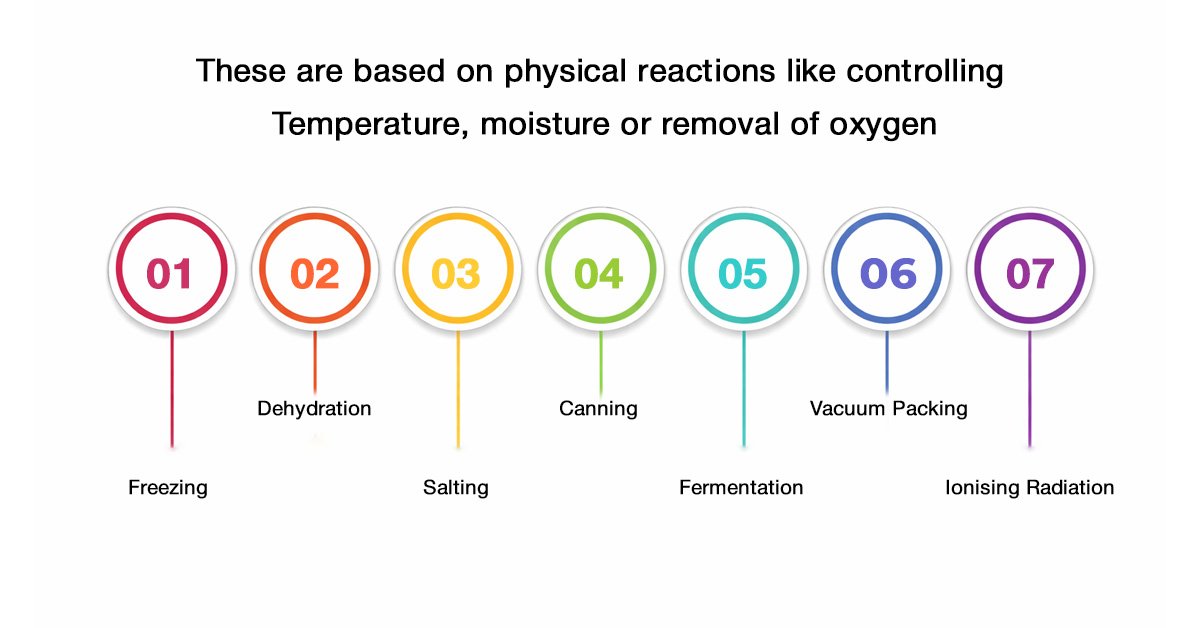
These are based on physical reactions like controlling temperature, moisture or removal of oxygen.
Freezing
One of the modern preservation methods is freezing. It reduces the rate of microbial activity by decreasing the temperature, which is below the range of growth of bacteria and yeast.
Though it does not kill microorganisms, it greatly slows down their metabolic processes.
Examples of food preserved through freezing:
- Vegetables
- Fruits
- Meat
- Seafood
- Ready-to-eat meals
One of the most efficient methods of extending the food shelf life is freezing.
Dehydration
The most ancient traditional methods of food preservation include drying. It gets rid of food moisture, which stops the onset of microbial growth.
Microorganisms need water to survive; thus, dehydration makes the environment unfavourable.
Examples:
- Dried fruits
- Spices
- Mushrooms
- Dehydrated vegetables
- Milk powder
Drying also helps to lose weight, and thus, food is easy to carry around.
Salting
One of the earliest methods of preservation is salting. Salt attracts moisture and inhibits the development of microbes.
It is usually used together with other techniques like drying or acidic solutions.
Examples:
- Salted fish
- Cured meats
- Pickles
Canning
Canning gained popularity in the Industrial Revolution. In this process, the food is packed in containers that are airtight, and it is heated to kill microbes.
The absence of oxygen discourages the existence of numerous microbes.
Common canned foods:
- Jams
- Juices
- Fruits
- Vegetables
The food industry preserves its food through canning.
Fermentation
Fermentation is a natural process that involves changing sugars into acids or alcohols using microorganisms in the absence of oxygen (anaerobic).
Acids that are formed are natural food preservatives.
Examples:
- Yogurt
- Cheese
- Sauerkraut
- Pickled foods
Fermentation increases flavour and enhances digestibility.
Vacuum Packing
Vacuum packing removes air from the food packages and attaches them tightly.
This technique retards spoilage because numerous microorganisms need oxygen.
Common products:
- Nuts
- Coffee
- Cheese
- Cereals
It is among the most efficient food shelf life methods of retail packaging.
Ionising Radiation
Ionising radiation (irradiation) is applied to destroy parasites and decrease the number of harmful bacteria.
This method extends shelf life but does not have a great impact on nutritional value.
Commonly treated foods:
- Spices
- Fruits
- Vegetables
It is one of the major elements of the contemporary method.
2. Chemical Methods of Food Preservation
Chemical preservation entails the use of sanctioned food preservatives to inhibit spoilage.
These preservatives prevent the growth of microbes and promote shelf life.
Types of Chemical Preservatives
1. Benzoates
Example: Sodium benzoate
Applied to sour-sweet foods, such as juices and jam.
2. Sulfites
Example: Sulphur dioxide
Applied to fruits that are dried and used in drinks.
3. Nitrites
Example: Sodium nitrite
Used in processed meats.
These food preservatives are commonly used in the food industry as per the regulations.
Natural Food Preservatives
Besides synthetic food additives, some natural food preservatives are applied in food processing:
- Salt
- Sugar
- Vinegar (Acetic acid)
- Lemon juice (Citric acid)
- Spices such as cloves and turmeric.
These are natural agents that can be used to regulate the growth of microbes and are used in clean-label items.
Modern Food Preservation Techniques
Some of the contemporary methods of food preservation are common due to the presence of technology:
- High-pressure processing (HPP)
- Modified atmosphere packaging (MAP)
- Freeze-drying
- Irradiation
- Advanced refrigeration systems.
These processes play a vital role in mass production and the distribution of food all over the world.
Importance of Food Preservation
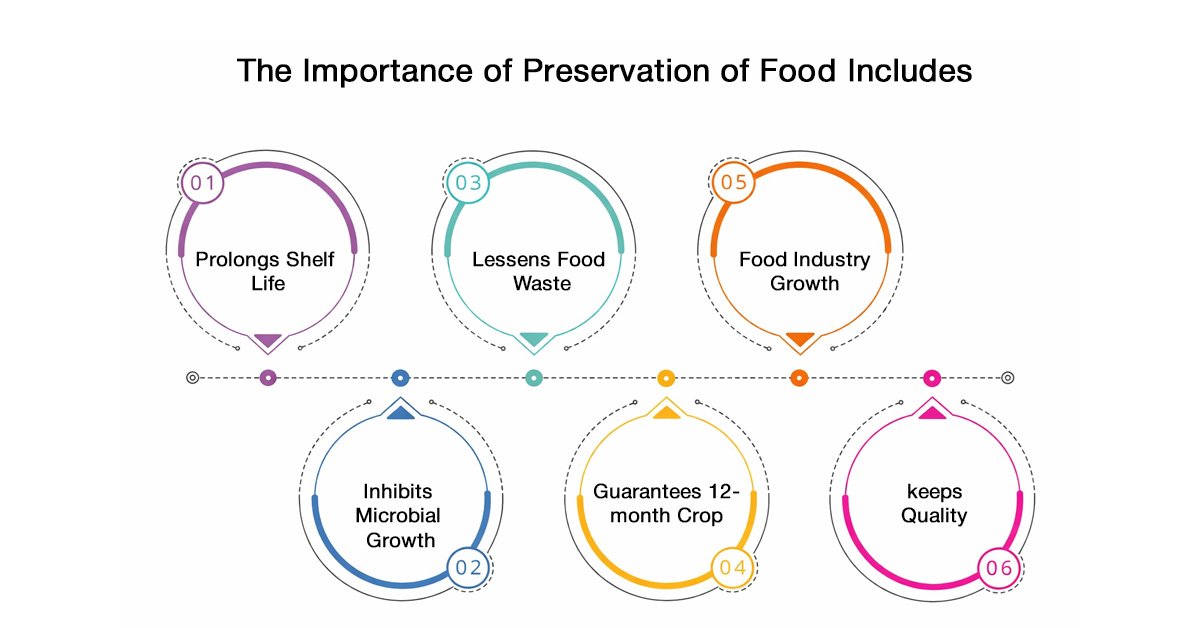
The importance of preservation of food includes:
Prolongs Shelf Life: Enables a food to have an extended shelf life.
Inhibits Microbial Growth: Cuts short the chances of contamination and food poisoning.
Lessens Food Waste: Assists in minimising production and domestic spoilage.
Guarantees 12-month Crop: It is possible to enjoy seasonal agriculture all year round.
Food Industry Growth: Packaging, storage, export and distribution.
Keeps Quality: Does not affect taste, colour, and nutritional value.
Preservation of food is thus very important to the consumers and the manufacturers.
Food Preservation in the Food Industry
Techniques are selected in the food industry for food preservation based on:
- Product type
- Target shelf life
- Packaging system
- Regulatory compliance
- Consumer preferences
Modern techniques are applied alongside the traditional ones in industries to ensure the safety and quality of food at large scale.
You May Also Like: Food Product Development
Conclusion
In the current fast-paced food business, food preservation not only remain a traditional practice, but a scientific requirement. Since ancient processes such as drying and salting have been used as means of preserving food, contemporary preservation systems have become instrumental in increasing the shelf life, preserving flavour, and ensuring food safety.
If you’re looking to enhance product stability or develop clean-label preservation systems, our expert team is here to help.
Contact us today to discuss your food preservation needs and get tailored, science-backed solutions designed specifically for your product!
READY TO SCALE YOUR FOOD?
Launch a New Food Product
From development and stability testing to full-scale commercial food product development, Foodsure supports end-to-end manufacturing.
FAQs
What is the primary aim of food preservation?
The primary purpose of it is to avoid food spoilage and improve shelf life through controlling microorganism growth and minimising chemical changes and nutritional quality.
What is the importance of food preservation?
It is important as it enhances shelf life, eliminates food-borne diseases, reduces food waste, and creates available foods throughout the year, including seasonal foods.
What are the various food preservation methods?
Preservation of food mostly occurs in terms of physical preservation (freezing, drying, and canning) and chemical preservation (which involves the use of approved preservatives like benzoates and nitrites).
What are the most popular preservation methods of food?
Usually, the techniques are freezing, drying, salting, fermentation, canning, vacuum wrapping, and chemical preservatives.
What are the methods of food preservation in the modern world?
High-pressure processing (HPP), modified atmosphere packaging (MAP), and irradiation are modern methods of food preservation that operate to contain the growth of microbes, the amount of oxygen, and environmental factors to increase the shelf life of foods.
What do we mean by natural food preservatives?
The natural food preservatives comprise salt, sugar, vinegar, lemon juice, and some spices. These substances prevent the growth of microbes and are usually applied in the traditional preservation techniques.
What is the usefulness of food preservation in the food industry?
Preservation of food in the food industry guarantees the safety of the product, increased shelf life, easy transportation, compliance with regulations and decreased wastage during storage and transportation.