The Indian beverage market is changing fast. Consumers are no longer satisfied with just taste. They want health benefits, clean labels, and functional value. This shift has created a massive opportunity for entrepreneurs to build a Functional Beverage Brand in India.
However, launching a functional beverage is not just about mixing ingredients and designing a label. It is a structured journey—from idea validation to formulation, compliance, manufacturing, and market launch.
This guide explains the entire concept-to-shelf process in clear and practical steps.
What Is a Functional Beverage?
A functional beverage is a drink that offers health benefits beyond basic hydration. These benefits are supported by ingredients such as:
- Protein
- Electrolytes
- Probiotics / Prebiotics / Postbiotics
- Vitamins & Minerals
- Adaptogens or Nootropics
- Natural caffeine or energy compounds
Examples include protein waters, gut-health sodas, energy drinks with clean caffeine, hydration drinks, and cognitive beverages.
Why India Is Ready for Functional Beverage Brands
India is one of the fastest-growing functional beverage markets due to:
- Rising health awareness
- Young, fitness-focused consumers
- Demand for low-sugar and clean-label products
- Growth of D2C and quick-commerce platforms
- Acceptance of premium and purpose-driven brands
Consumers now look for benefits like energy, digestion, immunity, protein, and hydration in their daily drinks.
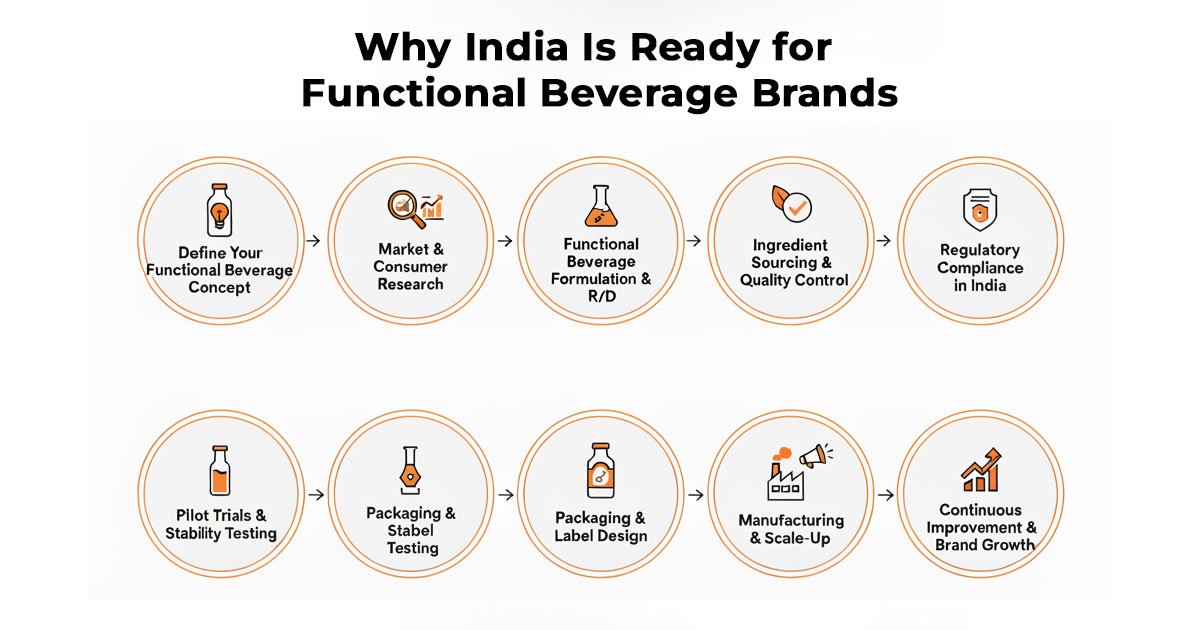
Step 1: Define Your Functional Beverage Concept
Before formulation begins, your concept must be clear.
Ask these questions:
- What problem does your beverage solve?
- Who is your target consumer?
- When and why will they consume it?
- What functional benefit will you focus on?
Popular functional beverage concepts in India include:
- Protein-enhanced sparkling water
- Gut-health sodas
- Electrolyte hydration drinks
- Functional energy drinks
- Low-calorie, no-sugar beverage
A strong concept reduces risk and improves market acceptance.
Step 2: Market & Consumer Research
Research is critical before investing in formulation.
Key areas to study:
- Consumer pain points
- Existing brands and price points
- Ingredient awareness
- Flavor preferences
- Packaging expectations
Indian consumers prefer:
- Mild flavors (citrus, berry, tropical)
- Clear health benefits
- Low or zero added sugar
- Transparent labeling
This research shapes your product positioning and formulation direction.
Step 3: Functional Beverage Formulation & R&D
Formulation is the backbone of your brand.
A good formulation must balance:
- Functionality (does it actually work?)
- Taste and mouthfeel
- Stability and shelf life
- Regulatory compliance
Key formulation considerations:
- Ingredient compatibility
- Dosage accuracy
- Solubility in liquid
- pH balance
- Carbonation stability (if applicable)
This stage should always be handled by experienced beverage technologists to avoid costly mistakes later.
Step 4: Ingredient Sourcing & Quality Control
Functional beverages depend heavily on ingredient quality.
Important points:
- Use food-grade, approved ingredients
- Ensure consistent supply
- Verify COAs (Certificates of Analysis)
- Check allergen and safety compliance
Poor ingredient sourcing can affect:
- Taste
- Shelf life
- Legal approval
- Brand credibility
Step 5: Regulatory Compliance in India
Regulatory compliance is non-negotiable.
In India, functional beverages must comply with:
- FSSAI regulations
- Ingredient limits
- Labeling and claims guidelines
- Nutritional declaration norms
Avoid making:
- Medical claims
- Unsupported health promises
- Misleading functional benefits
Compliance should be planned during formulation, not after production.
Step 6: Pilot Trials & Stability Testing
Before mass production, pilot trials are essential.
Pilot testing helps you:
- Validate taste and texture
- Test shelf life
- Check carbonation or protein stability
- Identify packaging interactions
Skipping this step can lead to product recalls or reformulation costs later.
Step 7: Packaging & Label Design
Packaging is not just about looks—it impacts functionality.
Key packaging decisions include:
- PET bottles, cans, or glass
- Carbonation compatibility
- Oxygen and light protection
- Convenience for consumers
Label design should:
- Clearly communicate functional benefits
- Be clean and easy to read
- Follow FSSAI labeling rules
- Build trust instantly
Step 8: Manufacturing & Scale-Up
Once trials are successful, production can begin.
Manufacturing considerations:
- Batch consistency
- Hygiene and food safety
- Automation vs manual processes
- Cost optimization
Choosing the right manufacturing partner ensures:
- Consistent quality
- Scalability
- Regulatory adherence
Step 9: Go-To-Market Strategy
A great product still needs the right launch plan.
Common launch channels:
- D2C websites
- Marketplaces
- Gyms, cafés, and health stores
- Modern retail
- Quick-commerce platforms
Successful brands focus on:
- Education-based marketing
- Sampling and trials
- Clear benefit communication
- Influencer and expert trust
Step 10: Continuous Improvement & Brand Growth
Post-launch, brands must evolve.
Track:
- Consumer feedback
- Repeat purchase behavior
- Flavor performance
- Cost efficiency
Many successful functional beverage brands expand into:
- New flavors
- Line extensions
- New functional benefits
Related Blogs
Final Thoughts
Launching a Functional Beverage Brand in India is a high-opportunity but high-precision journey. Success depends on research, formulation expertise, compliance, and execution.
Brands that focus on real functionality, honest communication, and strong product quality are the ones that survive and scale.
If you approach the journey step by step—from concept to shelf—you significantly reduce risk and increase your chances of building a trusted functional beverage brand.
Frequently Asked Questions
What is a functional beverage brand?
A functional beverage brand offers drinks that provide specific health or performance benefits beyond basic hydration, such as energy, protein, digestion, or immunity support.
How is a functional beverage different from a regular soft drink?
Functional beverages contain active ingredients like protein, probiotics, or electrolytes and are designed to deliver health benefits, unlike regular soft drinks.
What are the most popular functional beverage categories in India?
Protein drinks, gut-health sodas, electrolyte hydration beverages, and functional energy drinks are among the fastest-growing categories in India.
How much does it cost to launch a functional beverage brand in India?
The cost depends on formulation complexity, packaging, compliance, and scale, but a functional beverage brand can be launched with a planned and phased investment.
What regulatory approvals are required for functional beverages in India?
Functional beverages must comply with FSSAI regulations, including ingredient approval, dosage limits, labeling, and permitted claims.
How important is formulation in a functional beverage brand?
Formulation defines taste, effectiveness, stability, shelf life, and compliance, making it the most critical part of a functional beverage brand.
Can functional beverages be carbonated?
Yes, functional beverages such as protein sodas, gut-health sodas, and energy drinks can be carbonated with proper formulation and testing.
What packaging works best for functional beverages?
PET bottles, cans, and glass packaging are commonly used based on carbonation level, shelf-life needs, and brand positioning.
How long does it take to launch a functional beverage brand?
From concept to shelf, a functional beverage brand usually takes a few months, depending on formulation, trials, approvals, and production readiness.
What are the biggest mistakes new functional beverage brands should avoid?
Common mistakes include weak formulation, poor taste balance, unrealistic health claims, ignoring compliance, and launching without proper research.