Take a stroll into any gym in India these days, and what you will find is interesting enough: instead of lifting weights, people are reading labels. Content of proteins and ingredients, level of sugar, all are on the rear burner. There is a reason why the high protein vegan snack has emerged; in response to a more aware, health-conscious, and ethically conscious consumer.
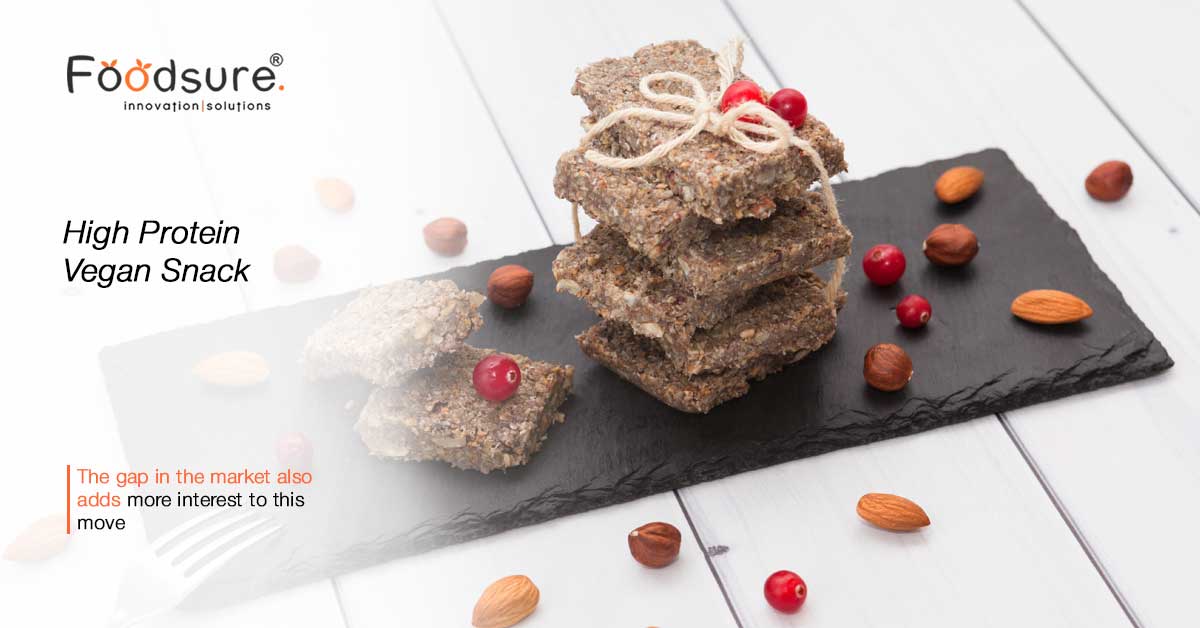
The gap in the market also adds more interest to this move. Although the shelves are filled with whey protein and snacks of dairy origin, vegan, clean-label, high protein vegan snacks remain under development, and high-protein snacks that suit the taste of Indians remain a reality that is yet to be implemented. It is here that we have got the chance Food Consultant.
Why the Demand for High Protein Vegan Snacks is Exploding in India
The demand is being propelled by the following:
- Increasing fitness trend: Indian Urban India has experienced an explosion in the number of gyms and people doing workouts at home, as well as taking part in marathons.
- Unawareness about proteins: Evidence indicates that almost 70 – 80% of Indians are protein-deficient, which has led to a high demand for protein foods that are readily available.
- Vegan / Plant-Based movement: The Indian plant-based food sector will reach over 1 billion dollars by 2030, as a result of ethical, environmental, and health issues.
- Lifestyle: Convenience first: The convenience-based snacks the consumers desire are related to fitness and on-the-go.
This gives a vegan fitness food product in India a sweet spot which is rich in protein, convenient, and according to local tastes.
Understanding the Indian Fitness Consumer
The point is that, before smashing into formulation, you should decode your listeners. The Indian fitness consumer is not the same; they are divided into certain segments:
- Budget-conscious new gym goers: Seeking cheap, good protein snacks.
- Serious athletes: Concentrating on macros, amino acid profile, and performance.
- Professional people: Desire convenience + health.
- Vegan customers are more concerned with clean-label and ethical sourcing.
Key expectations:
- Subject to a minimum protein per portion of 8 – 15g protein.
- Free sugars and the use of clean ingredients.
- All known (chocolate, peanut, masala, coconut) flavours.
- Easily digested (no bloat, no weight)
Choosing the Right Plant Protein Sources
Your protein source is the main ingredient of any snack plant protein formulation in India. Not every protein of plants is the same, and both of them have functional and nutritional consequences.
- Chickpea and Next: In India, chickpea and next are popular as sources of protein.
- Pea Protein: This is a highly used high-protein (approximately 80%), and is neutral in taste.
- Brown Rice Protein: Pea protein is complemented by adding brown rice protein to balance out the amino acids.
- Soy Protein: Full protein, but can be perceived as having a problem.
- Chickpea (Chana) Protein: Regionally closer, cheaper, and little known.
- Mung Bean Protein: New and very digestible.
Pro Tip: Mixing proteins (e.g., pea + rice) will score higher in terms of PDCAAS (protein quality), which will result in your product being a more attractive option to serious fitness users.
>HelpFul Guide:-
Product Formats That Work in India
The format is equally important as nutrition when it comes to creating a vegan gym snack brand in India.
High-Performing Snack Formats:
- Protein bars: The most popular, can be scaled.
- Protein snacks that are roasted: Chana, makhana, lentil crisps.
- Protein laddoos: Fusion of traditional and functional.
- Ready-to-eat snacks: little, portion-sized snacks.
- Protein cookies: Delicious and nutritious.
Insight: Indian customers like utilising familiar formats but have a functional twist to it, and not entirely new products.
Formulation Challenges & How to Solve Them
Developing a high protein vegan snack in India involves not only inserting protein but also balancing the taste, feel, and stability.
1. Taste & Aftertaste
Plant proteins tend to be earthy-tasting or bitter.
Solution:
- Apply natural flavour maskers (cocoa, atmanjaggery, spices)
- Add butter and nuts to add richness
2. Texture Issues
High protein = dry or chalky products.
Solution:
- Read edibles (dates, syrups)
- Apply fats (coconut oil, almond butter) to the mouth
3. Shelf Life
Snacks made of natural ingredients that are vegan can go bad more quickly.
Solution:
- Get maximum water activity (aw)
- Take natural preservatives, such as rosemary extract
4. Digestibility
There are some proteins that lead to bloating.
Solution:
- Use enzyme blends
- Select proteins that are easy to digest, such as mung beans.

Flavour Innovation for Indian Palates
The niche that is your competitive advantage in the vegan athlete food product segment in India is localisation.
Winning Flavour Ideas:
- Chocolate peanut butter (global favourite + local favourite)
- Gal dopus (Coconut jaggery (traditional + healthy))
- Coffee mocha (City people)
- Masala snacks (savoury lovers), which include protein snacks
- Fusion flavours of mango or elaichi
Foresight: Indian consumers usually do not have a high degree of sensitivity to sweets and complexity in taste as compared to the Western market.
Clean Label & Regulatory Considerations
The modern consumer uses labels and makes up his mind about brands at first glance.
Must-Have Label Claims:
- Large amount of protein (according to FSSAI rules)
- Vegan-certified
- None added sugar/ low sugar.
- No artificial preservatives
Regulatory Basics (India):
- Adhere to the guidelines of FSSAI protein claims
- Make sure labelling nutrition correctly
- Do not make false claims (e.g., there are no false claims on complete protein, etc.)
Pricing Strategy & Market Positioning
In India, your vegan fitness food product can or cannot be popular due to pricing.
Market Benchmarks:
- Protein bars: ₹80 – ₹150
- Premium vegan bars: ₹120 – ₹250
- Roasted snacks: ₹50 – ₹120
Positioning Options:
- Low-cost, bulk premium: Low-price, bulk premium.
- High-end niche: pure, functional, high-quality products.
- Performance-focused: Athlete-grade nutrition
Go-to-Market Strategy
No matter how good the product is, the failure of the product occurs due to the lack of an appropriate launch strategy.
Key Channels:
- D2C (website + marketplaces)
- Rapid business (Blinkit, Zepto)
- Gyms & fitness centers
- The contemporary shopping (Nature’s Basket, Foodhall)
Growth Drivers:
- The use of influencers (fitness coaches)
- Sampling in gyms
- Subscription models
Role of Innovation & Future Trends
Clean vegan snacks in India will depend upon the following to be the future:
- Additional ingredients, functional ingredients: Adaptogens, probiotics.
- One-on-One Nutrition: Fitness-based snacks.
- Sustainability: Upcycles.
- Combination items: Protein + immunity + energy.
Innovative brands will emerge victorious, not only those which innovate on protein.

Call Foodsure for Professional Food & Beverage Product Development
Prepared to make your high protein vegan snack and market-winning with your idea?
Foodsure is designed to support all tested concepts (whether a startup founder, a fitness brand or an existing food business) to achieve commercial success more quickly and intelligently.
We will help you in the following ways:
- End-to-end product development of high protein vegan snack
- State-of-the-art plant protein formulation with improved taste and texture
- Clean-label solutions and optimisation of shelf-life
- Complete FSSAI compliance & documentation
- To support large-scale manufacturing, pilot trials
Don’t be bogged down by formulation and regulatory challenges. The Indian market in the sphere of fitness is developing rapidly, and the interest in innovative vegan protein snacks only increases.
Today, book a free consultation with Foodsure and begin to create your brand of high protein vegan snacks with no fear.

FAQs
What does a vegan snack in India mean in terms of proteins?
At least 20% of the energy of a snack must be made up of protein, or the protein in the snack must be 815g of protein per serving to be considered high protein.
What is the best plant protein to use in snacks?
A combination of rice protein with pea protein is highly believed to be ideal as it has a balanced amino acid composition.
Will vegan snacks, with high protein content, be profitable?
Yes, as fitness is becoming more known and trends are shifting towards plants, margins and demand are growing as well.
What is your solution to make plant protein snacks throughout?
Bitterness can be minimised by using natural flavour maskers such as cocoa, jaggery and nut butters.
Which types of vegan snacks are the most popular in India?
Protein snacks: protein bars, chana snacks that are roasted, and protein laddoos are also very popular.
Should vegan snacks be approved by FSSAI?
Yes, everything sold in packaged food should be in line with the FSSAI rules and labelling.
What are the ways of opening a vegan gym snack business in India?
Start with market research, prepare a good formulation, make sure of compliance and recruit experts to help scale up, such as Foodsure.