Zero Calorie Beverage Formulation works to develop a soft drink that has no calories and the most accurate natural flavour profile because of its elimination of sugar.
Modern consumers choose natural zero-calorie sweeteners because they search for the best non-calorie sweetener or a trustworthy stevia substitute in clean-label zero-calorie drinks. The selection process demands proper selection of a zero-calorie sugar name, together with an appropriate drink that needs natural sugar reduction ingredients to achieve the required taste and compliance results.
Many brands choose to partner with a beverage formulation company in India, which provides outsourced beverage formulation services, because this approach helps them to complete product development faster while they achieve FSSAI compliance.
Why Zero-Calorie Beverage Formulation Is Shifting to Natural
- Health Awareness: The demand for zero-calorie beverages that contain natural zero-calorie sweeteners that do not raise blood sugar levels has increased because of the growing number of lifestyle diseases that emerged in 2026.
- Consumer Demand: Approximately 50% of consumers now choose plant-based sweeteners, including stevia as a pure stevia substitute instead of artificial sweeteners for their contemporary Zero Calorie Beverage Formulation needs.
- Clean Label Trend: Shoppers increasingly choose drinks with simple ingredients for natural sugar reduction, ingredients and a transparent zero-calorie sugar name* on the label.
The List Of Top 5 Natural Sweeteners
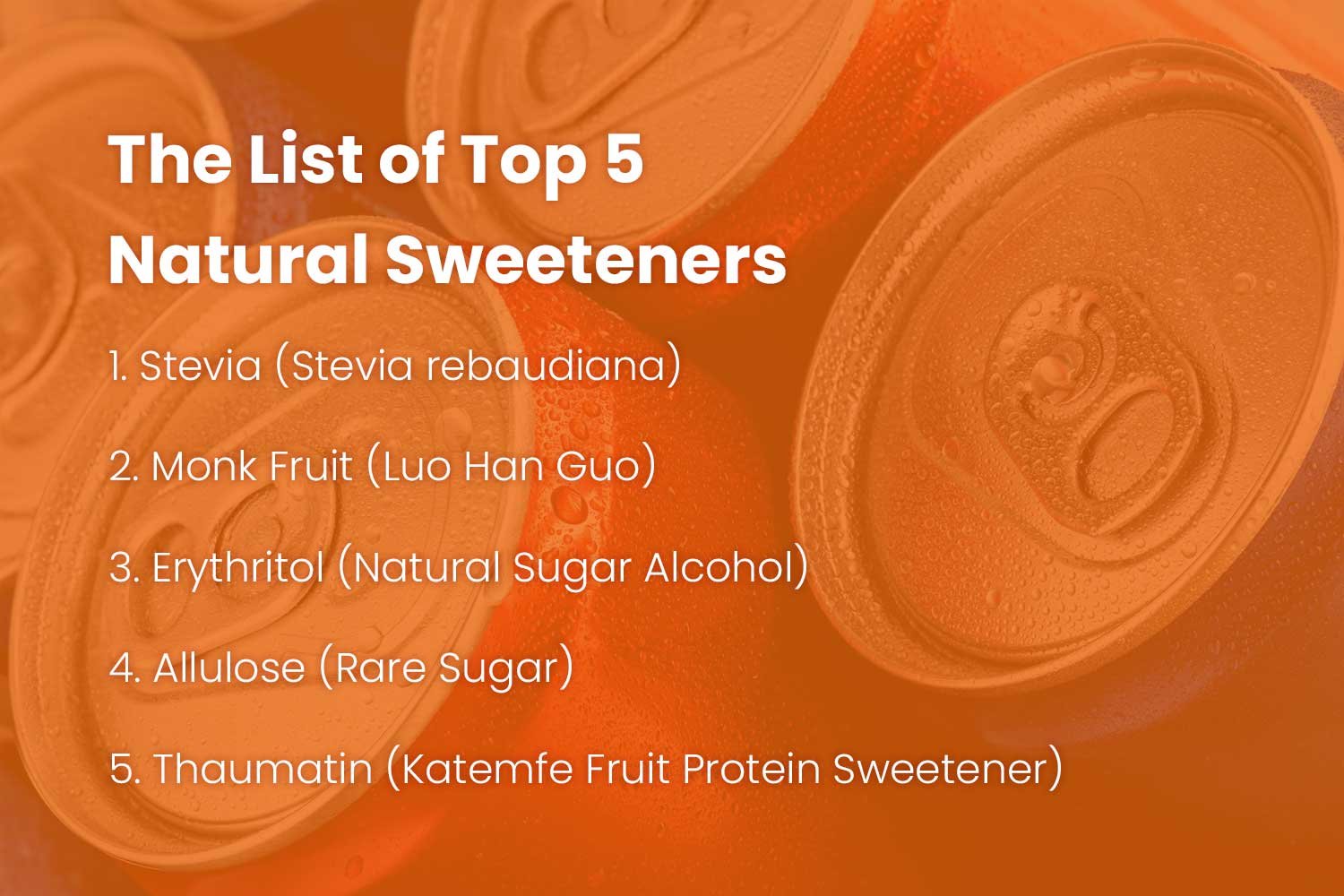
Stevia (Stevia rebaudiana)
Stevia serves as a natural zero-calorie sweetener, which is derived from Stevia rebaudiana leaves and proves suitable for zero-calorie beverage formulation. The product does not increase blood sugar levels while it promotes heart health and meets the requirements for clean-label zero-calorie drinks.
Taste: The product delivers a sweet flavour which combines with gentle herbal tones, but modern extracts (Reb-A 97,% Reb-D and Reb-M) provide a more refined taste experience.
Stevia Formulation Tips:
- This product works best when used in combination with carbonated beverages, herbal teas, and flavoured waters.
- The combination of erythritol and monk fruit, together with this product, will help to decrease its bitter taste.
- The product should be used in products that have a pH level below 7 because this will help to eliminate any remaining taste.
Monk Fruit Sweetener (Siraitia grosvenorii)
Monk fruit sweetener, from Siraitia grosvenorii, delivers natural zero-calorie sweetness, which beverage makers can use to create zero-calorie drinks. Mogroside V, together with other mogrosides, maintains sweetness levels that exceed 200 to 300 times normal sugar sweetness while providing calorie-free benefits and safe usage for diabetic patients and people who follow low-carb meal plans.
Taste: The product delivers a pure sweet flavour which lacks any bitter aftertaste and contains faint fruit and caramel flavour elements.
Formulation Tips:
- The product works best with ready-to-drink energy beverages, vitamin drinks and iced tea products.
- The product works best when combined with stevia because it creates a balanced sweet taste.
- The product maintains its stability under extreme heat and different pH levels, which makes it suitable for use in all types of beverages.
Erythritol (Natural Sugar Alcohol)
Erythritol functions as a natural zero-calorie sweetener, which exists in various fruits, including grapes and melons and serves as an ingredient for zero-calorie beverage formulation. The product delivers sweetness that resembles sugar but contains almost no calories, and it is safe for diabetic consumption while supporting low-carbohydrate and ketogenic dietary plans.
Taste: The product delivers a sweet flavour that contains no bitter notes and produces a slight cooling sensation.
Formulation Tips:
- The product works well for sports drinks, flavoured waters, cold brew beverages and kombucha.
- The product functions as a primary sweetening agent when combined with stevia or monk fruit.
- The product should remain below 5% concentration because this level causes excessive cooling effects.
Allulose (Rare Sugar)
Allulose exists as a natural sweetener that provides zero calories and is derived from figs and raisins, which makes it suitable for creating zero-calorie beverages. The product replicates sugar taste with 90 % lower calories while maintaining stable blood sugar levels, which makes it suitable for people with diabetes and those on low-carbohydrate meals.
Taste: The product matches sugar flavour without showing any bitter taste or lingering aftertaste.
Formulation Tips:
- The product works best as an ingredient for premium low-carb sodas, mocktails and flavoured protein drinks.
- The product first appeared in India, but its production costs decrease when combined with stevia or monk fruit.
Thaumatin (Katemfe Fruit Protein Sweetener)
Thaumatin, derived from the Thaumatococcus daniellii plant, functions as a zero-calorie natural sweetener that manufacturers use to create their zero-calorie beverages. The substance possesses 2000 to 3000 times greater sweetness than sugar, which requires only minimal usage for safe application in products sold throughout the world.
Taste: The product delivers persistent sweetness, which includes subtle liquorice and fruity elements that end with a smooth aftertaste.
Formulation Tips:
- The solution works best for creating herbal beverages that need both functional properties and methods to hide bitter flavours.
- The combination of stevia with erythritol creates a taste experience that delivers multiple sweetness levels.
- The product demonstrates extreme potency, which requires users to apply only minimal amounts.
Natural Sweeteners Comparison
The correct selection of a natural zero-calorie sweetener establishes the foundation for the successful development of zero-calorie beverages. The sweeteners demonstrate different taste profiles and aftertaste effects, which determine their best uses in different types of beverages. The chart enables brands to swiftly assess their leading possibilities for clean-label low-calorie beverages which will be available in 2026.
| Sweetener | Taste | Aftertaste | Best Use Cases | Regulatory Status |
|---|---|---|---|---|
| Stevia | Herbal-sweet | Mild bitterness | Tea, soda | FSSAI Approved (E960) |
| Monk Fruit | Fruity-sweet | Very clean | RTDs, juices | FSSAI Approved |
| Erythritol | Sugar-like, cool | None | Fitness drinks, flavoured water | FSSAI Approved |
| Allulose | Sugar mimic | None | Premium sodas, mocktails | Pilot stage in India |
| Thaumatin | Intense, long | Fruity/soft | Bitterness masking, herbal drinks | FSSAI Approved |
Real-World Use Case: How We Formulate
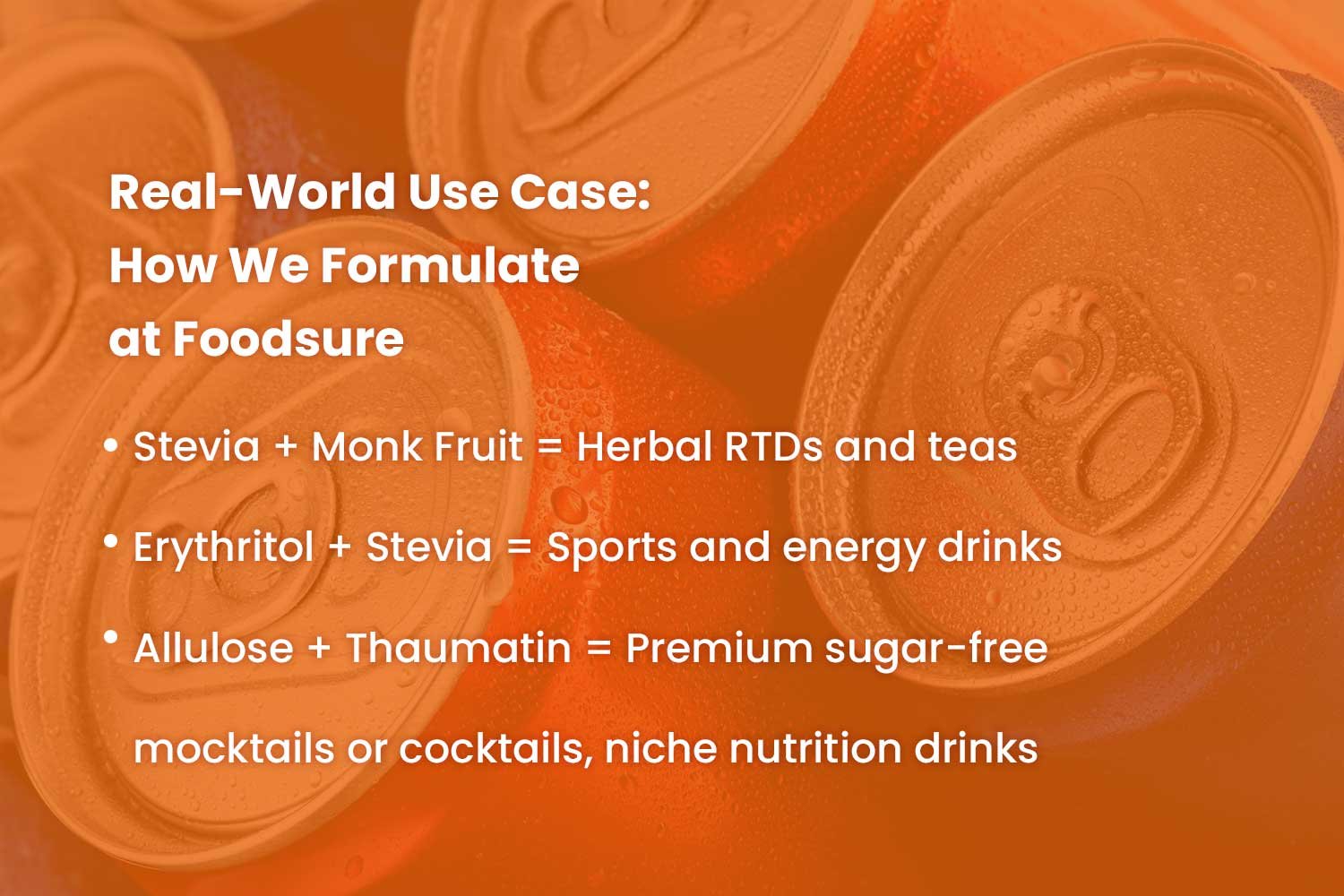
At Foodsure, our formulation process develops zero-calorie beverages through smart sweetener blends that establish an optimal balance among cost, taste, and mouthfeel. The standard combinations contain these components:
- Stevia + Monk Fruit: Herbal RTDs and teas
- Erythritol + Stevia: Sports and energy drinks
- Allulose + Thaumatin: Premium sugar-free mocktails, cocktails, and niche nutrition beverages
Our Zero-Calorie Beverage Formulation Process
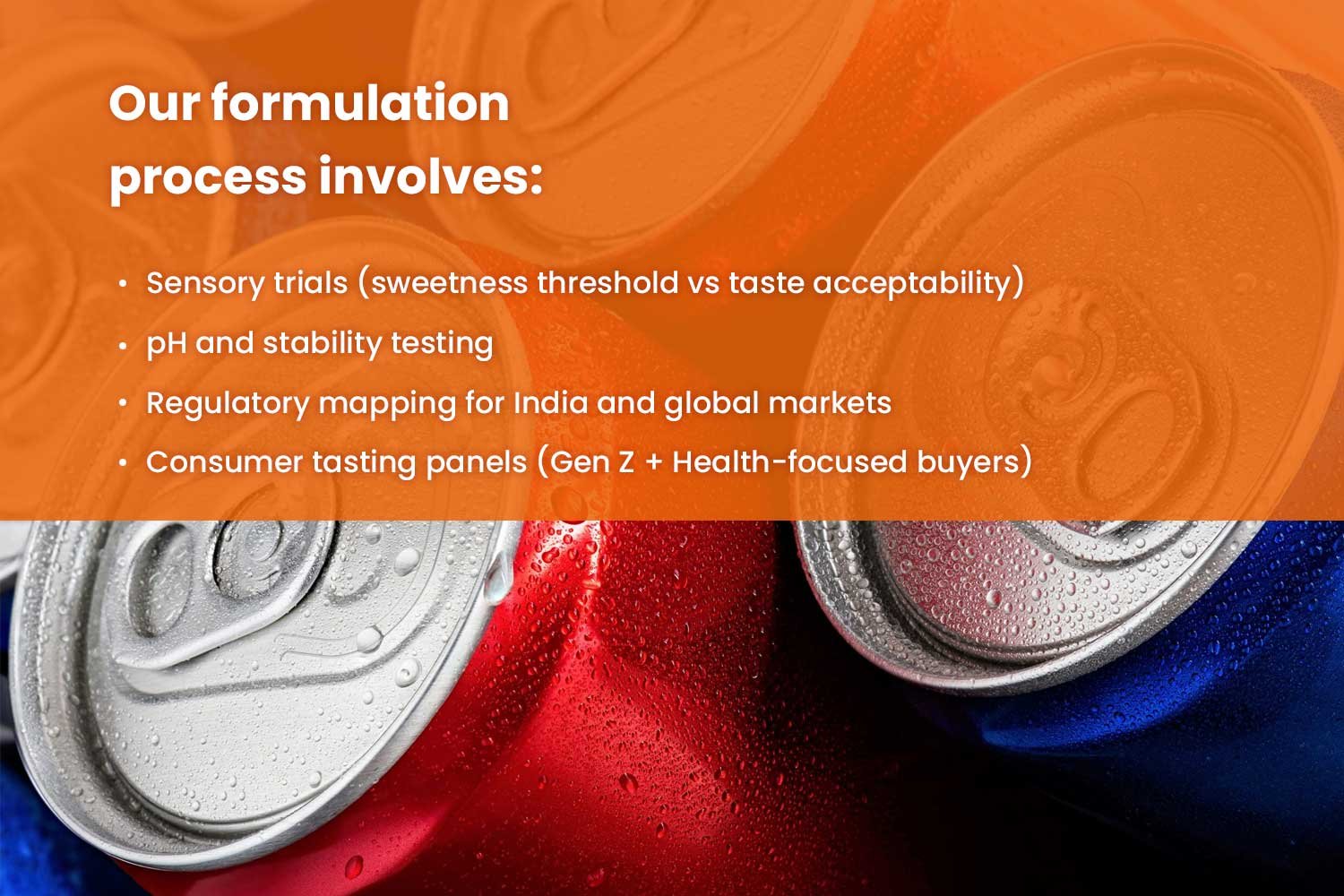
At Foodsure, the company develops successful zero-calorie beverages through a structured process that meets its 2026 operational requirements.
- The testing process includes Sensory Trials, which evaluate sweetness levels and their impact on taste acceptance.
- The testing process requires pH & Stability Testing to verify that all formulations maintain their flavour and shelf-life.
- The process of Regulatory Mapping checks that all products meet both FSSAI requirements and international regulations.
- The company uses Consumer Panels to collect feedback from Gen Z customers and health-conscious buyers for taste and appeal improvements.
Get more insights: How We Solved the Bitter Aftertaste in a Sugar-Free Beverage – A Real Formulation Case Study.
The Decision Point
Sweetness exists as a flavor which creates sensory experiences while serving as a brand identity and scientific study. The correct natural zero-calorie sweetener selection will determine the success of your zero-calorie beverage formulation development.
Consumers in 2026 demand more than just “sugar-free” products because they want:
- Clean, plant-based sweetness
- Great taste without compromise
- Transparency, functionality, and health benefits
Get Zero-Calorie Beverage Formulation That People Crave
The company Foodsure holds the primary position in developing functional and zero-calorie beverages that serve both contemporary Indian markets and international markets. Our company enables you to create beverages that people will enjoy through our expertise in developing existing products and our team of skilled professionals. Our beverage development expertise includes the following products:
- Herbal iced teas
- Energy drinks
- Immunity shots
- Protein shakes
Want to formulate your beverage with lab-tested precision? Talk to Foodsure’s R&D team today. Reach out to us at +918130404757 today for a custom formulation consultation.
Related Blogs
- No Sugar Beverage Formulation Strategy for Commercial Launch
- Clean Label Beverage Development & Ingredient Compliance
- Commercial Beverage Formulation Process Explained
- Functional Beverage Ingredients & Sweetener Systems
- Beverage Reformulation for Sugar Reduction & Market Positioning
FAQs
What is the zero-calorie beverage formulation?
It is the process of making the zero-calorie drinks using the natural zero-calorie sweeteners in order to have the most natural-tasting zero-calorie soft drink.
What are the most popular natural zero calorie beverages sweeteners?
The best non-calorie sweetener options are stevia, monk fruit, erythritol, allulose, and thaumatin. Those will be the best zero-calorie beverages with clean labels.
Are there any zero-calorie drinks that are safe for diabetics?
Yes, beverages designed using zero-calorie natural sweeteners, along with an appropriate name of zero-calorie sugar, are safe for people with diabetes and low-carb diets.
What drinks do stevia or monk fruit mix well with?
Hot teas and RTDs, energy drinks, and flavoured waters would be the best to use in the formulation of zero-calorie beverages using monk fruit or a stevia substitute.
What do I do to ensure that there is taste and stability in zero-calorie drinks?
By using drink development schedules and procedures, sensory experiments, pH analysis, and consumer tests, particularly among Gen Z and health-conscious consumers.
Do they have these sweeteners approved by FSSAI in India?
The majority of natural alternatives, such as stevia, monk fruit, erythritol, and thaumatin, are accepted by the FSSAI and can therefore be used as part of the out-of-house beverage development services; allulose is coming up.
Is it possible to mix sweeteners in a single formulation?
Yes, starch sweetener, monk fruit, erythritol or thaumatin are all needed to balance taste, price, and mouthfeel in formulating zero-calorie beverages nowadays.