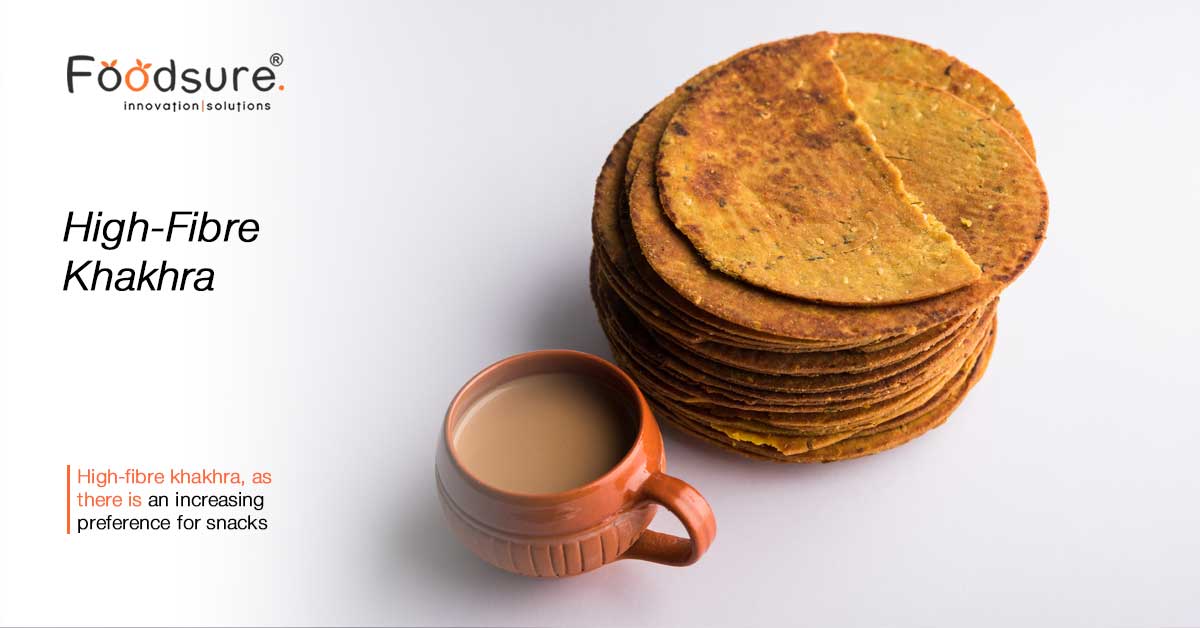
The Indian healthy snack industry has developed at an accelerated rate in recent years as a result of changing tastes and increased nutritional awareness among consumers. Health, taste, and convenience are all things that today’s consumers are on the lookout for. Therefore, the use of beneficial elements and superior positioning is being leveraged to transform traditional Indian snacks. One such snack is high-fibre khakhra.
Historically consumed as a roasted snack from Gujarat, khakhra has evolved into a modern and healthy snack category that works well for consumers who care about their health, as well as fitness enthusiasts. In line with the rising preference for healthier snacks, the D2C players are launching innovative high-fibre khakhra made out of oats, millets, and other sources of fibre. One of the most promising product categories in the healthy snacking space is that of high-fibre khakhra, as there is an increasing preference for snacks with lower oil content and high fibre.
What is High Fibre Khakhra
It is an Indian style crispy flatbread, which is made up of high-fibre elements. It is preferred as a snack over namkeen because of its low fat roasted preparation. Ingredients used to prepare modern day high-fibre khakhra include:
- Whole wheat flour
- Oat flour
- Ragi flour
- Jowar flour
- Bajra flour
- Flax seeds
- Chia seeds
- Isabgol or psyllium husk
In addition to increasing the fibre content, these ingredients maintain the crunchy nature of this product and increase its shelf life as well. The use of high-fibre khakhra as a snack by consumers is on the rise owing to its convenience, nutritional value, and tasty nature.
Rising Requirement of High Fibre Snack Items in India
The demand for healthier snacks is on the rise in metropolitan and semi-urban centres of India. Consumers are becoming more conscious about the number of calories consumed and the ingredients used in snacks.
- Shift to Proactive Nutrition
Modern consumers are adopting proactive health through their diet habits. High-fibre snacks are generally considered beneficial in providing satiety and proper digestion.
- Rise in Functional Foods Demand
Functional foods have additional benefits apart from just being nutritious. High-fibre khakhra fits into the category of functional foods due to its properties.
- The Emergence of Wellness and Fitness Trends
The increase in demand for roasted and high-fibre snacks is linked to the emergence of gymnasiums, wellness programmes, and healthy living practices.
- Favouring of Traditional Indian Ingredients
Moreover, consumers are inclined towards traditional Indian ingredients such as whole grains, cumin, and millets. The high-fibre khakhra enjoys an upper hand owing to its fusion of tradition and nutrition.
Key Ingredients for High-Fibre Khakhra
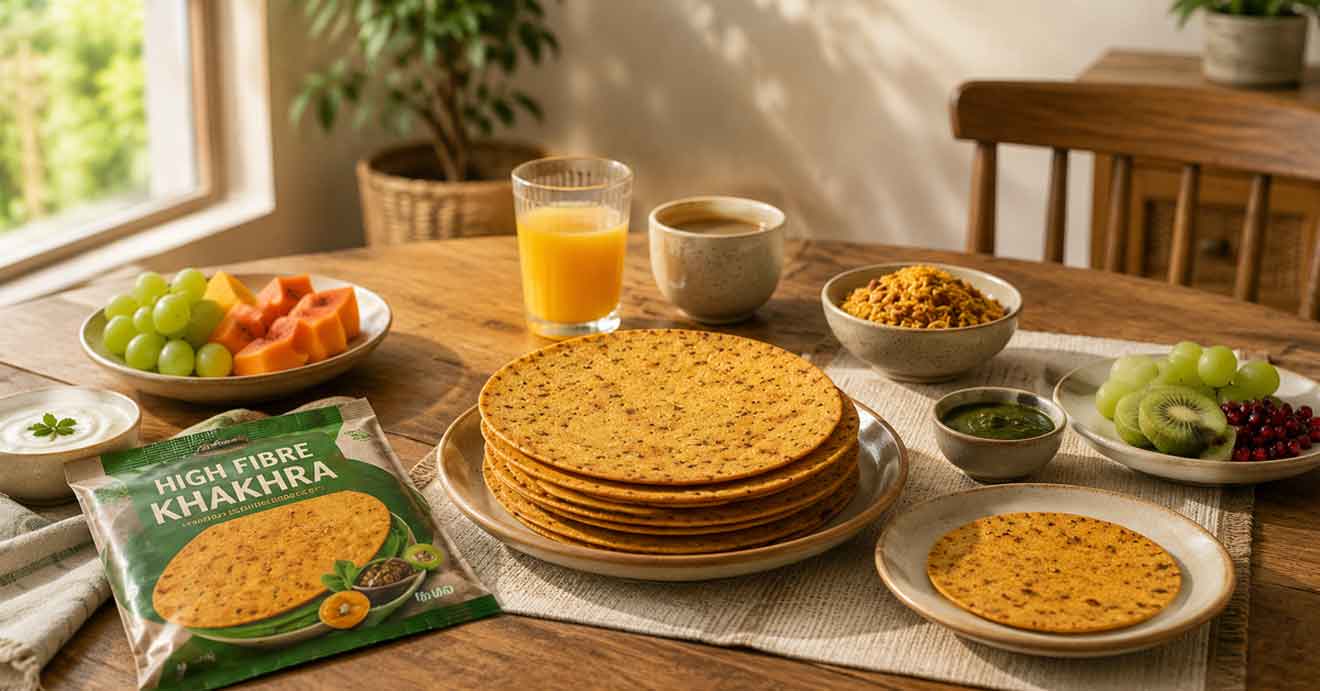
There is one very important component that needs to be considered when preparing high-fibre khakhra successfully.
Whole Wheat Flour: Whole wheat is where the basic structure of khakhra and its fibre can be obtained.
Flour of Oats: Oats help to maintain a healthy cardiac posture and increase soluble fibre.
Millets: As millets like ragi, jowar, and bajra are nutritious, there is an increased tendency towards consuming these.
- High amount of fibre
- Excellent source of minerals
- Gluten free nature
- Helps to provide constant energy release
Chia and flax seeds: Along with improving the crunchiness and textures of the food, chia and flax seeds also increase nutritional value.
Psyllium Husk: To increase the fibre content, psyllium husk is included in khakhra.
High Fibre Khakhra Product Development Process
The key areas that have to be considered during the development process of the high-fibre khakhra product include texture, taste, nutritional value, and shelf life.
Ingredient mixing
It involves selecting suitable flour blends, seeds, spices, and ingredients that will add nutritional value.
Manufacturers have to ensure:
- Proper blend of ingredients
- Balanced moisture content
- The right degree of elasticity in the dough
- Consistent taste profile
Dough preparation: The addition of water and oil helps create the dough. Kneading is important for getting an even dough texture and rolling.
Dough thickness & rolling: Rolling creates thin circular dough sheets. It is important to achieve consistent dough thickness, as rolling plays a crucial role in roasting.
Roasting Technology in the Process of Manufacturing High-Fibre Khakhra
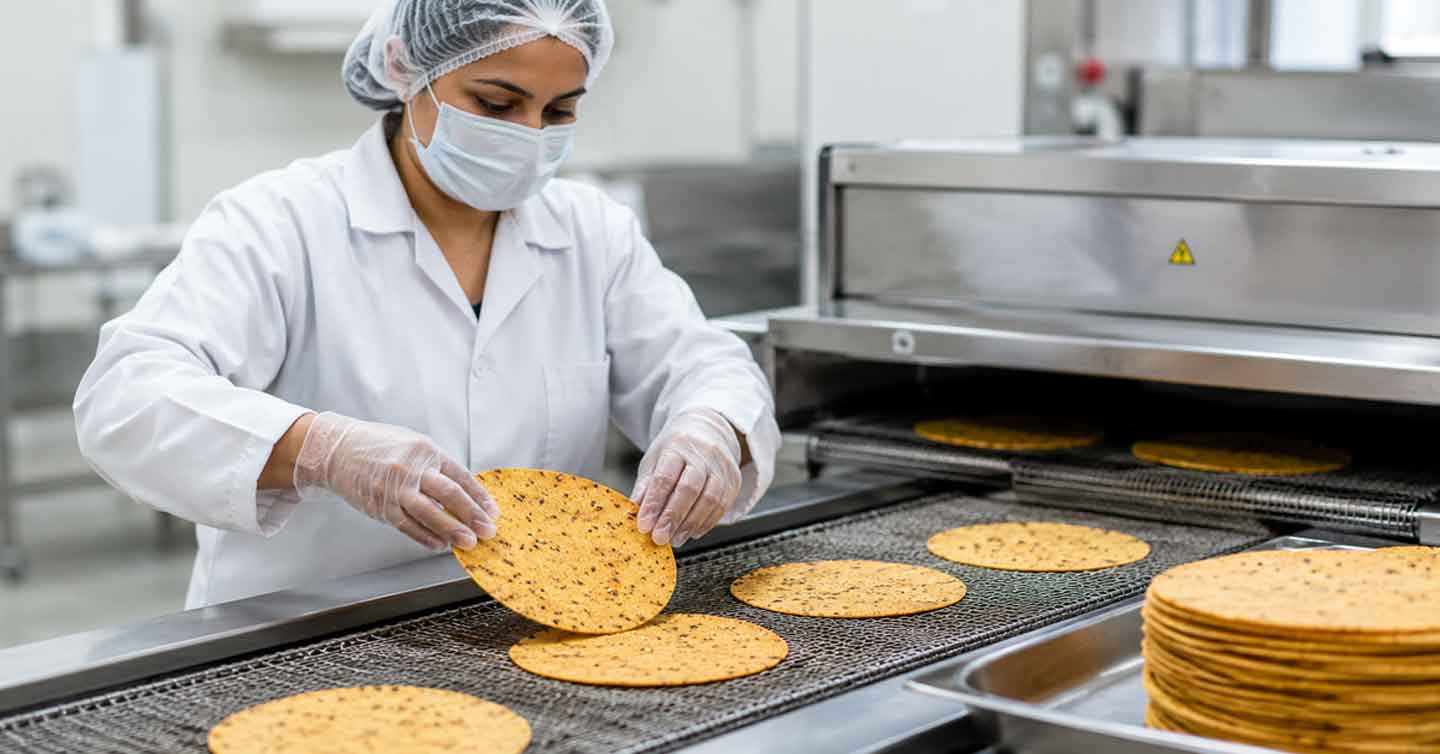
Roasting plays a crucial role in the process of manufacturing high-fibre khakhra. The right roasting technique helps in:
- Giving a sharp texture
- Enhancing aroma and taste
- Reducing moisture content
- Increasing shelf life
Manual Roasting Systems: Roasting procedures suitable for craft manufacturing are often applied by small manufacturers.
Semi-Automatic Roasting Machines: Such methods help reduce dependence on manpower.
Continuous Roasting Systems: Continuous roasting machines are generally applied by big D2C brands for mass production.
The Significance of Novelty in Flavour
In today’s healthy snacks, the most important element for success is flavour. Consumers have high expectations for flavours of their healthy snacks.
Common Seasoning Ingredients
Some common seasoning elements that go into making high-fibre khakhra are:
- Black salt
- Red chilli powder
- Garlic powder
- Onion powder
- Mint powder
- Cheese seasoning
- Dry mango powder
- Herbs seasoning
These ingredients play an important role in creating novel and authentic Indian flavours.
Popular Flavours in High-Fibre Khakhra
To cater to diverse customer segments, D2C brands have been emphasising flavour variety.
- Traditional Indian Masala
A spicy and tangy flavour variant containing dry mango, black salt, chilli, and cumin flavours.
- Pudina Mint Flavour
An ideal flavour for summer snacking due to its refreshing nature.
- Peri Peri Flavour
A flavourful variety of smoky and peppery types appealing to the younger generation.
- Cheese Flavour
A savoury cheese flavour designed for kids and teenagers, along with upscale market buyers.
- Fitness Product with High Protein
Some brands manufacture sports-oriented snacks by mixing high-fibre khakhra with soy crisps, nuts, and protein seasoning.
Packaging Techniques for D2C Brands
For the preservation of freshness and maintaining high shelf appeal, packaging plays an important role.
Protection from Moisture: Khakhra products are extremely vulnerable to the absorption of moisture. Barrier packaging can maintain the crispness of Khakhras.
Sealed Packages: Convenient packaging makes usability easier and increases the chances of repurchase.
Luxury Branding: Luxury packaging is commonly linked with higher standards and customer trust in contemporary times.
Nutrition Information
The customers expect accurate information regarding:
- Fiber Content
- Ingredients List
- Calorie Count
- Protein Levels
- Millet claims
Benefits of High-Fibre Khakhra for Consumers
Several health and lifestyle benefits are contributing to the growing popularity of high-fibre khakhra.
- Improves Digestion Health
Fibre is essential for gut health and improves digestion.
- Increases Satiety
High-fibre snacks minimise unhealthy snacking habits since they keep consumers feeling full for an extended period of time.
- Reduced Amount of Fats
It contains fewer fats as compared to other fried namkeen snacks.
- Convenience Snack
Its shelf life and convenience make it ideal to consume at home, in the office, and while travelling on holiday trips.
Why Should D2C Brands Incorporate Highbrow Khakhra
The D2C approach allows companies to reach health-conscious customers via the internet.
- Strong Customer Demands: Consumers are interested in buying healthy snacks from India through the Internet.
- Creating a Premium Image: Premium images and high pricing are possible through use of functional ingredients.
- Quick and Easy Diversification: Several flavours and millet products, along with additional proteins, can be incorporated into products.
- High Possibility for Re-purchasing: Healthy snacking behaviour leads to high chances of repeat purchases.
Problems Encountered in the Production of High-Fibre Khakhra
Even though the category has much potential, there are several issues faced by companies.
- Dealing with Texture: Incorrect proportions can lead to too much fibre affecting the texture of the product.
- Maintaining flavour balance: The distribution of seasoning needs to be kept in check during storage.
- Managing Product Lifespan: Moisture management is necessary for ensuring the freshness of the product.
- Controlling Costs: A proper pricing strategy is required to prevent the increased cost of production due to expensive ingredients.
Future Scope of Market for High-Fibre Khakhra
With consumers remaining conscious about food products offering health benefits, the future seems promising for high-fibre khakhra. The growth in consciousness about balanced lifestyles and preventative nutrition is leading to the growth of the healthy snacking segment.
Some of the emerging trends include:
- Innovation in Millet Snacks
- Higher Protein Variants of Khakhra
- Clean Label Foods
- Gluten-Conscious Products
- Organic Positioning of Ingredients
- Sustainable Packaged Products
The emergence of high-fibre khakhra is expected to increase as the D2C models keep innovating Indian snacks by converting them into functional foods.
Conclusion
There are bright opportunities for innovative D2C food entrepreneurs in the healthy snacks sector of India. High-fibre khakhra is distinct from the other new sectors because of the way that it combines both modern benefits and traditional Indian flavours. It is an excellent choice for modern consumers because of its roasted preparation process, high dietary fibre composition, flexible ingredients, and long shelf-life period. A focus on better ingredients, roasting techniques, flavours, and packaging can help D2C companies find success within the growing market for healthy snacks.
Demand for high-fibre khakhra is expected to increase slowly over the coming years as more consumers become aware of digestive health, fibre intake, and clean-label products.
High-Fibre Khakhra Product Development for D2C Brands
Develop high-fibre khakhra products with crispy texture, balanced nutrition, and modern flavours for health-conscious consumers. Create scalable snack formulations using functional grains, fibre-rich ingredients, shelf-life optimisation, and efficient manufacturing systems designed for D2C food brands, healthy snack startups, retail expansion, and commercial food product success.
FAQs
Why are regular snacks less nutritious than high-fibre khakhra?
High-fibre khakhra contains nutritious components that promote satisfaction and proper digestion processes and is baked rather than fried.
Which nutritious components do high-fibre khakhra contain?
They include whole wheat flour, oats, millets, flax, chia, and psyllium husk.
Is it possible to control one’s body weight with the help of high-fibre khakhra?
Sure enough, its high fibre content promotes satiety, which prevents unnecessary snacking.
What high-fibre khakhra tastes do people prefer the most?
The top-rated high-fibre khakhra tastes are traditional masala, peri peri, pudina mint, methi, and cheese.
What makes high-fibre khakhra more attractive to D2C brands? Health benefit claims, opportunities for taste experimentation, premium branding capabilities, and high purchase repurchase desire are all available.
How must high-fibre khakhra be packaged?
A moisture-proof and resealable package that offers excellent barrier protection is ideal.