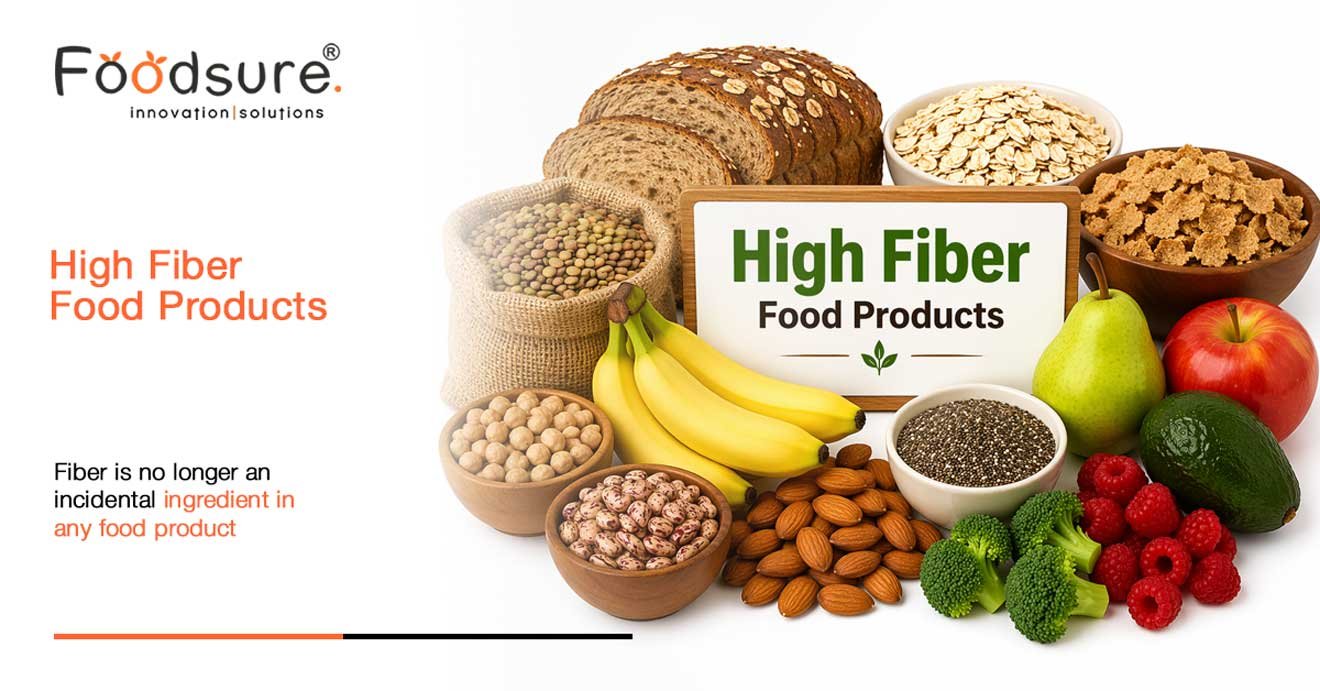
Fiber is no longer an incidental ingredient in any food product; it has now taken center stage in many food items. The demand for High Fiber Food Products is on the rise due to its benefits such as aiding in digestion, helping maintain a healthy weight, and improving metabolism among others.
If you work in the field of food science technology or food contract manufacturing, it is imperative for you to know the ins and outs of fiber rich foods. This knowledge will be useful in ensuring that your products meet the set criteria and standards.
The dietary fiber market size was estimated to be at USD 6.2 billion in 2024 and is expected to reach USD 11.1 billion by 2030, growing at a compound annual growth rate of 8.8% during the forecast period.
Creating high fiber food products is not as easy as most people might think.
This manual gives you a step-by-step approach on how to develop High Fibre Foods. Starting from the choice of the fiber used, all the way to developing a ready-to-market high-quality product that is consumer-approved.
Have a High Fiber Food Product Idea?
Share it with our formulation team — [email protected]
What Are High Fiber Food Products?
High Fiber Food Products refer to food products which are processed in such a way that they have sufficient amounts of dietary fiber in them. Under the Indian food laws, any food item that has more than 6 grams of dietary fiber per 100 grams if the food is solid, or 3 grams per 100 milliliters if it is liquid, will be considered “high fiber”.
Dietary fiber, on its own, is known to exist in two main forms – namely, soluble fiber and insoluble fiber. Soluble fiber, including beta-glucan, inulin, and psyllium husk, dissolves in water and creates a gelatinous substance, which helps in slowing down digestion and managing cholesterol levels. On the other hand, insoluble fiber, including cellulose and wheat bran, helps in increasing stool mass.
An efficient and effective high-fiber formulation involves the use of both kinds of fibers so as to achieve physiological completeness in terms of effects. Just adding one kind of fiber to a product does not usually lead to the desired clinical/sensory effect for the customer.
List of foods high in fiber include oats, chickpeas, lentils, psyllium husk, inulin, resistant starch, apple pectin, pea fiber, and chicory root extract.
High Fiber Food Products vs. Standard Fortified Foods: A Comparison
Not all fiber-containing products are alike. There is indeed a huge difference between the fiber-rich product which has been produced using natural fiber ingredients and the artificial one which is made up of synthetic fibers.
It is essential to be aware of such differences in order to scale up recipes from laboratories to industrial processes. The fiber affects moisture movement, baking time, and mixing torque.
| Feature | Standard Formulation | High Fiber Formulation |
| Water Absorption | Low Absorption | High Absorption |
| Mixing Time | Standard Duration | Extended Duration |
| Dough Machinability | Highly Pliable | Often Stiff |
| Baking Time | Standard Cycle | Longer Cycle |
| Shelf Life | Standard Length | Requires Monitoring |
| Ingredient Cost | Budget Friendly | Premium Priced |
| Sensory Profile | Smooth Texture | Potential Grittiness |
Trends Driving the High Fiber Food Products Category
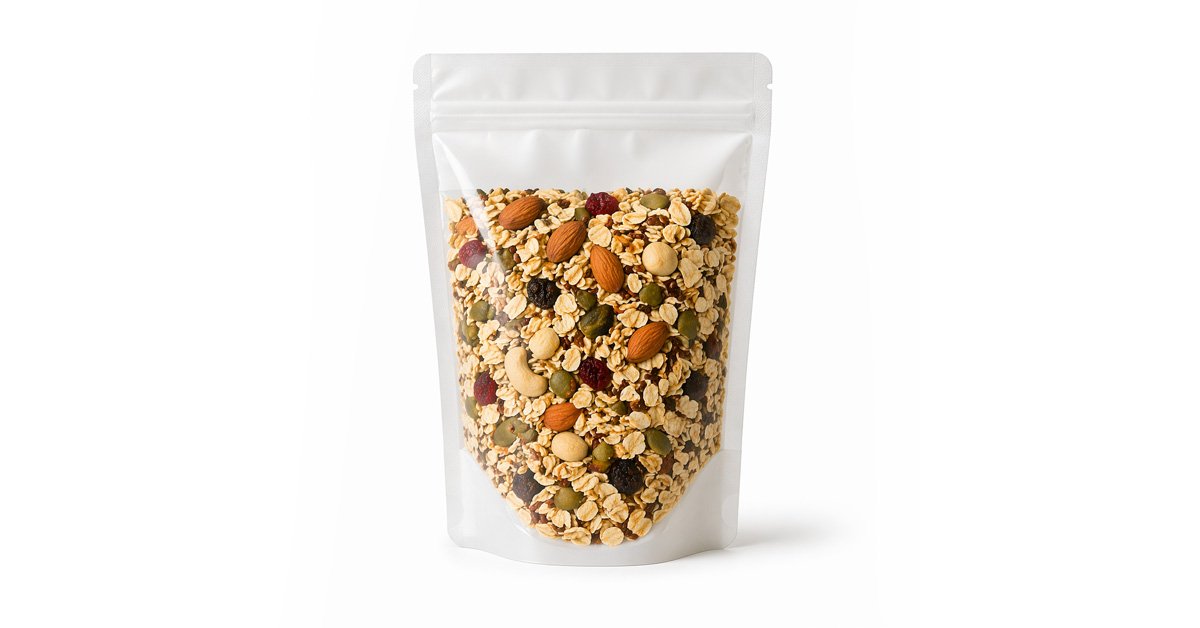
There have been many changes within the High Fiber Food Products category in recent years. Innovations have been spurred by consumer interest, clinical studies, and clear regulations.
Emerging trends shaping the market for fiber-rich foods and functional foods in the 2025-2026 period:
- Increasing consumer interest in the gut health segment leads to use of psyllium and inulin ingredients across different product categories.
- Resistant starch is increasingly considered a valuable prebiotic in conventional food products.
- Snack food rich with fibre products perform better than supplements.
- Natural sources of fiber are replacing artificial additives within re-formulated product categories.
- Product lines offering combinations of fibers with proteins have gained popularity due to satiation effects.
- Transparency of information regarding High Fiber Foods List increases purchase intentions.
- Modern uses are discovered for regional grain-based fibers such as jowar, bajra, and ragi.
- Specialty fibers for children and older consumers emerge as fast-growing segments.
- Specialty products containing fermentable fibers gain popularity through online retail platforms among Tier 2 and Tier 3 consumers.
Those brands that will adopt the above trends in formulating High Fiber Food Products brands will have more relevance, competitiveness, and sustainability.
Have a High Fiber Food Product Idea?
Share it with our formulation team — [email protected]
Core Components of Well-Formulated High Fiber Food Products
Each successful fiber-based product contains a unique collection of basic ingredients. It is the combination of these ingredients that makes sure the product passes regulatory requirements, fulfills its health claims, and obtains consumer approval.
| Component | Primary Role | Key Consideration |
| Fiber Source | Nutritional Delivery | Solubility Profile |
| Binding Agents | Texture Stability | Clean Label Fit |
| Moisture Control | Shelf Life | Water Activity |
| Flavor Masking | Sensory Balance | Earthy Notes |
| Regulatory Filing | Claims Validation | FSSAI Compliance |
The choice of the appropriate fiber source is the key decision in developing High Fiber Food Products. The properties of each fiber source vary in terms of viscosity, water absorption ability, fermentation speed, and taste, and this will impact all future formulation decisions.
Fiber binders and texture modifiers need to be chosen in sync with the fiber source. For instance, psyllium husks are extremely viscous when hydrated, and the addition of such fiber sources to bakery and beverage products may lead to drastic alterations of their mouthfeel, unless the appropriate hydrocolloids are used to balance out this effect.
Water management is especially important when dealing with food products containing a high concentration of fiber, especially bakery products and snacks. As the water-binding ability of fiber sources is quite high, it may affect the shelf life of products negatively and contribute to undesired changes of the texture.
Masking flavors is a rarely addressed problem. Some fiber sources have earthy, bitter, or beany off-flavors that need special flavor modification or encapsulation technologies.
Common Problems in Formulating High Fiber Food Products
Developing High Fiber Foods Products requires considerable technical expertise. Seasoned food scientists still face recurring issues that may stall the product development process and prove costly, or worse, cause outright rejection by consumers. Early identification of these formulation issues is critical.
Formulation issues in developing high fibrous foods product:
- Too much use of soluble fiber results in poor gel formation in beverages.
- Use of insoluble fiber making the texture of the snack/bakery product rough/gritty.
- Interaction between fiber and protein resulting in off-taste in high-protein, high-fiber dual claims products.
- Failure to test product for validated label claim.
- Insufficient palatability testing prior to scaling up the product.
- Degradation of fiber caused by excessive heat generated in processes such as extrusion or baking.
- Low dispersibility of fiber powder in instant/ready-to-mix products.
- Incorrect label of fiber contents based on improper testing using AOAC methods.
This is not an issue facing just new businesses. Food brands that are already established have experienced product recall and notices from authorities because of formulation issues in the High Fiber Food Products range that had not been solved. Only by having a systematic development process will such outcomes be avoided.
Development Stages for High Fiber Food Products
High Fiber Food Products’ commercialization through its development process is a systematically planned one. There is an objective for each stage, and failure to undertake any stage will lead to a high likelihood of failure.
| Stage | Key Activity | Expected Output |
| Stage 1 | Fiber Source Screening | Ingredient Shortlist |
| Stage 2 | Prototype Formulation | Bench-Top Sample |
| Stage 3 | Sensory Evaluation | Consumer Panel Score |
| Stage 4 | Nutritional Analysis | Fiber Content Verified |
| Stage 5 | Stability Testing | Shelf Life Data |
| Stage 6 | Regulatory Filing | FSSAI Approval |
| Stage 7 | Pilot Scale-Up | Commercial Readiness |
The first step commences with the screening of fiber ingredients based on their suitability to the product format, fiber claim, cost considerations, and consumer demographics. Candidate ingredients from the list of High Fiber Foods should not only meet fiber criteria but should also be compatible with the intended product formula.
Formulation in step 2 entails running a series of tests with varying proportions of fiber to establish the optimum inclusion rate for the intended purpose. This process involves numerous trial runs, often requiring up to 10 or 20 attempts to establish the optimal product prototype.
Consumer sensory testing at stage 3 is mandatory. A product that meets nutritional criteria and other regulatory standards but fails to meet the consumer taste standards will likely never become a regular buy. The consumer sensory panel must comprise consumers from the intended consumer demographic.
In Step 6, all fiber claims on any food product need to be supported by tests done by AOAC using the FSSAI recommended method. Products which try to use a manufacturer’s Certificate of Analysis to claim fiber values on their label run into serious labeling problems.
Have a High Fiber Food Product Idea?
Share it with our formulation team — [email protected]
Foodsure’s Process for Formulating High Fiber Food Products
Formulation of an effective formulation requires a scientific and empirical approach. Speculation results in batch inconsistency and customer disapproval. Each and every additive must have a reason to be included into the formula.
The step-by-step method for formulating functional foods involves the following actions:
- Identify the exact dietary message intended for the food rich with fibre
- Choose the main dietary fiber according to the necessary level of solubility.
- Measure the base hydration of the raw fiber.
- Manipulate base hydration of the recipe’s control.
- Include hydrocolloid additives to create a stable matrix.
- Organize blind sensory panels to detect taste deficiencies.
- Refine conditions for cooking or baking process.
- Certify final nutrition composition via an independent lab.
Ingredient interaction is the key element in a successful approach. One should consider the combination of a quick fermenting fiber, such as fructooligosaccharides (FOS), and a slow-fermenting fiber, e.g. cellulose, as a way of achieving sustained gut activity without unexpected gas release. Such intelligent selection allows distinguished companies to compete with inferior products.
Fiber rich foods formulation should also take the aspect of attractiveness of the product into account. People eat with their eyes and if the food rich with fibre looks dull and gray, chances of success are slim. Even color masking and natural coloring may be used when necessary.
In FoodSure, there is a methodical way of food product development. Everything is done with scientific rigidity and exactness. From selecting ingredients to conducting tests, we make sure that all is done consistently and accurately.
Cost Optimization Strategies for Formulating High Fiber Food Products
The manufacture of premium functional products typically involves high production costs. Finding specific ingredients for manufacturing High Fiber Food Products might stretch the R&D budget. Profitability does not mean sacrificing nutrition.
Ingredient selection and pricing need to be balanced against consumer expectations. While consumers are prepared to pay higher prices for fiber-rich foods, there is always an upper limit to their brand loyalty. Good formulation needs to have sound financial management from the very first bench test.
Ingredient mixing is an extremely successful cost-cutting method. Isolated pure fibers, such as organic inulin from chicory root, tend to be exceptionally costly. It is possible to lower costs by mixing high-priced soluble fibers with low-priced insoluble fibers.
| Fiber Source | Cost Tier | Functional Role |
| Oat Bran | Low Cost | Bulk Addition |
| Apple Pomace | Low Cost | Moisture Retention |
| Pea Isolate | Medium Cost | Protein Synergy |
| Chicory Inulin | High Cost | Prebiotic Support |
| Resistant Dextrin | High Cost | Clear Solutions |
Companies manufacturing high fibrous foods must carry out periodic audits of their supply chain operations. Long-term agreements on bulk fibers serve as insurance against future rises in agricultural prices.
In addition to considering profit-making capabilities, companies should focus on scientific research that enhances nutritional value. In doing so, High Fiber Foods will continue to sell well beyond the launch period.
The Clean Label Challenge in High Fiber Food Products
Clean label expectations have emerged as a hallmark criterion in the High Fiber Food Products category. By 2026, shoppers are no longer simply looking for a fiber presence in their product; they expect a clean label that is free of any unrecognizable ingredients and artificial substances.
Key considerations in formulating products in a clean label manner include:
- The sources of dietary fibers should consist of recognizable whole ingredients rather than chemical fiber isolates with strange names.
- Use of artificial sweeteners in compensation for fiber influence on taste needs to be explicitly declared.
- Products high in dietary fiber should avoid synthetic thickening agents that go against a natural approach.
- Front-of-pack fiber claims should match the nutritional facts at the back of the package exactly.
- Use of proprietary fiber blends where the amounts of particular components cannot be seen by the consumer.
The issue of clean labeling in formulating fiber-rich products is made more difficult by the necessity to use some highly effective yet controversial in terms of consumer perception fibers.
High Fiber Food Products that are considered the most reliable brands are those using familiar raw materials such as oats, chickpeas, flaxseed, psyllium, lentils, and making valid and legal claims about their fiber benefits.
Have a High Fiber Food Product Idea?
Share it with our formulation team — [email protected]
Emerging Formats in the High Fiber Food Products Space
The format landscape for High Fiber Food Products has evolved much further than the conventional formats of bran-enriched cereals and fiber sachets. The advancement in food technology has created new formats that offer the advantages of high fiber food products in an enjoyable way.
| Format Type | Key Fiber Used | Target Occasion |
| High Fiber Biscuits | Wheat Bran, Oats | Snack, Breakfast |
| Fiber Beverages | Psyllium, Inulin | Morning Routine |
| Fiber Protein Bars | Pea Fiber, Chicory | Post Workout |
| Extruded Snacks | Resistant Starch | Evening Snacking |
Format trends developing in the high fibrous foods product range involve:
- Readymade drinks of high-fibre shakes as meal replacements for busy professionals working in cities.
- Pastas and noodles made with lentil and chickpea flours as the basis of high-fibre products.
- Functional chocolates containing chicory root inulin as a substitute for sugars and fibers.
- Flatbreads and rotis are fortified with jowar, bajra, and psyllium.
- High-fibre protein puffs and snacks using pea fiber and resistant starch.
- Gummies containing prebiotics as sources of soluble fiber for younger demographics.
- Breakfast cereals fortified with beta-glucan for cholesterol-lowering benefits.
Innovation in packaging is also revolutionizing packaging at High Fiber Food Products. Sachets, snacks packed in portions, and pouches that can be reclosed are helping people incorporate fiber-rich foods into their schedules without interfering with their current routines.
As noted by McKinsey, some of the fastest-growing categories of food include wellness-oriented foods and foods that emphasize health.
Manufacturing Standards for High Fiber Food Products
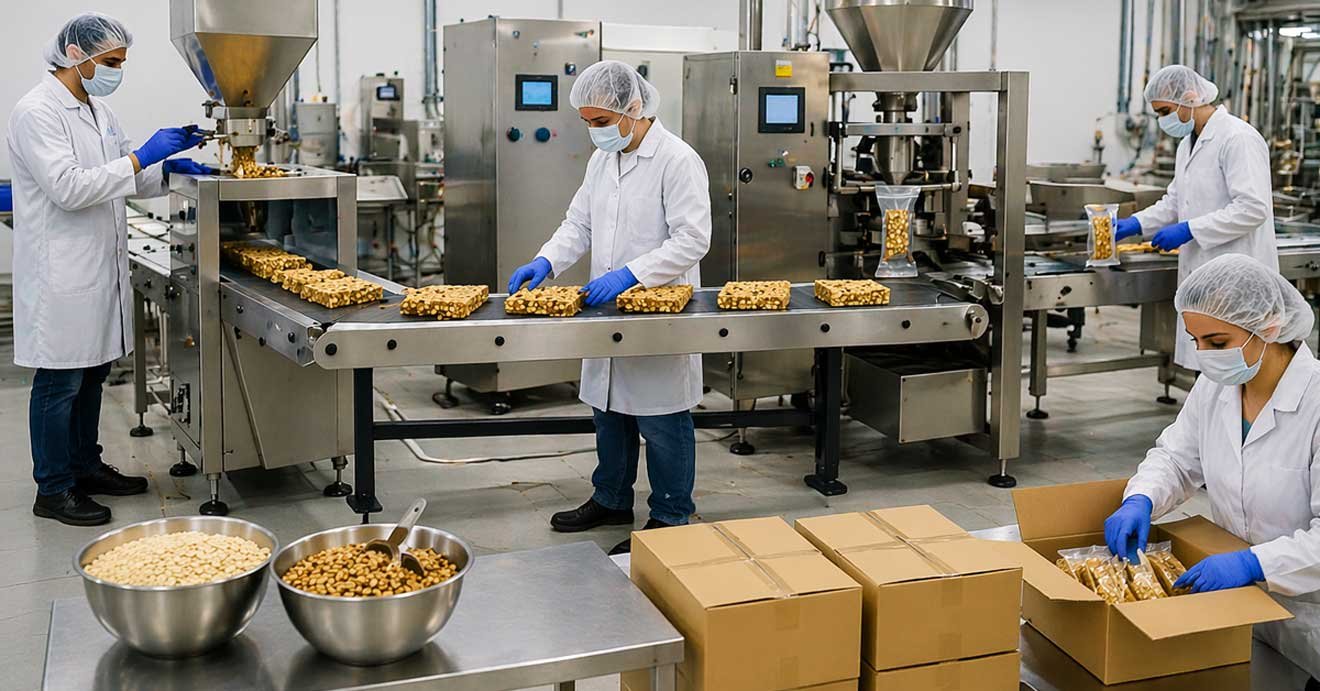
Quality in manufacturing is where claims around fiber formulation meet reality in practice. Every aspect of production, from temperatures and mixing order to hydration duration and drying process, directly influences the composition and behavior of fibers in High Fiber Food Products.
Below are the crucial manufacturing quality parameters which distinguish high-end manufacturers of High Fiber Foods products from others:
- Exceed Minimum Requirements: Take GMP as your base, placing emphasis on stringent QC and full traceability of the ingredients used.
- Test Ingredients: Ensure all ingredients contain accurate fiber levels before processing starts.
- Maintain Strict Moisture Content: Monitor the heat and moisture conditions in order to maintain functionality of fiber-rich foods.
- Processing Parameters: Make sure there is no over-mixing/shearing and proper processing temperature/pH so that soluble fibers are not denatured.
- Perform Batch Analysis: Analyze nutritionally and perform tests on the matrix.
- Microbiology Testing: Meet all safety requirements before releasing the goods for sale.
- Always Use Finished Product Analysis: Do not trust only certification of ingredients.
Food manufacturers dealing with fiber rich foods formulations involving such processes as extrusion cooking, baking, or retorting need to ensure that fiber molecules are not negatively affected by processing. Resistant starch, for instance, may revert to regular starch molecules when subjected to specific high heat-high moisture processing conditions.
Building Better High Fiber Food Products
High Fiber Food Products, a product class expected to thrive by 2026, will be among the most dynamic and profitable areas within the worldwide food manufacturing industry. The high demand from consumers, the increasing number of clinical studies supporting fiber consumption, and the gradual improvement of regulations all play important roles.
Creating fiber rich foods that will meet nutritional, sensory, regulatory, and business requirements is not an easy task. There are numerous aspects that need to be considered. Choosing a proper fiber type and simply incorporating it into your existing formula is not enough.
In the world of high fiber food products, those brands that are based on sound ingredient selection, scientific formula design, rigorous testing, and honest labeling prevail. Those who take fiber food formulation seriously and regard it as a strategy instead of marketing will succeed and create long-lasting relationships with consumers.
Regardless of whether you have just joined the competition in fiber rich foods or are a seasoned player considering re-formulation of your products for compliance, we hope that this guide will be helpful.
Conclusion
The brands that will shape the future decade of High Fiber Food Products innovation are the ones currently striving to improve ingredients, formulations, and communications with their consumers.
Connect with Foodsure to develop fiber-based products that are scientifically designed, regulation compliant, and consumer oriented.
Our food technologist can assist you from idea generation to marketing your product through innovation and excellence.
LAUNCH YOUR Food Product with us
Launch a Winning High Fiber Food Product in 2026
From high fiber ingredient sourcing and flavour optimisation to stability testing and contract manufacturing — Foodsure handles every step so your high fiber food product reaches market clean, compliant, and commercially ready.
✓Fiber Formulation & Taste Optimisation
✓Contract Manufacturing
Or email us — [email protected]
FAQs
How is a product classified as a High Fiber Food Product by FSSAI?
The minimum fiber content in such products should be 6 grams per 100 grams.
What is the best fiber to use in a High Fiber Foods List formula?
Psyllium Husk, Oats, and Chicory Inulin are very versatile and well studied.
Is there any way that foods rich in fiber can also be rich in protein?
Yes. The formulations containing pea fiber and chickpeas are rich in both components.
How does fiber rich foods affect the properties of the product?
Soluble fibers make the product viscous, while insoluble fibers increase its volume and may cause grittiness.
Which testing technique confirms the presence of fiber in foods rich with fiber?
AOAC 2009.01 and AOAC 991.43 are the recognized techniques for measuring dietary fiber.
How frequently should the formulation of High Fiber Food Products be revised?
Annually or when a new supplier of a component or new processing conditions arise.
Is there anything specific about High Fiber Food Products concerning storage and packaging?
Yes. Due to the presence of hygroscopic ingredients, moisture-resistant packaging is needed.