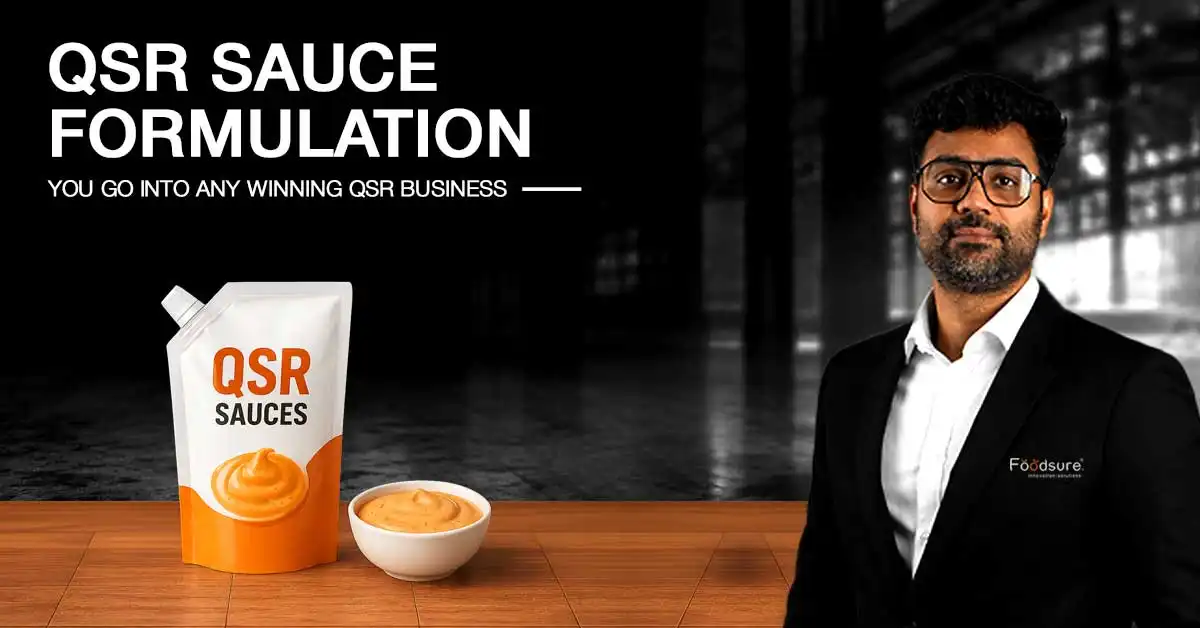
You go into any winning QSR sauce formulation business, and you realize one common thing. Customers will come in to buy a burger, wrap, pizza, sandwich, fries or snack, but most come back for the sauce. A well-conceived sauce not only enhances flavor; it elevates an eating occasion and develops strong brand identity. Many times, customers may not be able to recall what ingredients were in their favorite sauce, but they can easily identify its flavor and the experience it elicits. This ability to distinguish and further foster brand loyalty has thus propelled premium sauce-making to be one of the most exciting prospects within the Indian food space. Amidst fierce competition from QSRs, cloud kitchens, and food startups alike, it is evident that proprietary sauces are a significant competitive advantage.
Foodsure supports restaurants, food businesses and manufacturers in creating unique sauces, which leverage great taste, uncompromised quality, business scalability and high consumer acceptance to ensure their products succeed from conception through to the market. This growing demand for unique flavor experiences has made QSR sauce formulation one of the most important areas of innovation for restaurants, cloud kitchens, food startups, and food manufacturers.
Why QSR sauces are important
Customers do not buy sauces because of their ingredients. Customers buy sauces because they’ve had them before.
A successful QSR sauce formulation can:
- Improve Product Taste
- Increase Repeat Purchases
- Create Brand Identity
- Improve Menu Versatility
- Increase Customer Loyalty
One very common type of highly profitable restaurant franchise is one based on its signature sauces. In many situations, the sauce is more important than the actual product it’s associated with.
The mindset of Indian consumers
Indian consumers want extremely strong taste experiences. They seek to look for the following:
- Creamy Texture
• Balanced Spice
• Tanginess
• Rich Mouthfeel
• Familiar Taste Profiles
Indians do not typically consider a single sauce to have one flavor dimension as many Western markets do, making localized QSR sauce formulation essential. This is precisely why simple translation of Western recipes does not work. Indian flavors are to be considered. The sauces and condiments market was valued at USD 132.30 Billion in 2025, projected to reach USD 139.71 Billion in 2026, and is forecast to expand to USD 240.91 Billion by 2036 at a 5.60% CAGR.
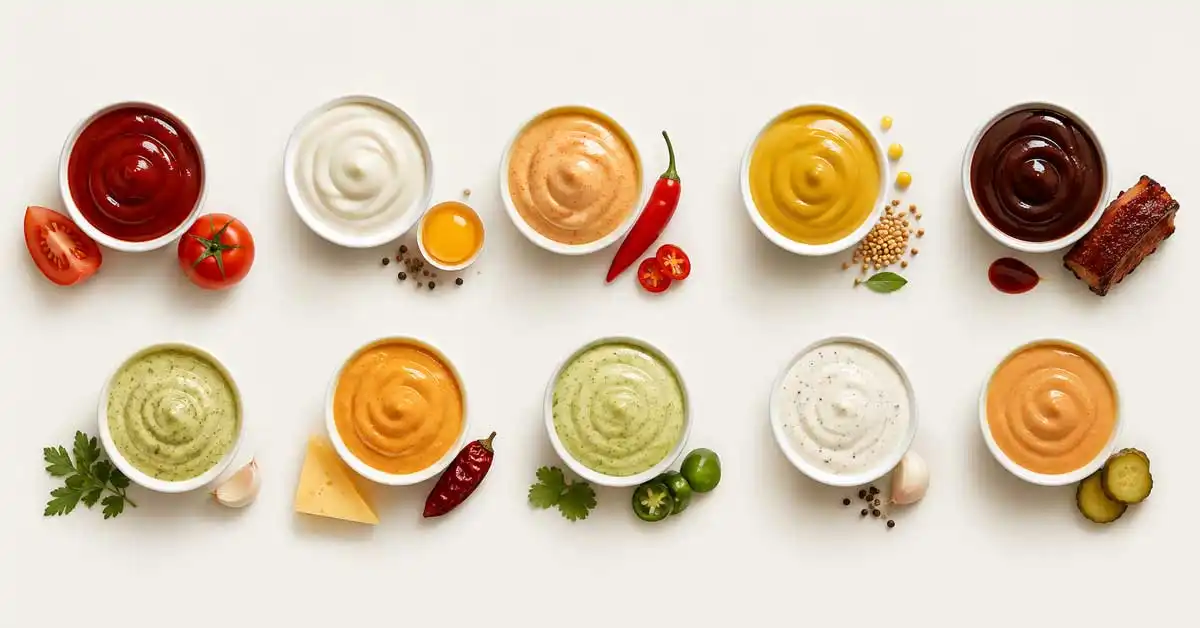
Popular Premium QSR Sauce Categories
Burger Sauces
- Signature Burger Sauce
- Smoky Burger Sauce
- Cheese Burger Sauce
Sandwich Sauces
- Mint Mayo
- Peri-Peri Mayo
- Chipotle Sauce
Wrap Sauces
- Tandoori Sauce
- Garlic Sauce
- Spicy Yoghurt Sauce
Dip Sauce
- Cheese Dip
- Schezwan Dip
- Jalapeno Dip
Fusion Sauces
- Butter Chicken Sauce
- Tandoori Mayo
- Achari Mayo
- Makhani Sauce
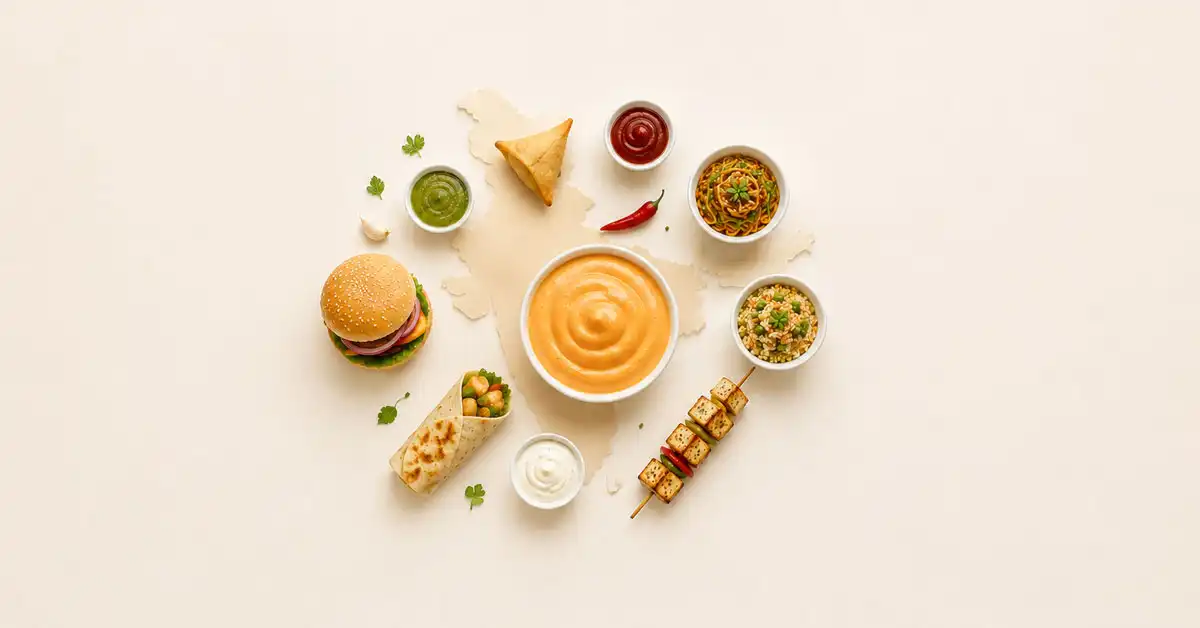
Indian fusion flavors continue to create strong differentiation opportunities.
Step 1: Define Your Target Consumer
It is also important, before creating a sauce, to clarify who the product is aimed at. Varying types of consumers have varying needs in terms of flavor, texture and overall eating experience. Every successful QSR sauce formulation begins with a clear understanding of the target consumer and their flavor preferences.
Youth Market
- Bold and exciting flavors
- Higher spice intensity
- Trend-driven taste profiles
Family Consumers
- Balanced flavor combinations
- Wider appeal across age groups
- Moderate spice levels
Premium Consumers
- Gourmet-style experiences
- Unique and sophisticated flavors
- International and premium-inspired profiles
Value QSR Segment
- Affordable formulations
- Consistent quality at controlled costs
When a marketer identifies a particular target audience, it can help influence all aspects of product development, including ingredient selection, flavor formulation, pricing, and even marketing.
Step 2: Create a Strong Flavor Architecture
The best QSR sauces are rarely about one single flavor. These sauces work by combining layers upon layers to build complexity.
Base Notes
This mixture forms the base of the sauce and provides the richness, body and mouth feel.
Examples include:
- Oil
- Eggless mayonnaise base
- Dairy-based ingredients
Middle Notes
These flavors define the core character of the sauce and help create its unique identity.
Examples include:
- Garlic
- Onion
- Tomato
Top Notes
These are the flavors consumers notice first and often remember most.
Examples include:
- Herbs
- Spices
- Natural flavor systems
When these flavor layers are properly balanced, the result is a sauce that delivers a more satisfying and memorable eating experience.
Premium QSR Sauce Development Flowchart
Consumer Research
↓
Competitive Benchmarking
↓
↓
Laboratory Trials
↓
Sensory Testing
↓
Pilot Production
↓
Shelf-Life Assessment
↓
Packaging Development
↓
Commercial Manufacturing
↓
Market Launch
Step 3: Prioritize Texture Development
Although flavor may draw a consumer in, texture is usually the deciding factor in enjoyment. Consumers are very quick to recognise problems, including:
- Thin consistency
- Excess water release
- Grainy texture
- Oil separation
Premium sauces are expected to deliver the following:
- Smooth consistency
- Stable emulsions
- Rich mouthfeel
- Easy spreading and coating properties
These features are attained by Foodsure through the use of technologies that are: high-shear mixing, homogenization and an improved emulsification system which maintains consistent product throughout batches.
Step 4: Design for Shelf Stability
It’s easy for a new product to taste great during development and have issues during commercial production.
Some general problems of stability are the following:
- Oil separation
- Water separation
- Color deterioration
- Flavor degradation
- Reduced shelf life
Thus, the shelf life performance has to be taken into account right from the beginning of the formulation process and not after launching the product. By inculcating stability within the formulation process, one can minimize potential quality problems and improve commercial performance.
Step 5: Choose the Right Processing Equipment
In the manufacture of sauces on a commercial scale, it is necessary to use equipment that produces sauces with the correct quality, stability and texture.
Recommended Processing Equipment
Processing Area
- High-shear mixer
- Colloid mill
- Homogenizer
Cooking Area
- Steam-jacketed kettle
- Agitated cooking vessel
Area of filling:
- Piston filler machine
- Automated filling line
Quality control area:
- PH meter
- Brix meter
- Stability test equipment
Using the right equipment can have an advantage not just in improving product consistency but also in good scale-up and manufacturing.
Step 6: Develop Packaging That Supports the Brand
Packaging is usually the first interaction a consumer has with a product and is key in making purchase decisions and brand image. Packaging must convey:
- Premium quality
- Flavor identity
- Key product benefits
General packaging forms are as follows:
Squeeze Bottles
A popular format for retail products and a practical one for everyday consumption.
Sachets
A good solution for QSR networks and takeaways.
Doy Packs
An economical format with a good presence on the shelf.
Bulk Packs
A format for restaurants, food service operators, and cloud kitchens.
The right packaging solution enhances the success of the overall QSR sauce formulation strategy.
Common mistakes made when developing QSR sauces
Mistake 1
Trying to copy competitor products without knowledge of the target consumers.
Mistake 2
Failing to carry out shelf life trials during product development.
Mistake 3
Developing a product purely on flavor, and failing to account for texture/mouthfeel.
Mistake 4
Using ingredients that cannot be reliably sourced or commercially scaled.
Mistake 5
Not taking manufacturing realities into account during formulation.
The product needs to function not just in the development kitchen but also in large-scale commercial manufacture.
Why the Indian Market Needs Premium Sauce Innovation
India is rapidly developing in:
- QSR Chains
- Cloud Kitchens
- Food Delivery
- Ready-to-Eat Foods
- Premium Convenience Foods
In this growing, competitive world, sauces offer one of the most readily available ways to differentiate. People remember the flavor of experiences. Brands can forge that experience with premium sauces.
Why brands work with Foodsure
Foodsure facilitates:
- QSR Sauce Recipe Formulation
- Signature Sauce Development
- Dip Product Development
- Shelf-Life Validation
- Machinery Selection
- Contract Manufacturing
- Packaging Development
- Commercial Launch Support
We are primarily in the business of helping brands develop scalable and commercially viable products.
Looking to Develop Premium QSR Sauces
Foodsure offers:
- Sauce Recipe Formulation
- Signature Sauce Development
- Shelf-Life Validation
- Machinery Selection
- Contract Manufacturing Support
- Packaging Development
- Commercial Launch Assistance
Conclusion
Premium sauces are no longer an afterthought but rather a critical brand-building component for quick-service restaurants and food companies. Whereas customers might remember little else about a burger, it’s the great sauce that lingers. Well-designed sauces create a memorable, unique flavour profile that drives customer loyalty and sets a brand apart from the competition in this saturated food industry. Investing in professional QSR sauce formulation today can offer brands a lasting competitive advantage tomorrow. Creating the right formula, process, and market plan could make all the difference in the future success of your burger, wrap, sandwich, dip or signature QSR condiment.
Create premium QSR sauces with authentic Indian taste profiles, texture optimization, ingredient stability, and scalable manufacturing solutions designed for restaurants, cloud kitchens, and food brands.
🌶️ Indian Flavours
🍔 QSR Ready
🚀 Scale-Up Support
FAQs
Which factor is most critical when developing QSR sauces?
Consumer acceptance. The flavor profile, texture and consistency need to be designed to meet the specific preferences of the target consumer.
Is it possible to develop premium sauces without eggs?
Yes. Many successful QSR sauces utilize eggless emulsion systems.
What is the shelf life of a QSR sauce?
The required shelf life varies according to the distribution model, packaging, and product category.
What type of packaging should I use?
The selection of packaging depends on whether the sauce is for retail, QSR, food service or cloud kitchens.
Can Foodsure develop custom, signature sauces?
Yes. Foodsure assists its clients by developing custom recipes tailored to the specific requirements of QSR and retail brands.
Is contract manufacturing an option for sauces?
Yes. Many start-ups utilize contract manufacturing until they invest in their own production facility.