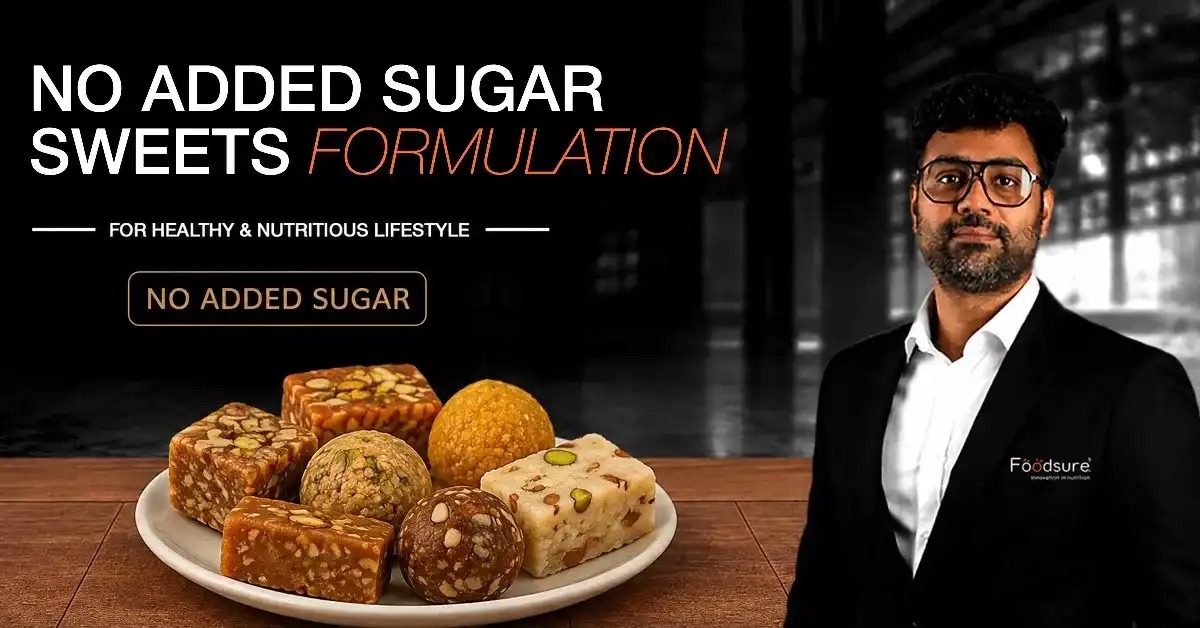
A confluence of health, nutrition, and pleasure should be observed in the new era of the Indian sweet business. Sweets no longer represent occasional treats for customers; customers prefer products that combine the traditionality of Indian desserts with a modern approach to life.
It offers food companies an excellent opportunity to develop sugar-free candies that possess great taste, quality, and nutritional value. Corporations are slowly looking for healthier alternatives that will meet the requirements of current consumers. Developing sugar-free candy or no added sugar sweets is becoming a sustainable strategy for corporations that aim to retain their competitiveness in the modern food industry.
The Reasons Why Sweets in India without Artificial Sugars have Gained Market Potential
Consumers’ awareness regarding their sugar intake has risen considerably over the past few years. Consumers have been on the lookout for healthier alternatives in various food categories, comparing products, and reading food labels. Some factors in the current market that are contributing to the growth of sugar-free confectionery include:
- Awareness of health
- There is an increase in consumer demand for healthier foods
- Market expansion of diabetic-friendly products
- Clean label category of food products
- Popularising the traditional Indian snacks
- Consumer interest in functional nutrition
Modern consumers are looking for guilt-free indulgence products. The India sugar-free confectionery market size reached USD 76.1 Million in 2025. Looking forward, IMARC Group expects the market to reach USD 123.1 Million by 2034, exhibiting a growth rate (CAGR) of 5.32% during 2026-2034.
Understanding the “No Added Sugar” Concept
It is important for companies to be able to comprehend what “no added sugar” is before creating any kind of product.
- What Is “No Added Sugar”: Those products that do not contain added sugars, sucrose, glucose syrup, and/or similar ingredients are called “no added sugar sweets”. Sometimes, naturally occurring sugars may be found depending on the composition of the product.
- Why Does It Matter: Consumers tend to prefer those products that look natural and are minimally processed. Honesty and transparency play a key role in building a positive reputation for a company. Product positioning is directly linked to the definitions set by regulations.
The Challenges Involved in Making Indian Candies without Adding Any Sugar
The creation of Indian candies without sugar poses challenges for the need to strike a balance between the health benefits, flavour, and customer expectations.
| Challenge | Why It Matters | Key Focus Areas |
| Maintaining Traditional Taste | Consumers expect the same rich flavour as conventional sweets. Poor taste reduces repeat purchases. | Sweetness balance, flavour depth, authentic taste, and an enjoyable eating experience |
| Achieving Authentic Texture | Texture strongly influences acceptance across laddoo, peda, barfi, and halwa. | Softness, moisture balance, smoothness, binding, mouthfeel, traditional bite |
| Shelf-Life Stability | Sugar naturally helps preserve freshness and stability. | Water activity control, freshness retention, microbial stability, packaging, and storage consistency |
Maintaining the genuine flavour, texture, and freshness that characterise traditional Indian sweets is more difficult than eliminating sugar.

Expectations of Modern-Day Consumers for Healthier Candies
Modern consumers are much more knowledgeable than their predecessors. What do they expect to see in their healthier candies:
- Real flavor
- Clean labeling
- A healthier diet
- Quality products
- Convenient packaging
- Transparency
The more products assist consumers in meeting their healthy goals without taking away their fun, the more popular they become. These changing expectations influence the future development of no added sugar sweets.
The Indian Sweets Industry Is Being Redefined by Generation Z
Among many factors driving the emergence of sweets without sugars, Generation Z ranks high. Unlike other generations, Gen Z consumers are influenced a lot by the following:
- Fitness culture
- Wellness trends in digital space
- Ingredient transparency
- Social media food posts
- Effective nutrition
- Lifestyle-driven consumption
Gen Z customers buy not only products but also experiences and values.
Gen Z Desires Health Without Giving Up Taste
While being nutritionally aware, Gen Z consumers do not intend to trade their health for taste. Healthy products often fail because this generation requires the following from them:
- Outstanding taste
- Premium packaging
- Modern brand image
- Convenience
- Sharable experience
For Gen Z, healthy products have to be enjoyable and indulgent.
Clean Labels Matter Like Never Before
Labels are being read carefully by the current generation. They are showing a great interest in products that are:
- Natural, clear, and trustworthy
- Processing minimised
- Ingredient-conscious
Through the focus on simplicity, authenticity, and clarity in their marketing efforts, brands offering sugar-free sweets will enhance their attractiveness to the market.
Social Media Fosters Education
Marketing in the food sector has become different because of social media platforms such as Instagram. Candies from young generations generally get attracted to visually appealing candies with modern positioning. Smart organisations understand that the following play an essential role in Generation Z’s purchasing decisions:
- Product story
- Brand personality
- Visuals
- Community participation
- Wellness positioning
This is a huge opportunity for Indian sweet brands.
Potential Products with High Prospects for Innovation
There is a range of classic Indian sweets with high prospects for healthy innovation.
- Innovative Options from Laddoos: Laddoo products have flexibility that can help with luxury products and modern positioning.
- Ideas for Barfi: Barfi remains one of the most popular kinds of sweets in India and is easy to modify for healthier options.
- Products Based on Peda: There is room for creating luxury gift packaging options based on peda and smaller portions.
- Innovations Using Halwa: Halwa is gaining popularity among urban consumers looking for ready-made products.
- Modern Indian Sweet Formats: Companies today create innovative combinations of traditional Indian delicacies and snack formats.
This innovation trend is helping to spread sugar-free sweets beyond festive consumption times.
Importance of Sensory Evaluation
Most products are rejected due to their unpleasantness in consumption rather than any health concerns. Sensory evaluation must include:
- Perceived sweetness: The product should provide a sense of satisfaction but not make you feel compromised.
- Flavour authenticity: Traditional flavours are expected to retain their authenticity.
- Mouthfeel quality: Customers expect candy to be soft, rich, and luxurious.
- Overall acceptability: Sensory evaluation before the complete release of products will help improve consumer goods.
Brand loyalty and continued patronage are ensured through proper sensory optimisation.
Strategies for Packaging at a Higher Level
Packaging not only acts as a form of protection but also as a marketing strategy. The packaging strategy for sugar-free sweets should be the following:
- Premium Quality
- Health-oriented positioning
- Purity and Dependability
- Modern brand image
Indeed, purchasing decisions are significantly impacted by quality packaging.
Labelling and Regulatory Problems
The claims made by all products should be accurate.
- Claim Verification: Claims related to health need to have scientific evidence behind them.
- Clarity in Labelling: Consumers are becoming more aware of product labelling before buying it.
- Compliance: Both the consumers and the brands will be protected by proper labelling.
Right from the very beginning of the design, compliance needs to be kept in mind.
Opportunities for Food Brands in the Future
Traditional Indian desserts will have a bright future as a product of culture and health. No sugar-added desserts will see an increasing demand in the future due to growing health consciousness in these sectors:
- D2C brands
- Modern retailing
- Elegant gifts
- Functional foods
- Wellness products for organizations
- Export markets
Success will be determined by those brands that can create a synergy between convenience, nutrition, authenticity, and strong brand identity.
Conclusion
Innovation in the Indian sweet industry is taking place in response to evolving consumer needs. Health-aware consumers are searching for products that not only aid their health but also offer traditional indulgence. Balance in taste, texture, shelf-life, sensory aspects, and consumer confidence is needed in order to make low-sugar sweets popular. The prospects for no-added-sugar sweets and confectionery in India seem very bright. With the growing health awareness among consumers, the need for confectionery items that offer nutrition, naturalness, and indulgence will keep on increasing. On the other hand, Gen Z is bringing about a shift in consumer behaviour by demanding transparency, exclusivity, and clean labelling.
There is an opportunity for food manufacturers. Manufacturers will be well-positioned to lead the development of the next generation of sweets in India if they can produce exclusive, sugar-free sweets with a unique flavour profile and a great brand image.
FAQs
What is it called when there is no sugar used?
Sweets made without glucose syrup, sugar, or other similar sweeteners.
What constitutes sugar-free and healthy sweets?
Sugar-free, practical snacks, and sweets that do not contain added sugar are all examples of healthier sweets.
Can you make sugar-free hard candies?
It is feasible to make hard candies without sugar by following certain recipes.
Where can I purchase no added sugar sweets?
They are available from supermarkets, direct-to-consumer brands, online retailers, and health stores.
Why are no added sugar sweets becoming popular?
The popularity of no added sugar sweets is increasing due to rising health awareness, growing demand for healthier indulgence options, and consumer interest in clean-label products.